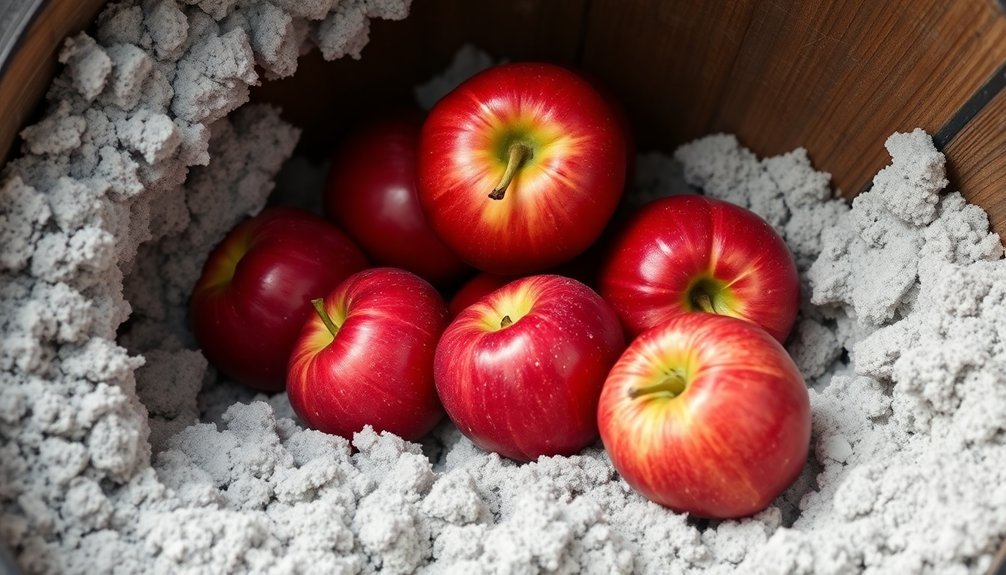
You can preserve food for 6+ months using wood ash, a traditional method that creates an alkaline environment hostile to bacteria. The process works best with hardwood ash (never treated wood) and requires 1.5 kg of ash per kg of food. You'll need to layer your food items – like hard cheeses, eggs, or root vegetables – in airtight containers with sifted ash, ensuring complete coverage. Store your preserved foods in a cool, dark place with consistent temperature and humidity. Understanding the proper techniques, container types, and safety measures will help you master this time-tested preservation method.
Understanding Wood Ash Properties
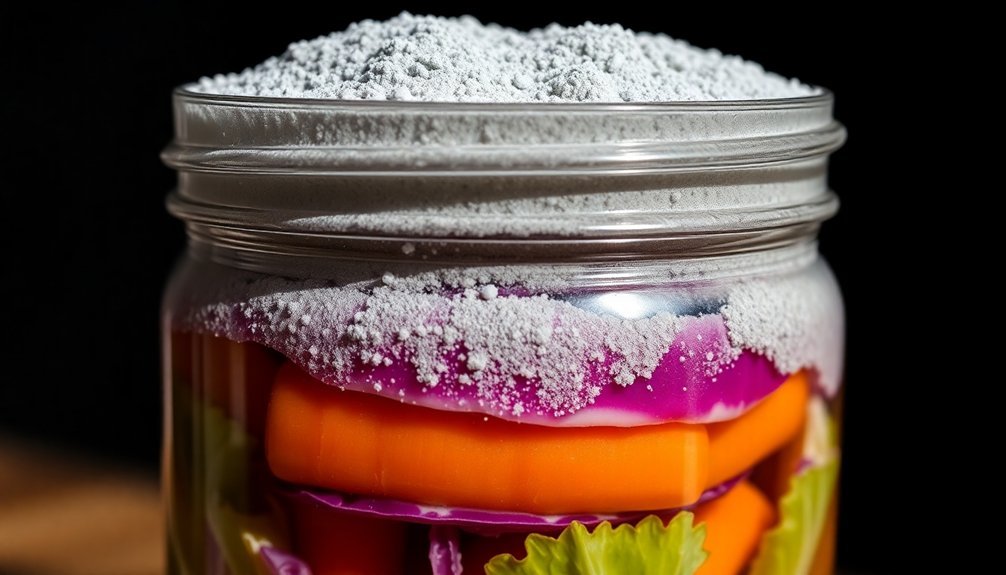
Various properties make wood ash a remarkable food preservative, owing to its rich mineral composition and natural protective qualities. When you examine wood ash closely, you'll find it contains essential elements like calcium, potassium, phosphorus, and magnesium, with calcium being the most abundant component.
This mineral-rich composition gives wood ash properties similar to agricultural lime, with an N-P-K ratio of approximately 0-1-3.
What makes wood ash particularly effective for food preservation is its ability to create an inhospitable environment for unwanted organisms. Studies show that using 1.5 kg ash per kilogram of tomatoes provides optimal preservation results. It actively deters both mammals and insects while inhibiting microbial growth on food surfaces.
You'll find that when you use finely sifted ash, it creates a sterile barrier that shields your food from air and moisture exposure. The ash's composition typically includes low concentrations of heavy metals, making it safe for food preservation purposes.
When you're working with wood ash, you're utilizing a natural preservative that's been proven effective through centuries of use. The ash's ability to maintain a cool, dark environment around food items contributes greatly to its preservative power, helping to keep your stored foods fresh for extended periods.
Best Woods For Food Preservation
When you're choosing woods for food preservation using ash, you'll want to focus on hardwoods like oak, maple, and hickory rather than softwoods like pine or cedar.
Hardwoods produce a better quality ash with higher mineral content and fewer resins, making them more effective for preservation purposes. These hardwoods are particularly effective because they provide strong, bold flavor that naturally enhances the preservation process.
The most essential tree species for food-grade ash include oak, maple, beech, and hickory, as these create clean-burning ash that's safe for food contact.
Hardwoods Versus Softwoods
Throughout history, the choice between hardwoods and softwoods has played an essential role in food preservation success. You'll want to exclusively use hardwoods like hickory, oak, maple, and beech for your food preservation needs, as they're specifically designed by nature for this purpose.
Hardwoods have 40% of U.S. trees in their species group, making them widely available for preservation purposes. Hardwoods offer superior preservation qualities due to their complex cellular structure, which includes fiber tracheids, vessels, and parenchyma. They burn longer and hotter than softwoods, creating an ideal environment for food preservation. The lignin in hardwoods contains natural antibacterial compounds that help protect your food.
You should never use softwoods like pine, cedar, or fir for food preservation. Their simple cellular structure and high sap content make them dangerous choices. When burned, softwoods create excessive sparks, burn too quickly, and can release toxic compounds like formaldehyde and acetic acid into your food.
When you're selecting wood for preservation, remember that hardwood ash is lighter and easier to handle than softwood ash.
Be sure to avoid orchard woods, as they may contain absorbed pesticides that could contaminate your preserved foods.
Essential Tree Species
Selecting the right tree species stands at the heart of successful food preservation with wood ash. You'll want to focus on hardwoods, as they provide the ideal nutrient content and lower silica levels necessary for effective preservation. Maple and oak are excellent choices, while hickory offers both preservative properties and distinctive flavoring that's particularly effective for meat preservation.
When you're gathering wood for ash production, prioritize these hardwood species over softwoods. The Cherokee's traditional use of hickory ash for meat preservation demonstrates the time-tested effectiveness of this particular species.
You'll find that hardwood ash contains higher levels of essential macronutrients, particularly potassium and calcium, which create the best alkaline environment for preservation.
To use these woods effectively, you'll need to burn them completely and sift the ash to remove any chunks. Store your preserved foods in stoneware crocks, layering the hardwood ash about 1 to 1.5 inches deep between food items.
Remember to keep your preserved foods in a cool, dark place, and make sure your ash stays dry, as moisture can reduce its effectiveness and cause hardening.
Essential Storage Container Types
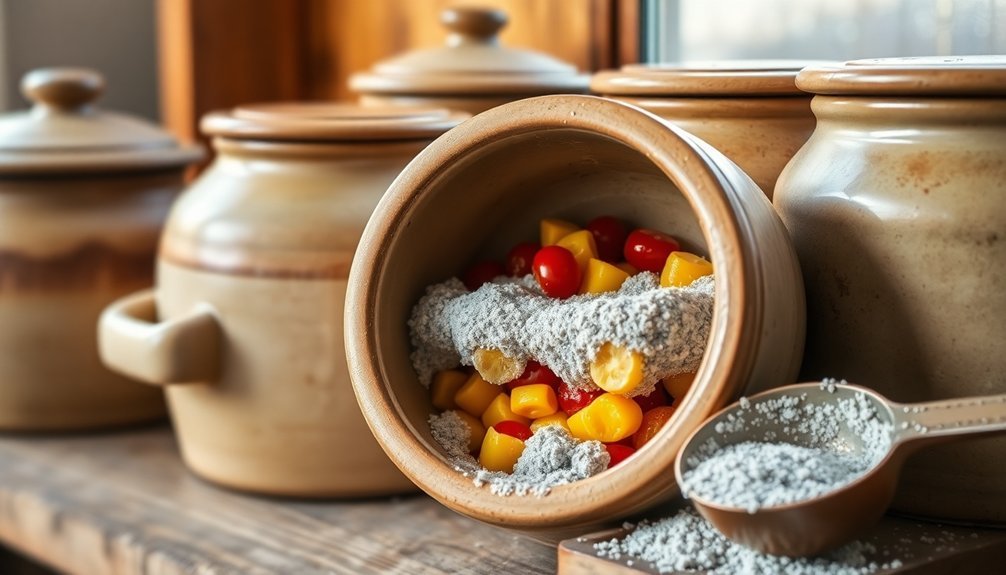
You'll find traditional stoneware pots are ideal for wood ash food preservation, offering non-reactive surfaces and excellent moisture control for items like cheese.
Modern alternatives include food-grade plastic buckets and cardboard boxes, though you'll need to guarantee proper sealing with materials like packing tape.
Whether you choose stoneware or modern containers, maintaining an airtight seal and layering the ash correctly will determine your preservation success.
Traditional Stoneware Storage Options
When preserving food with wood ash, traditional stoneware storage containers provide essential options for maintaining freshness and organization. You'll find several types that work effectively, including food crocks ideal for fermented foods, stoneware jars perfect for preserves, and storage canisters designed specifically for dry goods.
These containers offer significant advantages for your food preservation needs. You'll appreciate their airtight sealing capabilities, which prevent moisture and air from compromising your stored items. The non-reactive nature of stoneware means your food won't be contaminated by chemical interactions, and the material's durability guarantees long-term use without cracking or breaking.
You can maximize your storage efficiency by selecting stackable containers that fit neatly in cool, dark spaces. Many containers come with built-in labeling systems, making it easy to identify contents at a glance.
Whether you're storing meals prepared in advance, fresh produce, or dry goods, you'll find these containers versatile enough to handle various preservation needs. Their easy-to-clean surfaces promote proper food safety, while their decorative qualities make them attractive additions to your kitchen countertops.
Sealing Modern Container Choices
Modern food storage options expand far beyond traditional stoneware, offering specialized materials for every preservation need. When selecting containers for your wood ash preservation method, you'll need to take into account durability, reactivity, and sealing capabilities of different materials.
Glass containers stand out as your safest choice, as they won't leach chemicals and remain non-reactive with acidic foods. They're also transparent, allowing you to monitor your preserved items without opening the container.
For lightweight alternatives, food-grade plastic containers offer convenience and affordability, while stainless steel provides exceptional durability and hygiene.
- Glass containers with tight-fitting lids provide ideal visibility and chemical stability
- Stainless steel options resist corrosion and won't absorb food odors
- Food-grade plastic containers offer cost-effective storage for dry goods
- Stackable designs maximize your storage space efficiency
- Clear containers with proper labeling help track preservation dates
Choose containers that seal tightly to maintain the effectiveness of your wood ash preservation. While glass may cost more initially, its non-reactive properties make it ideal for long-term storage.
If you're planning to transport preserved foods, think about lightweight plastic or stainless steel options that won't break during handling.
Preparing Wood Ash Correctly
Before beginning the food preservation process, proper preparation of wood ash is essential for safe and effective results. You'll need to select ash from natural hardwoods like hickory while avoiding charcoal ash or treated wood sources. Confirm the ash has completely cooled before handling it.
Start by sifting your wood ash multiple times through progressively finer screens to remove debris and achieve a powdery consistency. Store your prepared ash in breathable containers made of wood, cardboard, or stoneware, and keep them in a cool, dry location away from direct sunlight.
| Ash Type | Suitability | Key Points |
|---|---|---|
| Hardwood Ash | Excellent | Cool completely, sift thoroughly |
| Softwood Ash | Acceptable | Use only if hardwood unavailable |
| Charcoal Ash | Avoid | Different properties, not suitable |
| Treated Wood Ash | Never Use | Contains harmful chemicals |
Remember to line your storage containers with breathable material and use loose-fitting covers to maintain the ash's preservative properties. Don't use plastic containers as they can promote decay and compromise the ash's effectiveness. Regular monitoring of storage conditions will help guarantee your ash maintains its preservation qualities.
Foods That Store Well
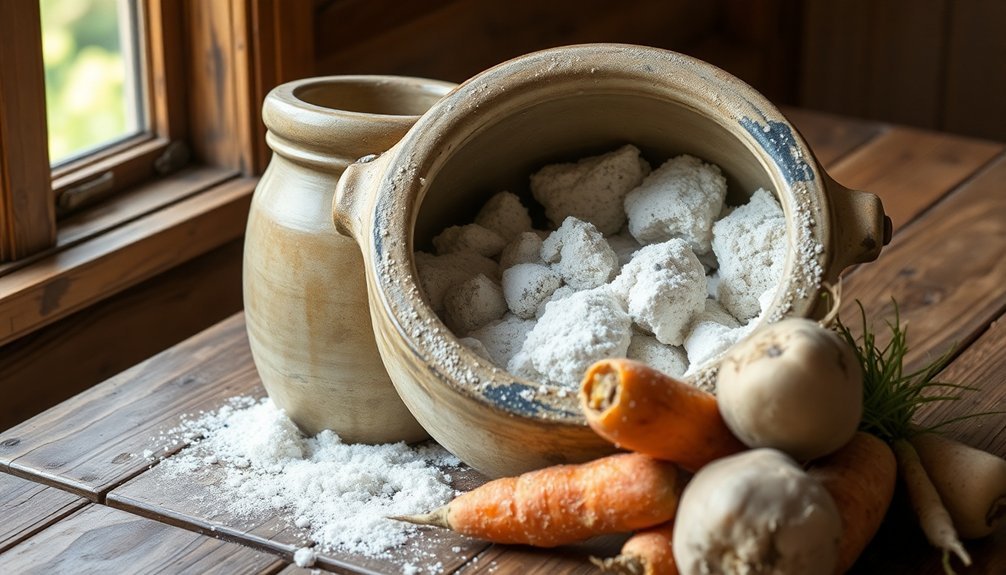
If you're looking to preserve food with wood ash, start with hard cheeses like Parmesan and aged cheddar, as they naturally resist spoilage and work well with ash preservation methods.
Fresh eggs can last considerably longer when properly stored in wood ash, which creates a protective barrier against bacteria while maintaining their freshness.
Root vegetables, including carrots, turnips, and beets, are also excellent candidates for ash storage due to their hardy nature and thick protective skins.
Best Hard Cheeses
When preserving food with wood ash, hard cheeses like Gruyere and Cheddar stand out as excellent candidates due to their low moisture content and dense texture.
You'll want to prepare your cheese by cutting it into pieces about 1-1.5 inches thick, ensuring there's enough volume to withstand the preservation process.
To successfully preserve your hard cheese in wood ash, follow these key guidelines:
- Store the cheese in stoneware crocks or mason jars with tight-fitting lids
- Surround the cheese completely with 1-1.5 inches of sifted wood ash
- Keep your containers in a cool, dark place like a cellar
- Air-dry or age the cheese before placing it in the ash
- Remove the outer layer after preservation, as a new rind will form
You'll notice your preserved cheese develops a saltier, grainier texture, similar to parmesan.
When properly stored, these hard cheeses can remain viable for up to a decade or longer.
Don't worry if some ash remains on the cheese – it's harmless if consumed and easily brushes off.
Remember that soft or medium cheeses won't work for this preservation method due to their high moisture content.
Eggs And Root Vegetables
Looking to preserve eggs and root vegetables for the long haul? Wood ash preservation works exceptionally well for eggs but isn't the best choice for root vegetables. Here's how to maximize storage for both:
For eggs, you'll need a ceramic or earthenware container and sifted wood ash. Place your eggs in the container, ensuring they don't touch each other or the walls. Cover them with 1-2 inches of ash on all sides. Store in a cool, dark place, and you can expect preservation for several months.
For root vegetables, skip the wood ash and opt for sand or sawdust instead. Trim the tops, brush off dirt (don't wash), and store in layers using your chosen medium.
| Item | Storage Method | Container | Medium | Duration | Location |
|---|---|---|---|---|---|
| Eggs | Layering | Earthenware | Wood Ash | 6+ months | Cool, dark |
| Carrots | Layering | Barrel | Sand | 4-6 months | Root cellar |
| Beets | Layering | Crate | Sawdust | 4-6 months | Basement |
| Potatoes | Curing first | Wooden box | Sand | 6+ months | Dark, cool |
| Sweet Potatoes | Curing first | Crate | Sawdust | 6+ months | 55-60°F |
Check your stored items regularly to remove any that show signs of spoilage.
Traditional Preservation Methods
Throughout history, humans have relied on diverse preservation techniques to keep their food safe and edible. Traditional methods fall into several categories, each using different principles to extend food's shelf life and maintain its safety for consumption.
Temperature control methods like freezing and cooling have proven effective, while dehydration techniques remove moisture to prevent bacterial growth. You'll find that many cultures have developed their own unique preservation approaches, from confit in France to hickory ash storage among the Cherokee people.
- Curing with salt and nitrates draws moisture out through osmosis.
- Smoking adds flavor while dehydrating and preserving meat.
- Fermentation creates beneficial bacteria that naturally preserve food.
- Pickling uses acidic solutions to keep vegetables fresh longer.
- Wood ash storage provides a cool, dry environment for various foods.
These time-tested methods often work in combination – for example, you might cure meat before smoking it, or use both salt and vinegar in pickling.
While modern refrigeration has changed how we store food, these traditional techniques remain relevant and effective, especially in situations where electricity isn't available or when you're seeking to preserve food naturally.
Proper Storage Environment Requirements

For successful wood ash preservation, creating the right storage environment is essential to maintaining food quality and safety.
You'll need to store your preserved foods in a cool, dark location that's protected from air and moisture. Using earthenware crockery is your best option, though you can also use cardboard boxes or dig holes filled with ash as alternatives.
When setting up your storage area, make sure it's away from any combustible surfaces.
You'll want to maintain consistent temperature and humidity levels throughout the preservation period. The containers you choose should be properly sealed to prevent air and moisture from compromising the preservation process.
As you store your food items, place them so they don't touch each other, and cover them completely with fine wood ash.
You'll need about 1.5 kg of ash for every 1 kg of tomatoes.
Remember to regularly monitor your stored items without disturbing them unnecessarily.
Check for changes in texture and signs of decay, and keep track of any weight loss. This data will help you optimize your preservation methods for future use.
Chemical Properties Of Wood Ash
Understanding wood ash's chemical makeup is essential to its food preservation capabilities. The ash primarily consists of calcium carbonate, which can make up to 45% of its total weight, along with varying amounts of calcium oxide and potassium carbonate.
These compounds work together to create an alkaline environment that inhibits bacterial growth.
The elemental composition reveals why wood ash is so effective at preservation:
- Carbon makes up 5-30% of the ash, providing a structural base
- Calcium comprises 7-33%, contributing to its alkaline properties
- Potassium ranges from 3-10%, enhancing preservation capabilities
- Magnesium at 1-2% adds to its mineral content
- Trace elements like iron, zinc, and copper complete its chemical profile
When you're using wood ash for food preservation, you're working with a complex mixture that increases pH levels and electrical conductivity.
The calcium oxide formed at higher temperatures combines with moisture to create an inhospitable environment for microorganisms.
The presence of various mineral compounds affects nutrient bioavailability and bacterial community composition, making wood ash an effective natural preservative.
Common Mistakes To Avoid

While wood ash's chemical properties make it an excellent preservative, many people make preventable errors that compromise its effectiveness. You'll ruin your preservation efforts if you use ash from treated wood, plastics, or other synthetic materials instead of natural hardwoods like oak or maple.
Don't skip the vital step of sifting your ash, as large particles can damage food and create air pockets that lead to spoilage.
You're setting yourself up for failure if you store food in damp conditions or use wet ash. Moisture is your biggest enemy in wood ash preservation, so guarantee both your storage area and ash remain completely dry.
Don't try to preserve overripe or damaged food – only use fresh, unblemished items. Your preservation will fail if you don't maintain a consistent ash layer of 1-1.5 inches around the food.
Watch out for insufficient coverage – every food surface must contact the ash directly. Don't leave food in any packaging, as this prevents proper ash contact.
Finally, don't forget to check your stored items regularly for signs of spoilage, and always keep detailed records to improve your future preservation attempts.
Cultural Heritage And Techniques
Throughout history, diverse cultures have embraced wood ash preservation techniques, each adding their own unique practices to this time-tested method. From the Mesoamerican nixtamalization process to Portuguese bread-making traditions, wood ash has played a vital role in food preservation and preparation across continents.
You'll find these preservation methods deeply rooted in indigenous knowledge and cultural heritage. The Cherokee people discovered that hickory ash could both flavor and preserve meat, while African farmers developed techniques to preserve tomatoes for months during off-seasons.
In Iceland, you'll see wood ash used to prepare moss for consumption, while Nigerian cuisine incorporates it in traditional dishes like akanwu.
- Ancient Romans used wood ash to clarify white wine and bake bread
- Mesoamerican cultures improved corn's nutritional value through nixtamalization
- Portuguese bakers create "pão de soborralho" using traditional ash techniques
- European cheesemakers use wood ash to preserve varieties like Morbier
- African communities preserve tomatoes by layering them with sifted ash
You'll need to carefully sift the ash multiple times before use, just as generations before you have done, ensuring the preservation of both food and cultural traditions.
Scientific Research And Findings

Recent laboratory studies have revealed compelling evidence about wood ash's effectiveness in food preservation, particularly with tomatoes. Research shows that tomatoes treated with 1.5 kg of wood ash experienced only 20% decay compared to 100% decay in untreated samples.
However, you'll find mixed results regarding weight loss, with ash-treated tomatoes showing slightly higher losses (33.47%) compared to control groups (30.56%).
When you examine the chemical aspects, you'll notice that ash treatments don't greatly affect total soluble solids, though they do influence other factors. The studies show that all tomatoes, regardless of treatment, experience decreased firmness and increased pH over time.
You'll also find that ash-treated tomatoes produce less carbon dioxide, suggesting slower ripening. The research, conducted in chemistry laboratories using randomized complete block designs, demonstrates that wood ash can extend preservation up to 6 weeks under controlled conditions.
While ash treatments show promise in reducing decay, you should note that they perform similarly to sand treatments in some aspects. The findings suggest that wood ash's preservative effects are considerable but vary depending on specific conditions and measurement parameters.
Monitoring Food Quality During Storage
During food storage with wood ash, monitoring quality requires a thorough approach combining temperature, humidity, and advanced technology.
You'll need to maintain precise control over storage conditions to guarantee your preserved foods remain safe and fresh for extended periods. Real-time monitoring systems can help you track critical parameters and receive instant alerts if conditions deviate from ideal ranges.
- Install IoT sensors throughout your storage area to continuously monitor temperature and humidity levels
- Set up automated alerts to notify you when conditions fall outside safe parameters
- Use wireless sensors for hard-to-reach areas where traditional monitoring would be difficult
- Implement centralized remote monitoring software to track conditions 24/7
- Document all readings systematically for compliance and quality assurance
With proper monitoring, you'll minimize bacterial growth and extend shelf life while maintaining ideal moisture levels in your wood ash preservation system.
Real-time tracking helps you make data-driven decisions about storage conditions and take swift corrective action when needed. Advanced monitoring technologies also simplify record-keeping, making it easier to demonstrate compliance with food safety regulations and maintain consistent quality throughout the storage period.
Safety Precautions And Guidelines
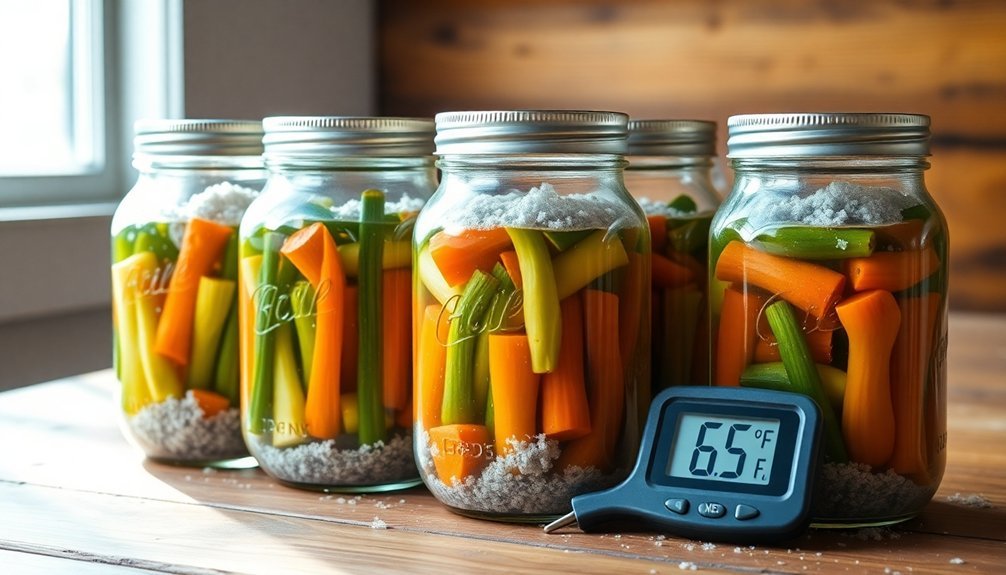
Proper safety measures must accompany any wood ash preservation system, regardless of your monitoring capabilities. When handling wood ash, you'll need to wear protective equipment, including gloves, goggles, and a NIOSH-approved respirator if dust levels are high.
Keep your storage area well-ventilated to prevent dust accumulation and potential combustion hazards. Store your wood ash in covered containers that won't react with the material – wooden boxes, cardboard containers, or woven baskets lined with paper work best.
You'll want to sift the ash to remove sharp particles before use, and maintain a cool, dry environment to prevent the ash from becoming corrosive when wet. Don't expose wood ash to water, as calcium oxides can create corrosive reactions.
When layering food items with wood ash, make certain you're working in a dust-free environment and avoid creating airborne particles. Don't use high-pressure water streams near ash storage areas, and keep all ignition sources away to prevent dust explosions.
If you're experiencing skin dryness from handling ash, apply a barrier cream for protection. Remember to seal your storage containers properly to maintain preservation effectiveness while preventing ash dispersion.
Frequently Asked Questions
Can Wood Ash Preserved Food Be Safely Consumed During Pregnancy?
While there's no direct evidence of harm, you'll want to be cautious with wood ash-preserved foods during pregnancy. It's best to consult your doctor first and guarantee proper preservation techniques were followed.
Does Wood Ash Preservation Affect the Nutritional Value of Foods?
You'll find that wood ash preservation won't greatly affect your food's nutritional value. It keeps nutrients intact since it acts as a protective barrier rather than changing the food's chemical composition.
How Do You Test if Wood Ash Preserved Food Has Spoiled?
You'll need to check for mold, unusual odors, and discoloration. Inspect the texture for sliminess or abnormal dryness. If it smells rancid or tastes off after removing the ash, don't eat it.
Can Wood Ash Preserved Foods Be Used in Cooking Without Washing?
You can cook with wood ash preserved foods without washing, but you'll want to brush off any visible ash first. The ash doesn't contaminate the food and sometimes even enhances flavor in cooking.
Is It Possible to Preserve Liquids and Beverages Using Wood Ash?
You shouldn't try preserving liquids with wood ash. There's no historical evidence or proven methods for this practice. The ash's alkaline properties could react negatively with beverages and alter their composition and safety.
In Summary
You've now learned how wood ash can effectively preserve food for extended periods using time-tested methods. By selecting the right wood types, preparing ash correctly, and following proper storage guidelines, you'll be able to keep various foods fresh for 6+ months. Remember to monitor your preserved items regularly and maintain safe practices. This traditional preservation technique offers a sustainable, chemical-free way to extend your food's shelf life.