Ancient civilizations discovered powerful natural food preservers that you can still use today. Cloves, cinnamon, and mustard seeds stand out for their remarkable antimicrobial properties, with clove oil effectively fighting E. coli and Listeria at concentrations as low as 2.5%. You'll find that cinnamon's compounds, especially cinnamaldehyde, combat harmful bacteria while preventing fat oxidation. Mustard seeds' glucosinolates can reduce E. coli by up to 99.999%, while traditional salt preservation remains effective for meats and seafood. These time-tested spices offer sustainable alternatives to modern preservatives, and their ancient wisdom holds even more secrets for your kitchen.
Nature's Ancient Food Preservers
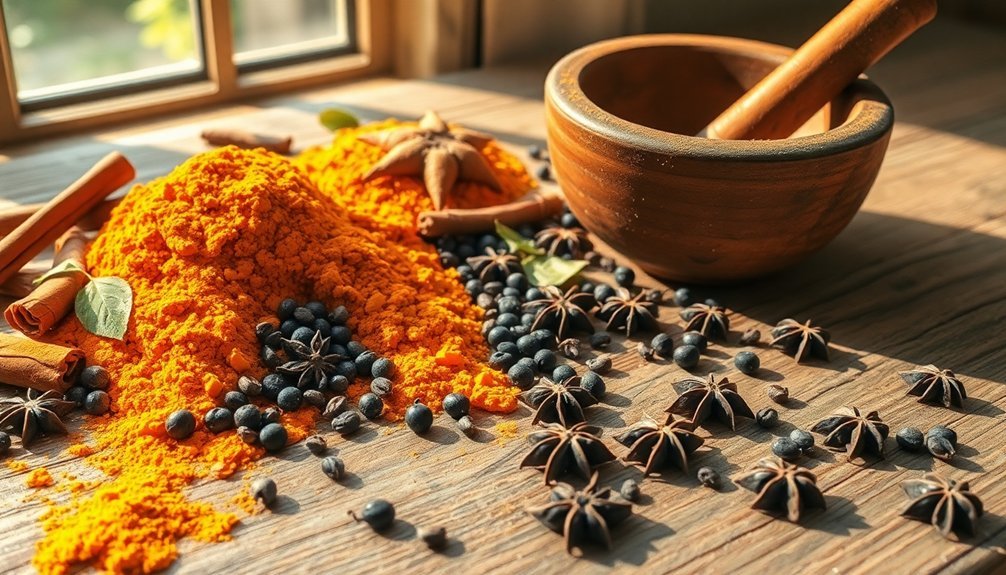
Four fundamental preservation methods have stood the test of time, helping ancient civilizations keep their food edible for longer periods.
You'll find that drying stands as one of humanity's earliest preservation techniques, dating back to 12,000 B.C. in the Middle East and Orient, where people harnessed the sun's power to dehydrate their foods and built heated still houses in areas lacking sunlight.
Salting emerged as another essential method, as ancient cultures discovered that salt could effectively remove moisture from foods and prevent harmful bacteria from growing. The process of curing with salt became crucial for preserving both meats and seafood throughout history.
When refrigeration didn't exist, people turned to natural freezing methods, burying their food underground or in snow and creating icehouses for storage.
You'll be interested to know that fermentation wasn't invented but rather discovered when grains and fruits naturally fermented in rain, leading to the development of pickling techniques.
These preservation methods didn't just keep food from spoiling – they often enhanced it.
Fermentation created additional vitamins, while salting developed new flavors.
Even the Romans found uses for pickling byproducts, creating their popular fish sauce, garum, from leftover brine.
Spices in Traditional Food Storage
You'll discover that ancient civilizations mastered the art of food preservation through clever uses of spices, from Egyptian cardamom to Indian turmeric.
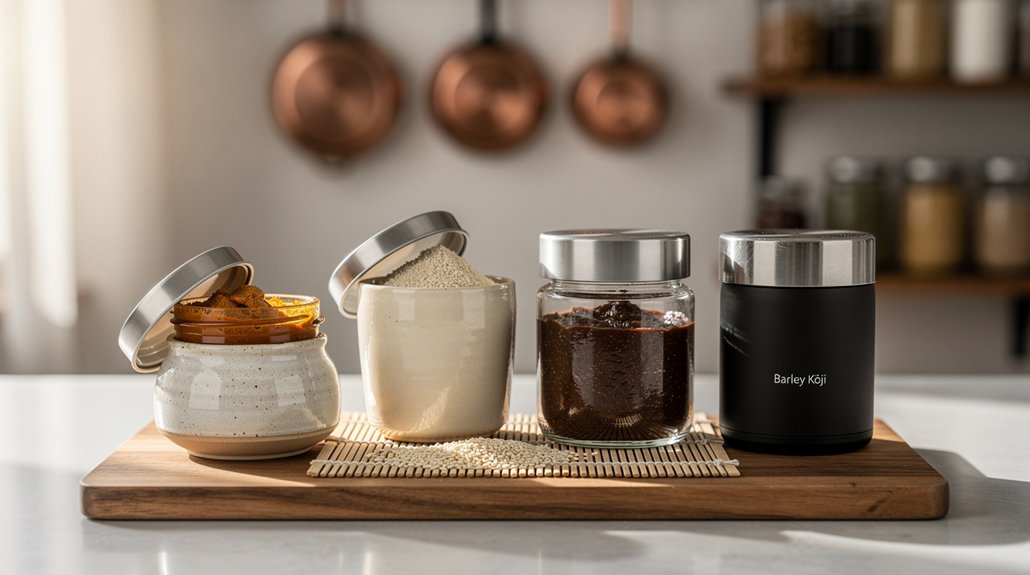
Traditional storage methods combined antimicrobial spices with specialized containers, like the Indian Masala Dabba and soapstone boxes, to maintain freshness and prevent spoilage.
These time-tested techniques show how different cultures across the globe developed their own unique approaches to food preservation, often using locally available spices and materials that proved remarkably effective. Early hunters and gatherers first discovered these preservation properties when they noticed that wrapping meat in leaves enhanced flavor while keeping it fresh longer.
Historical Spice Preservation Methods
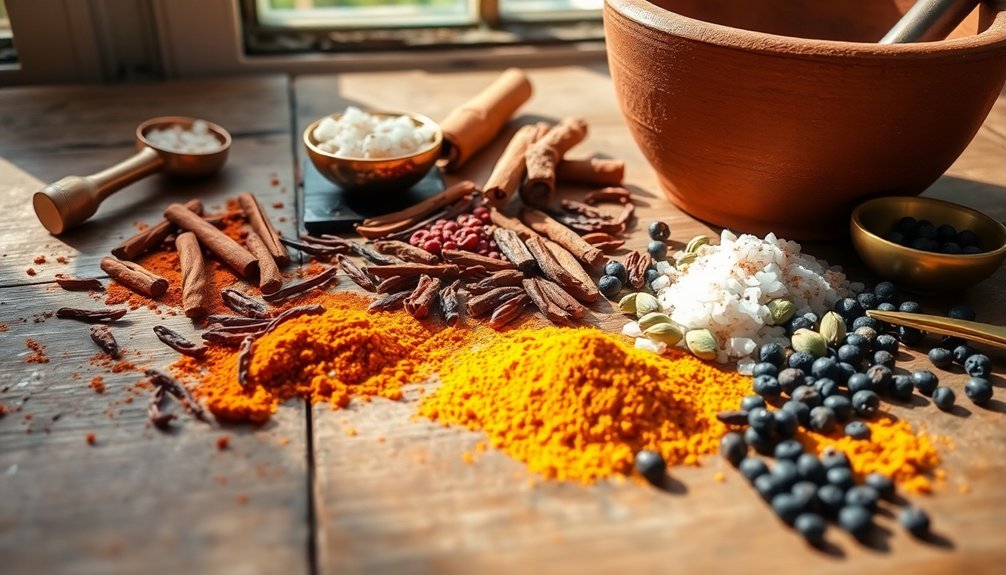
Throughout the ancient world, civilizations relied heavily on spices to keep their food from spoiling in an era before modern refrigeration. You'll find that cultures from Mesopotamia to Rome developed sophisticated preservation techniques using spices like cloves, cinnamon, and black pepper, which naturally fight harmful bacteria and fungi.
The Taino people mastered meat preservation by marinating it in native spices before slow-cooking it over fire. Meanwhile, ancient Greeks and Romans preserved their food using spiced wines and brines. Similar to the spontaneous fermentation processes discovered by ancient peoples, you can trace similar practices across different cultures, where they'd wrap meat in aromatic leaves or create spice-infused oils for preservation.
These methods weren't just about keeping food edible – they served multiple purposes. When you use spices like cinnamon and cloves, you're not only preventing bacterial growth but also acting as a natural antioxidant to prevent fat oxidation.
In medieval Europe, you'd find apothecaries using these same spices in their remedies, while traders during the Age of Exploration sought after pepper, nutmeg, and cloves for their powerful preservation properties.
These time-tested methods still influence modern food preservation techniques.
Regional Storage Traditions
Different regions across Asia developed unique spice storage traditions based on locally available materials and climate conditions.
In southern and western India, you'll find clay containers like kalchattis, whose porous nature helps keep spices dry in humid environments. These vessels aren't just practical – they're also associated with prosperity and spiritual significance.
Northern regions, particularly Kashmir and Gujarat, favor wooden containers, especially those made from neem wood. You'll appreciate how this material's natural anti-fungal properties help preserve spices, while its intricate carvings showcase centuries-old woodcraft traditions.
In Rajasthan, you'll discover elaborately decorated brass and copper containers featuring floral motifs and Arabic calligraphy, reflecting the fusion of Mughal and Indian artistry.
Kerala's tradition of using coconut shells for masala boxes demonstrates how communities adapt local resources sustainably.
You'll notice that proper storage practices are consistent across regions – containers are kept airtight, away from light, and at stable temperatures.
Whether it's silver's antimicrobial properties or clay's moisture-regulating abilities, each material serves both practical and cultural purposes in preserving these valuable spices.
Antimicrobial Powers of Cloves
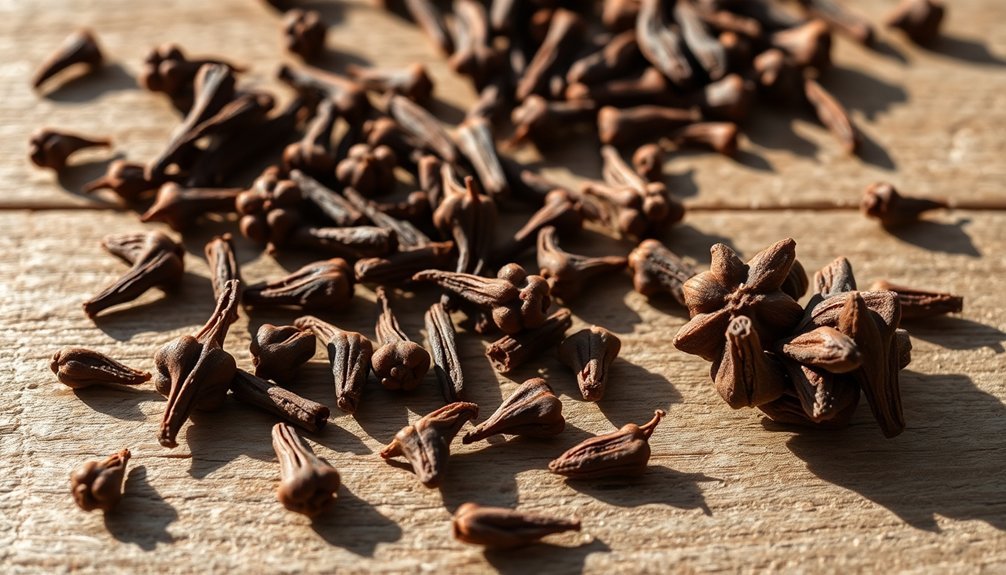
Cloves pack a powerful antimicrobial punch against both bacteria and fungi, making them one of nature's most effective food preservatives. You'll find that clove oil and extracts are particularly effective against common food-borne pathogens like E. coli, Listeria, and Staphylococcus aureus, with even small concentrations showing impressive results.
The secret behind cloves' preservative power lies in their rich content of eugenol and other phenolic compounds. When you use cloves in food preservation, these compounds attack harmful microorganisms by:
- Disrupting their cell membranes
- Increasing cellular permeability
- Interfering with essential cellular processes
- Neutralizing free radicals
You can harness cloves' antimicrobial properties in several practical ways. The essential oil works particularly well in ground meat products, where it effectively controls bacterial growth even under varying temperature and pH conditions.
In fact, clove oil outperforms regular extracts, with concentrations as low as 2.5% providing significant protection against spoilage organisms. This makes cloves an excellent natural alternative to synthetic preservatives, especially if you're looking to reduce chemical additives in your food storage methods.
Black Pepper's Preservation Legacy
While cloves dominated ancient preservation methods, black pepper emerged as another powerful ally in humanity's fight against food spoilage. You'll find evidence of its preservative powers dating back to ancient Egypt, where it was used in Ramses II's mummification process. By the 3rd millennium BCE, people across the Near East had discovered its remarkable properties.
| Time Period | Region | Key Use |
|---|---|---|
| 3-2nd millennium BCE | Egypt | Mummification |
| 3rd millennium BCE | Near East | Food preservation |
| 4th century BCE | Europe | Flavor enhancement |
| Roman period | Roman Empire | Meat preservation |
| Late 1st millennium BCE | Old World | Common spice |
Black pepper's effectiveness comes from its powerful antimicrobial and antioxidant properties. You'll notice it works in two ways: it fights bacteria and fungi while preventing fats and oils from oxidizing. When you're preserving meats or other foods, black pepper doesn't just mask unpleasant flavors – it actively combats the microorganisms causing spoilage. This dual action made it particularly valuable in ancient times when food preservation was challenging. Despite its initially high cost and limited availability to the elite, black pepper's preservation powers eventually made it an essential part of the global spice trade.
Salt Through the Ages
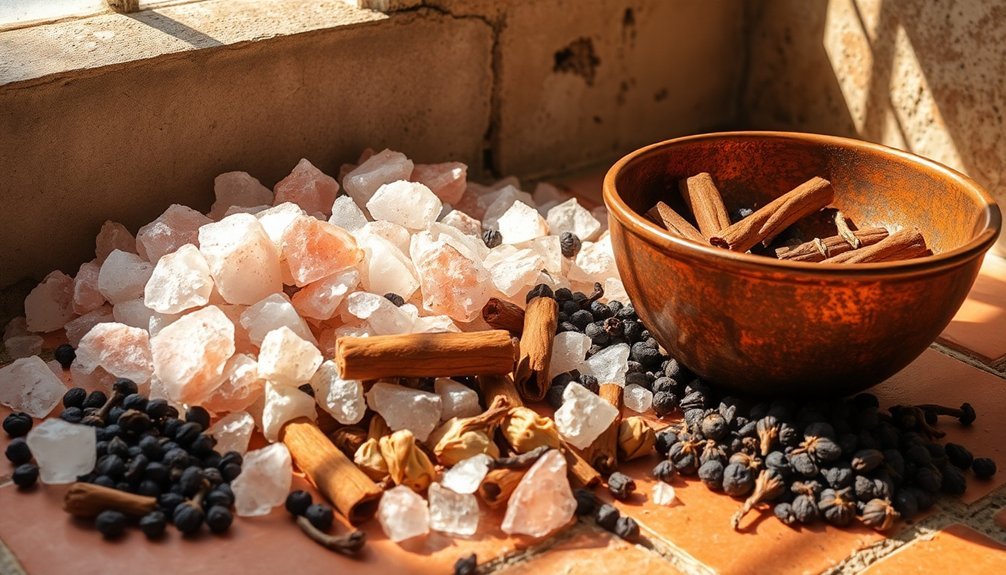
- Ancient Egyptians used natron, a natural salt mixture, for both mummification and food preservation.
- Romans created garum, a fermented fish sauce that became a valuable trade commodity.
- The Chicharro people utilized sodium nitrate from the Atacama Desert for meat preservation.
- Modern chefs are reviving ancient salt preservation methods, from curing meats to pickling vegetables.
Today, you're experiencing a renaissance of these time-tested techniques as they're adapted for modern kitchens and sustainability practices.
Cinnamon's Battle Against Bacteria
Long before scientists understood the molecular mechanisms behind cinnamon's antibacterial properties, ancient civilizations recognized its power to preserve food.
Today, it's understood that cinnamon's remarkable ability to fight bacteria comes from its key compounds, cinnamaldehyde and eugenol, which make up 60-77% of Cinnamomum burmannii and 65-89% of Cinnamomum zeylanicum, respectively.
You'll find that cinnamon's battle against bacteria is quite sophisticated. It attacks harmful microorganisms by damaging their cell membranes, disrupting their energy production, and preventing them from forming protective biofilms.
When you're looking at its effectiveness, the numbers are impressive: a 40% cinnamon extract creates a significant zone of inhibition against common bacteria like Staphylococcus aureus and Escherichia coli.
What's particularly fascinating is how cinnamon's natural compounds work together. Its phenols, alkaloids, steroids, and tannins don't just kill bacteria – they also prevent oxidation of fats and oils in your food.
This dual action explains why you'll often find cinnamon in traditional preservation methods worldwide. Even at concentrations as low as 5-10%, it's enough to achieve minimum bactericidal concentrations against common food-spoiling organisms.
Mustard Seeds' Protective Properties
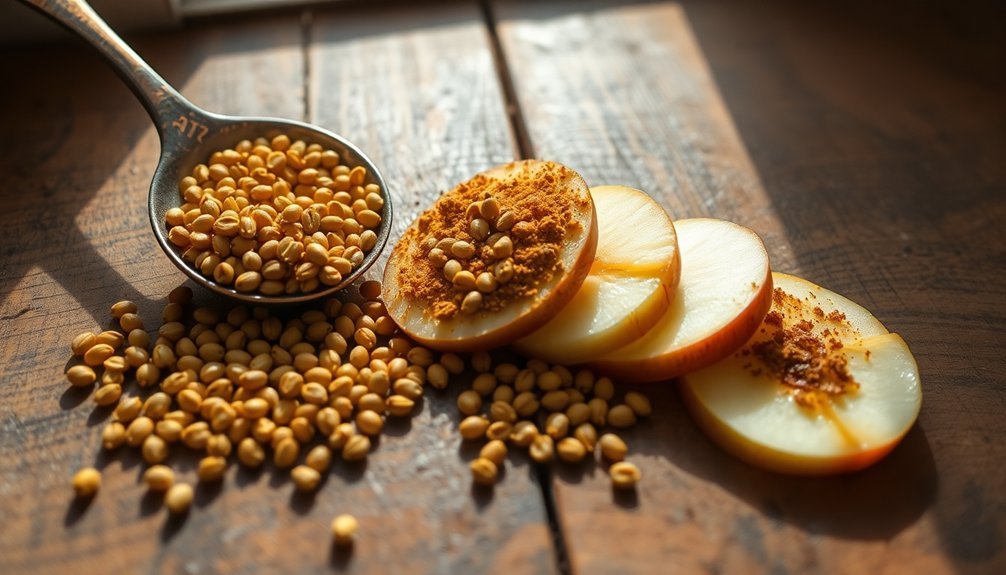
Inside mustard seeds lies a powerful arsenal of natural compounds that make them exceptional food preservatives. When these seeds come into contact with water, their glucosinolates transform into isothiocyanates, which can reduce harmful bacteria like E. coli by up to 99.999%. You'll find these protective properties particularly effective in fermented meats and bakery products.
What makes mustard seeds truly remarkable is their versatility as natural preservatives. Scientists have identified several compounds, including sinapic acid and phenolic compounds, that fight against both good and bad bacteria.
You can harness these benefits through various forms:
- Mustard Essential Oils (MEO) prevent fungal growth and stop the production of dangerous aflatoxins
- Defatted mustard seed meal provides concentrated antibacterial compounds
- Methanol extracts offer standardized preservation power
- Deheated/deodorized mustard maintains its protective properties while being flavor-neutral
You'll find mustard seeds readily available year-round at your local grocery store. Store them in an airtight container in a cool, dark place, or freeze them as ice cubes for future use.
They're not just a condiment – they're your natural ally in food preservation.
Ginger's Time-Tested Preservation Methods
Through centuries of culinary tradition, ginger has proven itself as one of nature's most versatile preservable spices. You'll find that this robust root offers multiple storage options to maintain its distinctive flavor and medicinal properties.
You can keep whole, unpeeled ginger at room temperature for up to three weeks, but you'll extend its life to a month by storing it in your refrigerator's crisper drawer in an airtight container.
If you've already peeled your ginger, wrap it tightly in plastic and refrigerate it for up to three weeks.
For long-term storage, you'll want to freeze your ginger. You can freeze it whole, cut it into portions, or puree it into a paste and freeze in ice cube trays. When frozen properly, your ginger will last three to four months, and you can grate it straight from frozen.
If you're interested in preservation through liquids, try soaking peeled ginger in brandy
Modern Applications of Ancient Spices
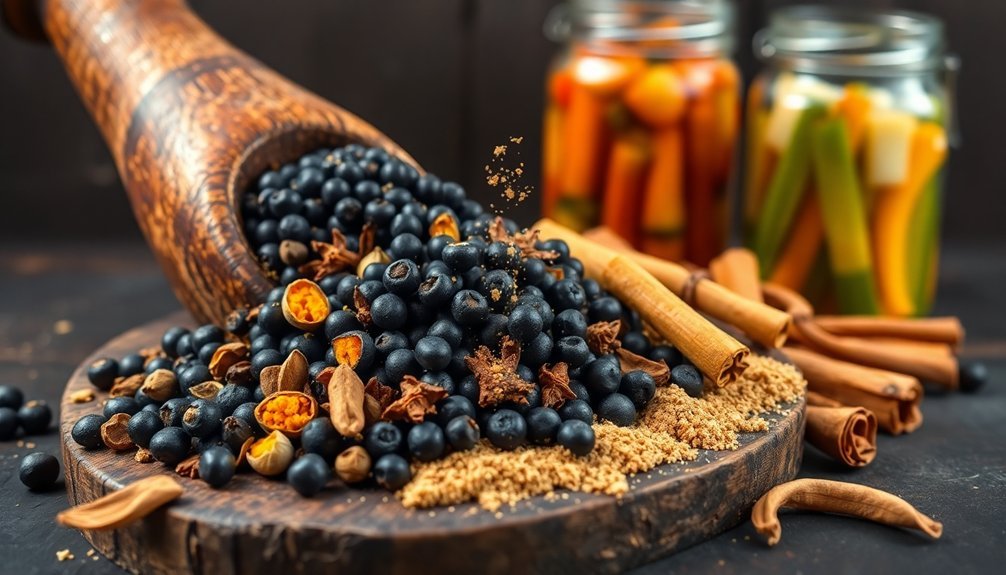
Spice-preservation techniques have evolved dramatically from ancient wisdom to cutting-edge applications in today's food industry. You'll find these time-tested ingredients being used in innovative ways, combining traditional knowledge with modern science to create clean-label preservation solutions.
Today's food manufacturers are incorporating spices into their preservation strategies through:
- Spice-infused oils and brines that extend shelf life while enhancing flavor profiles
- Polyphenol-rich solutions derived from rosemary, green tea, and other plant sources
- Fermentation processes that use spices to control beneficial microorganisms
- Natural preservative combinations that pair spices with sorbic and propionic acids
You can take advantage of these ancient preservatives in your own kitchen. Many common spices, like garlic, onion, allspice, and oregano, offer broad-spectrum antimicrobial protection against harmful bacteria such as E. coli and Salmonella.
What's particularly useful is that these spices maintain their protective properties even when heated, so you won't lose their benefits during cooking. They're especially effective when used in concentrations typical for cooking, making them both practical and reliable for everyday food preservation.
Sustainable Food Storage Solutions
You'll find that modern sustainable food storage perfectly complements the preservative power of ancient spices through eco-friendly containers made from materials like stainless steel, platinum-grade silicone, and Tritan copolyester.
These containers not only keep your spices fresh and potent but also honor traditional storage methods with their non-toxic, chemical-free construction that prevents bacterial growth and contamination.
Eco-Friendly Spice Storage Containers
In the quest for sustainable food storage, eco-friendly spice containers have emerged as essential tools for mindful home cooks.
Today's market offers several sustainable options that don't just store your spices but actively contribute to reducing environmental impact.
You'll find these innovative containers crafted from various eco-conscious materials:
- Gneiss Spice's glass and metal containers eliminate plastic while offering personalization through hand-stamped names, perfect for bulk spice shopping.
- INKA World's Tritan containers boast impressive sustainability credentials with Cradle to Cradle Bronze certification and minimal production waste.
- ECOlunchbox's stainless steel options feature etched tare weights, making bulk purchases seamless.
- Bamboo Switch combines natural bamboo construction with practical magnetic closures, all shipped plastic-free.
Each option provides unique benefits for your spice storage needs.
If you're looking for versatility, Stasher's platinum-grade silicone bags offer freezer-safe storage, while INKA World's containers are microwave and dishwasher safe.
For longevity, consider ECOlunchbox's non-porous stainless steel or Gneiss Spice's durable glass construction.
These containers aren't just storage solutions – they're investments in sustainable kitchen practices that help reduce single-use packaging waste.
Preserving Traditional Storage Methods
Traditional storage methods have stood the test of time, proving that sustainable food preservation doesn't require modern technology. You'll find that these ancient techniques rely on natural materials like clay, brass, and copper, which not only preserve food effectively but also enhance its nutritional value.
| Method | Benefits | Applications |
|---|---|---|
| Clay Storage | Natural cooling, moisture control | Storing vegetables, grains |
| Copper Vessels | Antimicrobial properties, mineral enrichment | Water storage, liquid preservation |
| Brass Containers | Long-lasting, prevents oxidation | Spice storage, dry goods |
You can adopt these time-tested preservation methods in your own kitchen. Start by replacing plastic containers with traditional alternatives like ceramic jars for pickles and brass containers for spices. These materials don't just store your food; they create an ideal environment that extends shelf life naturally. By using mesh shelves made from cane or coir, you'll guarantee proper air circulation, while jute bags provide cost-effective grain storage. These methods don't just preserve food—they're also environmentally sustainable, reducing your carbon footprint by eliminating the need for refrigeration and chemical preservatives.
Zero-Waste Spice Solutions
Building on ancient preservation wisdom, modern zero-waste storage solutions offer innovative ways to keep spices fresh while protecting our environment. Companies like Gneiss Spice combine functionality with sustainability through their magnetic glass jars that you can mount on your fridge or steel backsplash, making organization effortless while eliminating plastic waste.
You'll find several eco-friendly options that align with both traditional and modern storage needs:
- Glass spice jars that you can endlessly recycle and refill at bulk food stores, with tare weights clearly marked for easy shopping
- Stainless steel containers from ECOlunchbox that won't absorb bacteria or leach chemicals into your precious spices
- Silicone storage solutions from Stasher that you can reuse indefinitely and recycle through TerraCycle when they eventually wear out
- Beeswax wraps from SuperBee that create airtight seals using GOTS-certified organic cotton and sustainably harvested beeswax
When you're ready to refill, local natural food markets offer bulk spices that you can transfer directly into your reusable containers.
This system not only preserves your spices effectively but also supports companies that prioritize fair wages and community giving.
Frequently Asked Questions
How Long Can Spice-Preserved Foods Be Safely Stored at Room Temperature?
You can store properly sealed spice-preserved foods at room temperature indefinitely, but you'll want to check them monthly for quality changes. For items containing raw garlic or herbs, don't exceed 3 weeks.
Can Mixing Different Preservation Spices Create Adverse Chemical Reactions?
Yes, you'll need to be cautious when mixing preservation spices. They can trigger oxidation, alter pH levels, and create enzymatic reactions that might affect your food's safety and flavor profile negatively.
Which Spices Work Best for Preserving Specific Types of Meat?
You'll want salt as your base for all meats, then add black pepper and garlic for red meats, cumin and fennel for poultry, and paprika with coriander for cured meats and sausages.
Do Different Climates Affect the Preservation Capabilities of Spices?
Yes, you'll find that climate notably affects spices' preservation power. Spices grown in stable weather maintain stronger antimicrobial properties, while those from regions with extreme weather patterns may have reduced preservation effectiveness.
How Do Traditional Spice Preservation Methods Compare to Modern Refrigeration?
You'll find traditional spice preservation methods like drying and salting are more cost-effective and energy-efficient than refrigeration, though modern cooling offers better consistency and longer shelf life for commercial storage needs.
In Summary
You'll find these ancient spices are more than just flavor enhancers – they're your natural allies in fighting food spoilage. Whether you're using cloves, black pepper, salt, mustard seeds, or ginger, you're tapping into centuries of proven preservation methods. By incorporating these time-tested spices into your food storage practices, you're choosing a sustainable, chemical-free way to keep your food fresh longer.