
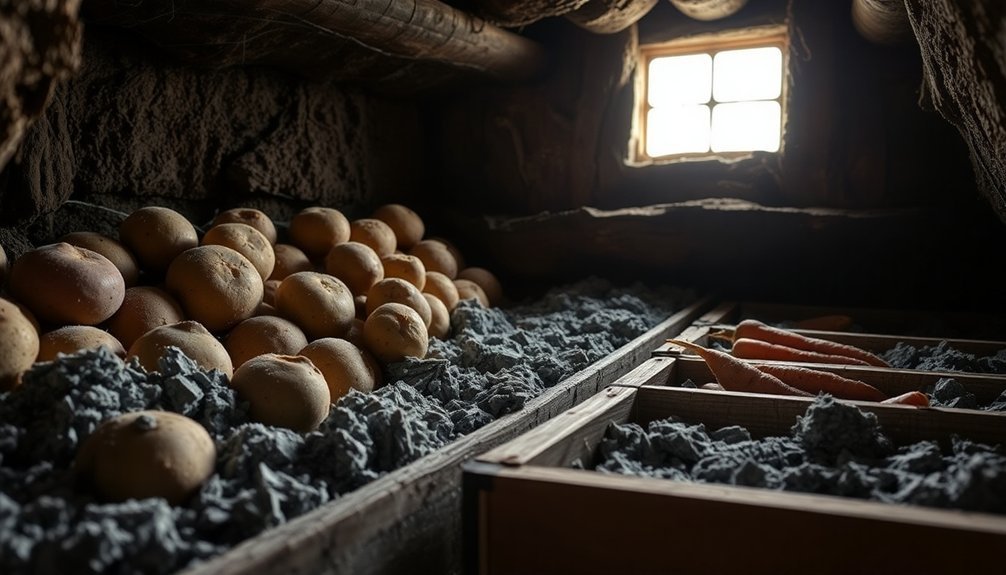
You'll find wood ash to be an effective natural preservative for root vegetables in seven key ways. It controls moisture by creating protective layers between vegetables, regulates temperature through insulation, and maintains ideal humidity levels around 90-95%. Wood ash's alkaline properties deter pests like slugs and snails while preventing bacterial growth. It creates stable air pockets when layered with straw or newspaper, extending shelf life by 3-6 months. You can use it in root cellars, clamps, or storage containers to preserve vegetables through winter. Plus, it's chemical-free and readily available. Discover how these preservation methods can transform your vegetable storage strategy.
Natural Moisture Control Methods
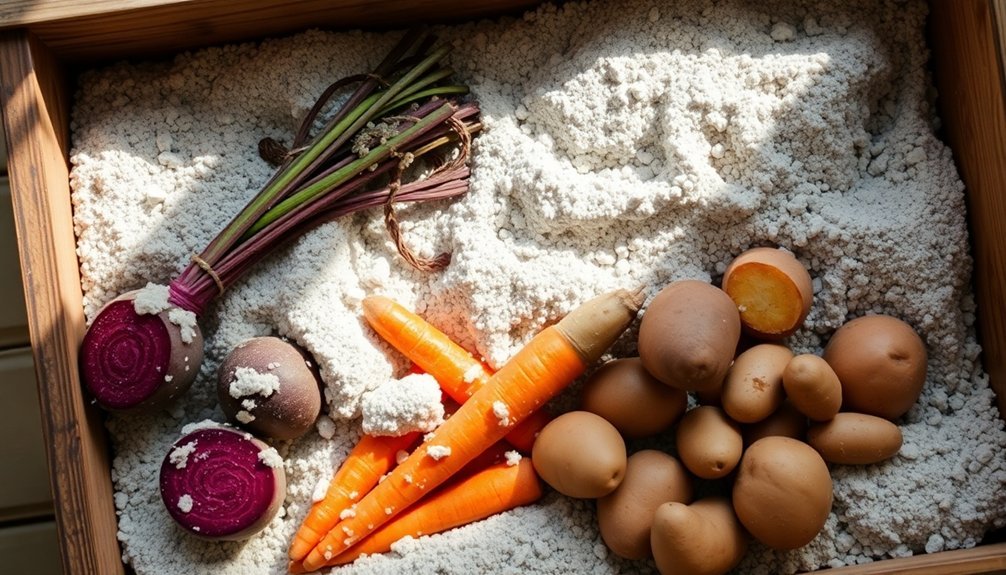
Before storage, clean your vegetables and make certain they're slightly wet – but avoid mixing different types in the same container, as each has unique moisture requirements.
You'll want to check regularly for any signs of rot and remove affected vegetables promptly.
Remember to cut off attached greens, as they continue to draw moisture from the roots.
For best results, store your vegetables in a cool, well-ventilated space where you can monitor and adjust humidity levels as needed. Traditional salt preservation methods can help maintain optimal moisture levels while preventing bacterial growth.
Root Cellar Storage Techniques
You'll achieve the best results in your root cellar by creating distinct layers using clean wood ash between rows of vegetables, which helps control moisture and prevents direct contact between items.
A well-designed root cellar requires proper air circulation to prevent mold growth and maintain ideal storage conditions.
Maintaining consistent temperatures between 32-40°F and humidity levels of 90-95% is essential for preserving your root vegetables through careful monitoring and ventilation adjustments.
To maximize storage life, wrap individual vegetables in newspaper before layering them with wood ash, and check weekly for any signs of spoilage or moisture issues.
Layering Methods for Longevity
Proper layering techniques in root cellars can mean the difference between vegetables that last through winter and those that spoil prematurely.
You'll need to choose between soil, wood shavings, or straw-based methods for ideal preservation.
If you're using soil, start with 1-2 inches of moist (not wet) soil at the container's bottom. Place your root vegetables with space between them, then cover with an inch of soil. Continue this pattern until your container is two-thirds full. The ideal storage temperature should remain at 34-40 degrees Fahrenheit.
For wood shavings, you'll want to use untreated pine shavings rather than cedar, as they contain fewer volatile oils. Line your container with shavings, then layer your vegetables so they don't touch.
You can also create an underground storage system by digging a pit and alternating layers of straw or leaves with your vegetables.
For clamp storage, build a pyramid with your largest roots at the bottom. Cover with straw, then soil, leaving a straw chimney for ventilation.
Remember to remove all top growth from your vegetables before storage to prevent rotting, and make sure each layer is properly insulated to maintain consistent conditions.
Temperature and Humidity Control
Install vents or fans to control airflow and remove ethylene gas produced by stored produce.
Don't overcrowd your storage space – use wooden crates or wire mesh baskets to allow air movement between containers.
By storing vegetables in separate, well-ventilated containers, you'll prevent unwanted odors and maintain ideal freshness.
Remember to monitor conditions regularly, as consistent temperature and humidity levels are essential for long-term storage success.
Layering For Extended Shelf Life
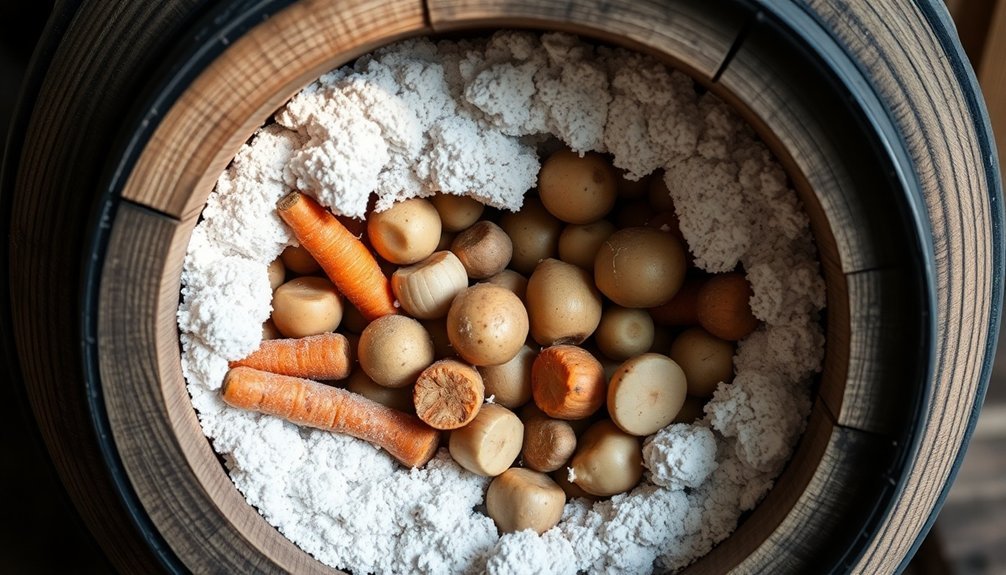
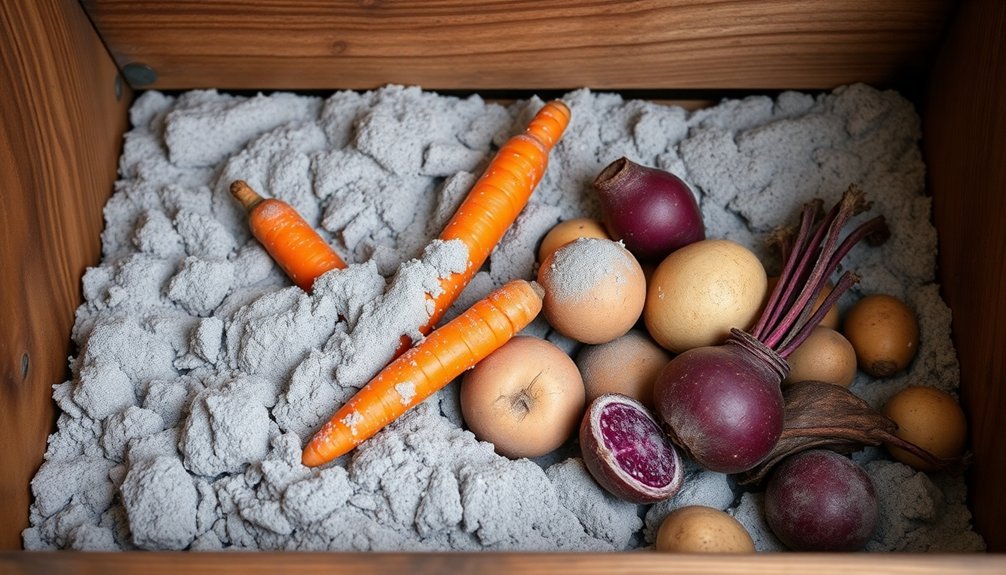
Creating an effective layering system is essential for extending the shelf life of your root vegetables with wood ash. You'll need to start with a suitable container like a wooden box or woven basket, lining it with paper to prevent direct contact between your vegetables and the ash.
For ideal preservation, use carefully sifted wood ash that's free of debris and sharp particles.
The layering process follows these critical steps:
- Start by spreading a 1.5-inch layer of cool, sifted ash at the bottom of your container.
- Place your vegetables in a single layer with stem ends facing down.
- Cover with another thin layer of ash before adding the next row of vegetables.
When you're layering, remember to maintain the ratio of 1.5 kg of ash per 1 kg of vegetables for the best results.
While your vegetables may show some natural changes like skin wrinkling over time, this method can preserve them for up to six months when properly stored in a cool, dark place.
The ash considerably reduces decay rates and helps maintain the internal quality of your produce, keeping the pulp juicy despite some physiological weight loss.
Pest Prevention During Storage
While storing root vegetables, you'll want to create a protective barrier by sprinkling wood ash around your storage containers to naturally deter slugs and snails from invading.
You can maximize pest prevention by layering wood ash between rows of vegetables, letting the ash's potassium salts and abrasive properties work against soft-bodied insects and mites.
For the best results, you'll need to maintain dry conditions and reapply the ash if moisture develops, ensuring continuous protection throughout the storage period.
Slug Barrier Protection Methods
Wood ash serves as a highly effective natural barrier against slugs, forming a protective ring around stored vegetables that deters these destructive pests. You'll find oak and beech wood ash particularly effective, with trials showing they reduce plant damage to just 10% compared to untreated vegetables.
To maintain protection, you'll need to reapply the ash after rain or strong winds since its effectiveness diminishes when wet.
Here's how to maximize wood ash's slug-repelling properties:
- Sprinkle a light, even ring of dry ash around your stored vegetables, ensuring it doesn't directly contact the produce.
- Store your protective wood ash in a covered metal container to prevent moisture contamination and fire hazards.
- Combine the ash barrier with other natural deterrents like copper strips or seaweed for enhanced protection.
You can strengthen your slug defense by integrating wood ash into a broader protection strategy.
When you're storing root vegetables, maintain short grass around the storage area and consider morning watering patterns to complement the ash barrier.
Remember that while wood ash is effective, it's not suitable for acid-loving produce, so adjust your storage strategy accordingly.
Natural Pest Repellent Properties
Anyone seeking natural pest control during root vegetable storage will find wood ash to be a potent ally. You'll find it particularly effective against soft-bodied pests like slugs and snails that might damage your stored produce. The ash works by drying out and irritating insects' bodies, making it difficult for them to move and feed on your vegetables.
When you're storing root vegetables, sprinkle a thin protective layer of wood ash around them. The ash contains potassium salts that repel and kill various small insects, while its alkaline properties can suffocate many pests.
You'll need to be strategic with your application, as the ash loses its effectiveness when wet and must be reapplied after moisture exposure. For best results, you'll want to store your wood ash in a covered metal container and use it sparingly to avoid nutrient imbalances.
While it's highly effective against crawling insects and soft-bodied pests, don't rely on it for hard-shelled or flying insects. Remember to avoid direct contact between the ash and your vegetables, as this could cause burning. You'll get the best protection by creating a barrier around your stored produce rather than applying it directly.
Root Storage Layer Technique
Beyond pest control with wood ash, proper layering techniques create an additional defense against unwanted insects while maintaining ideal storage conditions for your root vegetables.
You'll want to start by selecting a cool, dark storage area with humidity levels above 70%, preferably in an unheated cellar or basement. Make sure you're keeping your storage containers away from water sources and animal areas to prevent contamination.
For best preservation, follow these essential layering steps:
- Cover your root vegetables with a ¼-inch layer of sawdust, newspaper, or similar organic material to prevent skin wrinkling and moisture loss.
- Pack the vegetables in layers using dry materials like sand or sawdust, ensuring there's enough space between items for proper air circulation.
- Top everything with a thick layer of straw or hay for insulation against freezing temperatures.
You'll need to monitor your stored vegetables monthly for any signs of rot or decay.
If you're using wood ash in your storage system, keep it in metal containers with tight-fitting lids, and maintain a safe distance from combustible materials.
Remember to store your containers in an area that's protected from moisture while maintaining proper ventilation to prevent mold growth.
Temperature Regulation With Ash
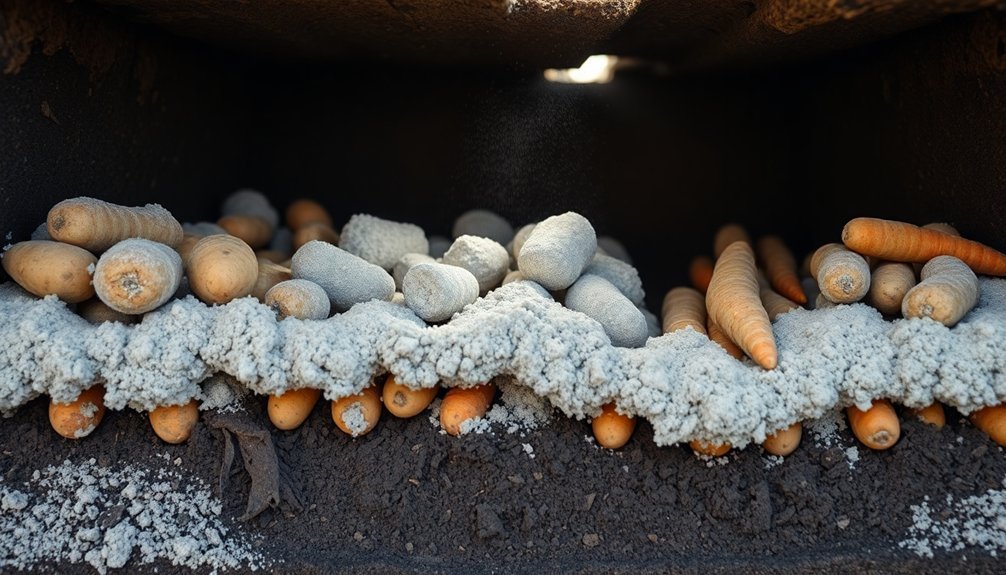
Using ash for temperature control is one of the most effective traditional methods for preserving root vegetables. When you layer wood ash correctly, you'll create a stable temperature environment that can preserve vegetables for up to three to six months. The ash acts as an insulating barrier, protecting your vegetables from direct contact with cold ground and preventing damaging freeze-thaw cycles.
You'll need to maintain proper storage conditions to maximize the ash's effectiveness. First, sift the ash to remove debris and sharp particles, then create a layer thick enough for insulation but not so dense that it blocks air circulation.
You'll want to keep your storage container in a cool, dry place and guarantee it's properly sealed to maintain the stable environment.
The ash's moisture-controlling properties work alongside its temperature regulation. It absorbs excess moisture, creating a dry environment that inhibits mold and fungi growth. The ash's alkaline nature also helps stabilize pH levels, deterring pests and pathogens.
Remember to keep your ash dry during storage, as wet conditions can leach out potassium and compromise its preservative qualities.
Traditional Root Vegetable Preservation
Traditional preservation methods for root vegetables extend far beyond wood ash applications.
You'll find several time-tested techniques that have proven effective for maintaining your harvest throughout the winter months. Canning and fermentation stand out as particularly reliable methods, with canning requiring sterilized jars and proper sealing techniques, while fermentation creates probiotic-rich preserved foods.
When preserving root vegetables traditionally, you'll want to take into account these essential methods:
- Lacto-fermentation – Creates tangy, nutritious preserved vegetables while enhancing their nutritional content through beneficial bacteria.
- Pressure canning – Required for plain root vegetables due to their low acidity levels, ensuring safe long-term storage.
- Pickling – Combines vinegar's acidity with proper canning techniques for reliable preservation.
Your success with these methods depends largely on proper preparation.
Don't wash your vegetables before storage; instead, let them dry in the sun to remove excess dirt and encourage dormancy. Remember to cut off tops and stems from vegetables like carrots before preservation.
Select only unblemished, firm specimens for preservation, as damaged vegetables won't store well regardless of the method you choose.
Safe Storage Container Selection
Selecting the right storage container for wood ash preservation starts with three essential factors: material safety, proper ventilation, and moisture control.
You'll want to choose wooden containers, cardboard boxes, or woven baskets, as these materials allow proper airflow while maintaining the right humidity levels. Metal containers should be avoided for vegetable storage, though they're perfect for storing the ash itself before use.
If you're using a cardboard box, line it with paper for added protection against moisture. Untreated wood makes an excellent choice for building storage bins, as it's naturally breathable and won't introduce harmful chemicals to your vegetables.
Whatever container you select, confirm it's clean, dry, and properly sized for your needs.
Before filling your container, you'll need to prepare it properly. Line the bottom and sides with paper to prevent direct contact between the vegetables and ash. If you're not using ash, you can substitute with sawdust or straw.
Remember to place your container in a cool, dark area with temperatures between 35-40°F and humidity above 70% to maintain ideal preservation conditions.
Frequently Asked Questions
Can Wood Ash From Barbecues Be Used to Preserve Root Vegetables?
You can use ash from lumpwood charcoal barbecues to preserve root vegetables, but don't use ash from briquettes or treated timber as they're potentially harmful and lack the beneficial properties needed for preservation.
How Long Should Wood Ash Be Aged Before Using for Preservation?
You shouldn't use wood ash for food preservation at all. Based on the background information, there's no documented method for preserving foods with aged wood ash, and it's mainly beneficial for soil amendment.
Does Mixing Wood Ash With Sand Improve Its Preservation Qualities?
You won't gain significant preservation benefits by mixing wood ash with sand. Research shows no clear advantage over using either material alone. It's better to stick with one method for simplicity and consistency.
Can Wood Ash Preservation Affect the Taste of Root Vegetables?
You'll find that wood ash preservation typically won't affect your root vegetables' taste considerably. When properly sifted and applied, the ash mainly acts as a desiccant while keeping your vegetables fresh and flavorful.
What Signs Indicate Wood Ash Has Lost Its Preservation Effectiveness?
You'll notice your wood ash isn't preserving well when it becomes damp, clumpy, or moldy. Watch for vegetable decay, unpleasant odors, and ash discoloration. If the ash's dry, powdery texture changes, it's lost effectiveness.
In Summary
You'll find wood ash to be an invaluable resource for storing your root vegetables long-term. By implementing these seven methods, you're not just preserving food – you're practicing a time-tested technique that's both sustainable and effective. Remember to keep your ash dry and store it properly between uses. Start with small batches to perfect your technique, and you'll soon master this traditional preservation method.



Leave a Reply