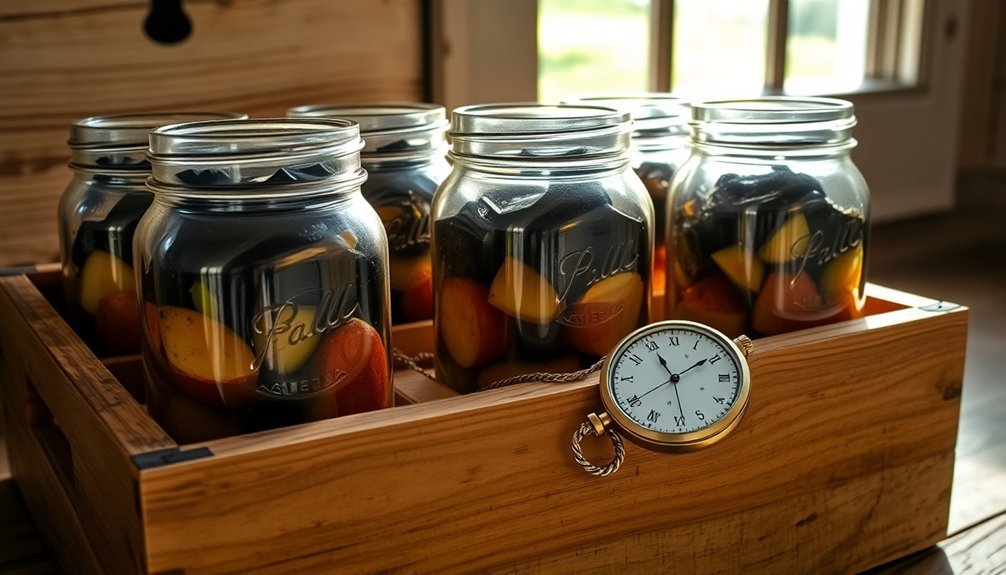
You can safely preserve foods using wood ash for up to six months when following proper methods. Use only hardwood ash from oak, maple, or hickory, and guarantee it's completely dry and sifted. Store your preserved items in stoneware or earthenware containers with loose-fitting lids, maintaining temperatures between 5°C-60°C in a cool, dark place. Layer ash uniformly at 1.5 inches thick for complete coverage, using 1.5 kg of ash per kg of food. Watch for signs of spoilage like wrinkling, softening, or color changes. Understanding the specific requirements for different food types will help maximize your preservation success.
Understanding Wood Ash Properties
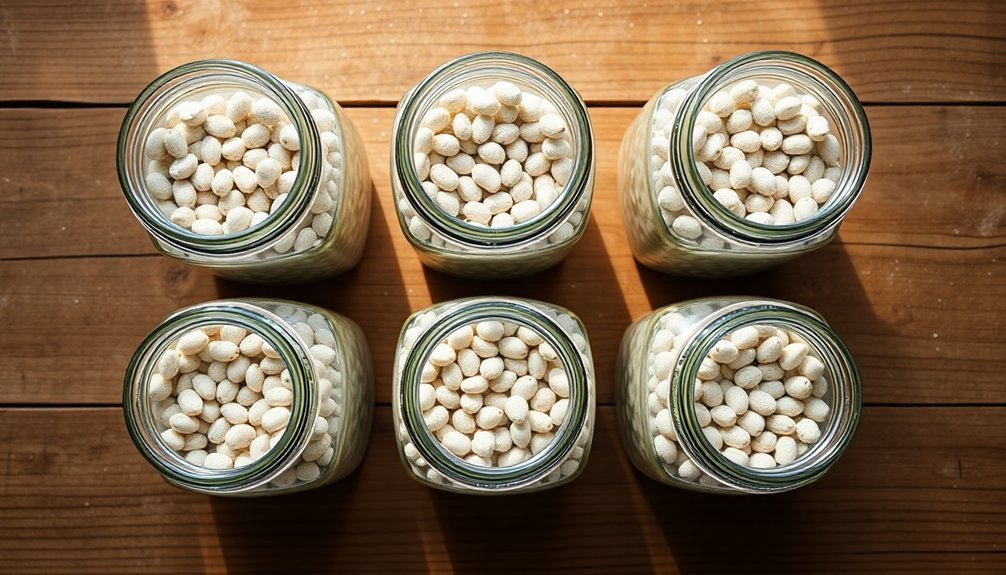
When you're working with wood ash, you'll need to understand its soluble nature. The potash content dissolves quickly when exposed to moisture, so it's crucial to keep your ash dry before use.
For best preservation results, you'll want to sift the ash to remove larger particles, ensuring even distribution around your food items. Research shows that using 1.5 kg of ash per kilogram of tomatoes provides optimal preservation results.
Remember that while wood ash's high pH makes it an excellent preservative, this same property means you'll need to handle it carefully to avoid skin irritation or chemical burns.
Safe Wood Selection Guidelines
Selecting the right wood source for your ash is essential to food preservation safety. You'll need to focus exclusively on hardwoods like maple and oak, as these provide the safest and most effective preservation environment. Using wood that is free from harmful VOCs or solvents ensures a safer preservation process.
Don't use ash from softwoods, as their resins can contaminate your food and compromise the preservation process.
When choosing your wood source, make certain you're avoiding any treated lumber, plastics, or hazardous materials that could release harmful chemicals into your ash.
Critical safety guidelines for wood selection:
- Choose well-seasoned hardwoods that haven't been exposed to chemicals, paints, or preservatives
- Verify your wood source is free from mold, fungus, or pest infestations
- Avoid collecting wood from areas near industrial sites or heavily polluted regions
You'll want to let your fire burn completely until you're left with cool, white ash.
Remember that the quality of your ash directly impacts the safety and effectiveness of your food preservation. By carefully selecting your wood source and following these guidelines, you'll create a preservation environment that maintains food quality while preventing contamination from harmful substances.
Essential Storage Container Requirements
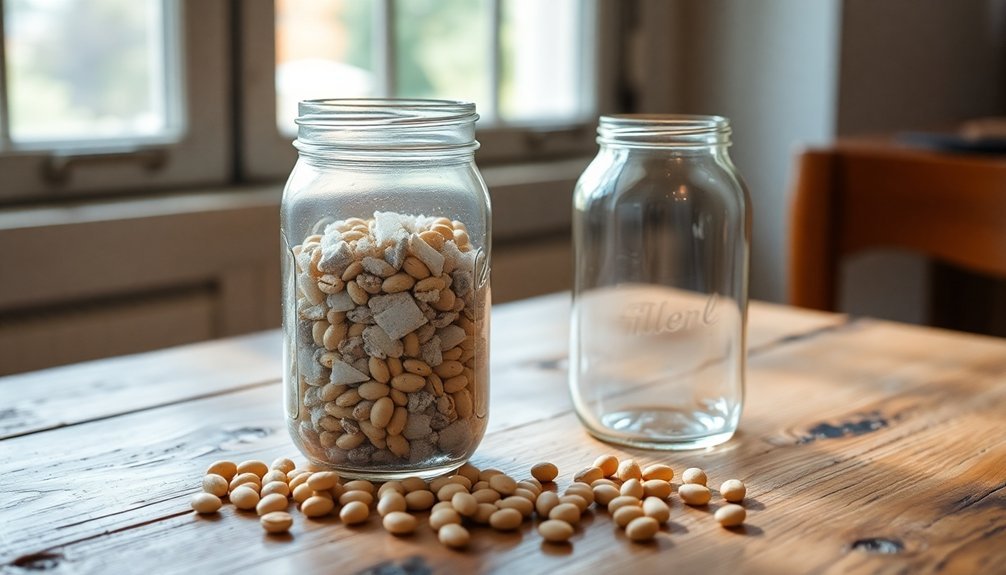
You'll need to choose storage containers made from stoneware, earthenware, or ceramic materials, as these won't react with wood ash like metal or plastic containers might.
Your container must seal properly to control air exposure while providing minimal ventilation to prevent moisture buildup.
It's essential to maintain the right balance of air circulation by using containers with proper lids or covers, ensuring the wood ash can effectively preserve your food. Based on research findings, proper storage containers can help maintain food quality for up to 6 weeks of preservation.
Container Material Types
The success of wood ash preservation largely depends on choosing the right container material for your storage needs. Earthenware and stoneware containers are your best options, as they provide a non-reactive environment and have been traditionally used for this preservation method.
You'll need to store these containers in a cool, dark place to maintain food viability.
While other materials exist, they're not all suitable for wood ash preservation. Natural materials like bamboo and wood containers, though sustainable, won't give you an airtight seal.
Metal containers should be avoided for direct food storage due to their reactivity with wood ash, though they're fine for storing the ash itself.
- Earthenware and stoneware containers offer ideal preservation conditions and don't react with the ash or food
- Alternative methods like cardboard boxes or ground holes aren't reliable and won't provide consistent results
- Natural containers require food-grade mineral oil treatment but are only suitable for short-term storage
For best results, stick with traditional earthenware or stoneware containers. They'll provide the controlled environment you need for successful wood ash preservation while ensuring your food remains safe and properly preserved.
Sealing Techniques Matter
Having the right container is just the start – proper sealing techniques will determine the success of your wood ash preservation method. You'll need to focus on creating a balance between air exchange and protection, using a cover that's loose enough to prevent an airtight seal but secure enough to keep the ash undisturbed.
Don't use plastic wraps or covers, as they'll trap unwanted moisture that can lead to decay. Instead, opt for a loose-fitting lid that allows minimal air circulation. The ash itself serves as an additional sealant when you layer it properly on top of your food items.
You'll want to create uniform ash layers, typically 1.5 inches thick, ensuring complete coverage with no exposed areas. Start by sifting the ash to remove any sharp particles, then layer it alternately with your food items until the container is full.
Place your sealed container in a cool, dry, and dark location, preferably on a cement or brick surface away from wooden materials and combustible items. Remember to check regularly for signs of moisture or mold, and avoid unnecessary disturbance of the ash layers to maintain ideal preservation conditions.
Air Circulation Control
Proper air circulation stands as an essential factor when selecting and setting up your wood ash storage containers. You'll need to guarantee air flows around all sides of your container while maintaining the delicate balance that prevents excessive moisture buildup.
Choose wooden, cardboard, or woven basket containers that allow minimal air leakage while avoiding plastic materials that can trap moisture and accelerate food decay.
Position your storage container to maximize airflow by:
- Elevating it off the ground using a platform or hanging system
- Keeping it away from walls to allow air movement on all sides
- Using a loose-fitting cover that permits air exchange without disturbing the ash layers
Your storage area's ventilation plays an important role in preservation success. Place containers in well-ventilated spaces with temperatures between 15-25°C, steering clear of humid areas and direct sunlight.
Don't disturb the internal microclimate once you've established it, as this can compromise the preservation process. Remember to maintain at least 1.5 inches of ash between food layers while guaranteeing adequate spacing for air movement.
This careful balance of airflow control helps prevent spoilage while maximizing your food's preservation potential.
Maximum Storage Times Per Food
Food's longevity in wood ash varies considerably by type, with tomatoes lasting up to six months and hard cheeses maintaining freshness for roughly three months.
You'll find that tomatoes offer the longest confirmed preservation time among the documented foods, provided you're using newly picked, unblemished fruit and properly sifted ash in your storage container.
When preserving hard cheese, you can expect about three months of storage time if you're maintaining the proper conditions with 1 to 1.5 inches of ash coverage in a cool, dark environment.
While both eggs and meat can be preserved using wood ash methods, specific storage durations aren't well documented in historical records, though they're known to be effective preservation techniques.
If you're planning to preserve eggs, you'll want to store them unwashed in your ash-filled container. For meat preservation, particularly using hickory ash as the Cherokee did, you'll need to guarantee complete coverage in your storage vessel.
Remember that regardless of the food type you're preserving, you must maintain cool, dark storage conditions and use properly sifted ash to achieve the maximum storage times.
Ideal Environmental Storage Conditions
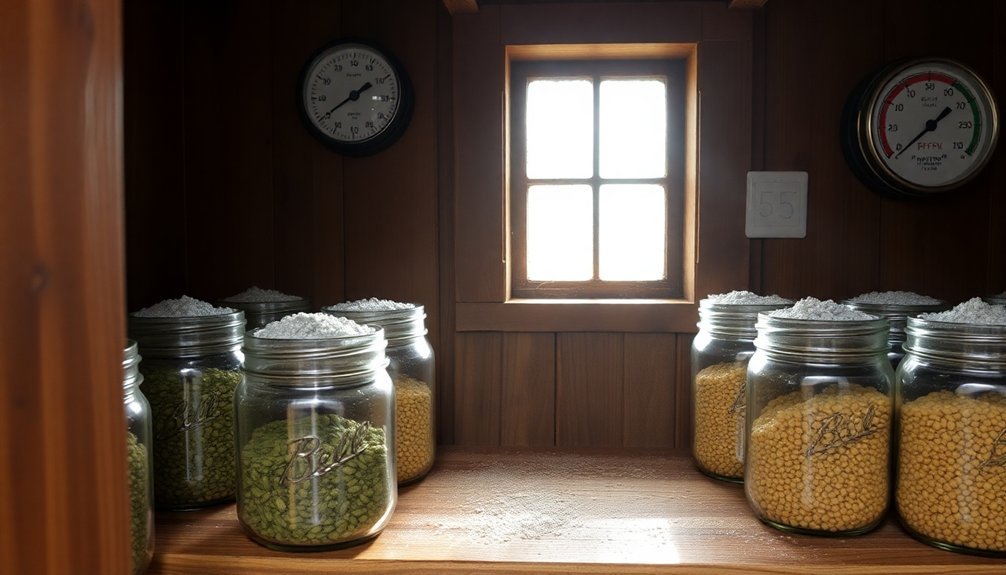
Success with wood ash preservation hinges on creating ideal storage conditions. You'll need to focus on proper location, temperature control, and moisture management to guarantee your preserved foods remain safe and edible.
Start by selecting a storage spot at least three feet away from any combustible surfaces, preferably on a cement or brick slab outdoors or in a cool, dark basement.
Temperature control is vital for preventing spoilage. Keep your preserved foods away from the danger zone (5°C-60°C) and maintain consistent cool temperatures throughout storage. Avoid placing containers near heat sources or in direct sunlight, which can lead to temperature fluctuations and accelerate food decay.
Key considerations for proper storage include:
- Using covered metal containers to protect against moisture and contamination
- Maintaining proper ventilation while keeping a dry environment
- Storing raw foods below cooked foods to prevent cross-contamination
You'll need to monitor your storage conditions regularly. Check for any signs of moisture buildup, which can compromise both the wood ash and preserved food.
Remember to sift your ash before use, removing any large charcoal pieces to guarantee fine, dry consistency. Keep your storage area clean and sanitized to prevent contamination.
Signs of Preservation Failure
Even with ideal storage conditions, you'll need to watch for specific indicators that signal when wood ash preservation isn't working. Pay attention to physical changes like skin wrinkling, though wrinkled tomatoes may still have juicy pulp inside. If you notice softening, bruising, or significant shrinkage, your preservation method is likely failing.
Look for signs of biochemical deterioration, which aren't always visible. While wood ash storage should maintain sugar content and pH levels, research shows it mightn't be more effective than sand storage. If you spot uneven ripening or color changes from vibrant to pale, your tomatoes are likely spoiling.
You'll want to check regularly for surface problems that indicate preservation failure. Watch for cracks, slime, or liquid leakage, as these are clear signs of bacterial or fungal infection. A soggy or mushy texture means the tomatoes aren't suitable for consumption anymore.
Storage issues can compromise preservation effectiveness. Make sure you're using clean ash without debris, laying it properly around the tomatoes, and protecting storage from moisture, insects, and rodents. If you notice any of these problems, your preservation system needs immediate attention.
Traditional Wood Ash Storage Methods
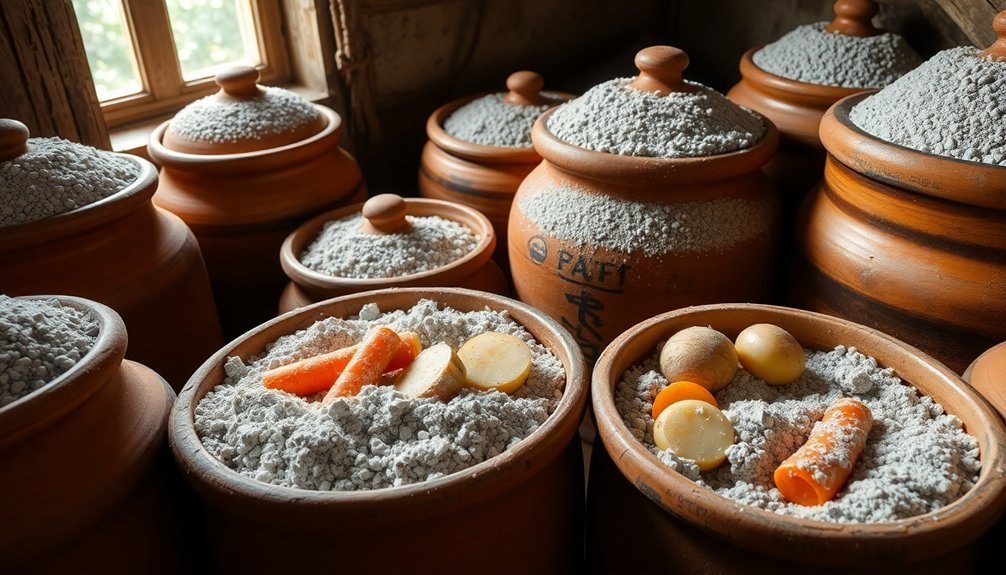
Mastering traditional wood ash storage starts with choosing the right containers and materials. You'll want to use stoneware or earthenware crocks as your primary storage vessels, and make sure they've proper lids or can be covered with plates or stones.
Don't use metal containers, as they can react with the wood ash and compromise your preservation efforts.
When preparing your storage system, you'll need properly sifted hardwood ash from sources like oak, maple, or hickory. Here are the key storage steps to follow:
- Layer the bottom of your crock with 1.5 inches of cooled, sifted ash
- Place your hard cheese in the center, ensuring it doesn't touch the sides
- Cover completely with another 1.5 inches of ash on all sides
Your storage location matters considerably. Place your crock in a cool, dark cellar where you can maintain consistent preservation conditions.
Check your stored items periodically for any signs of spoilage. While properly stored items can last for years, it's crucial to protect them from moisture, air, and pests.
Remember to avoid cardboard containers for long-term storage, as they don't provide adequate protection against environmental factors.
Frequently Asked Questions
Can Wood Ash Preserved Food Be Safely Consumed During Pregnancy?
You can safely eat wood ash-preserved food during pregnancy if it's properly preserved with clean hardwood ash. However, you'll want to inspect it carefully for spoilage and check with your healthcare provider first.
How Do You Properly Dispose of Used Wood Ash After Preservation?
You'll need to cool the ashes completely, seal them in a metal container, and either dispose in outdoor trash, bury 12 inches deep away from water sources, or add sparingly to compost while wearing protective gear.
Does Wood Ash Preservation Affect the Nutritional Value of Foods?
You'll find that wood ash preservation doesn't greatly impact your food's nutritional value. It actually helps maintain nutrients by preventing spoilage and decay, without transferring harmful substances or altering the food's composition.
Can Wood Ash Preserved Foods Be Used in Cooking Without Washing?
While you can cook with wood ash preserved foods without washing, it's best to rinse them first. You'll remove any excess ash and guarantee better flavor, though small amounts of ash aren't harmful if consumed.
Are There Religious or Cultural Restrictions Regarding Wood Ash Preservation Methods?
You won't face religious or cultural restrictions when using wood ash preservation. It's widely accepted across different faiths, including Christianity, Islam, and Judaism, and is traditionally practiced in many cultures without restrictions.
In Summary
You'll find wood ash preservation to be a reliable traditional method when you follow proper guidelines. Store your preserved foods in clean, dry containers using only hardwood ash at appropriate ratios. Always monitor for signs of spoilage and stick to recommended storage times. If you're uncertain, err on the side of caution. Remember, while effective, wood ash preservation isn't a substitute for modern food safety practices.


Leave a Reply