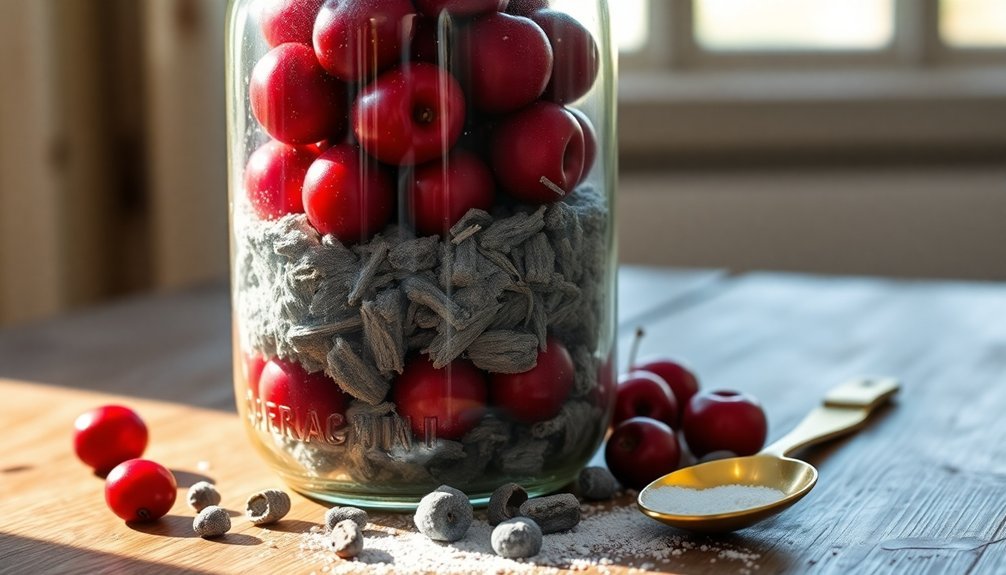
Wood ash preservation offers you a time-tested, chemical-free method to store food long-term without modern refrigeration. To get started, you'll need clean wood ash sifted through hardware cloth and appropriate storage containers like stoneware or earthenware. You can preserve hard cheeses, tomatoes, and eggs by completely covering them with a 1-1.5 inch layer of ash. Store your containers in a cool, dry place like a cellar or basement for best results. When done properly, foods like tomatoes can last 5-6 months, while eggs can keep for nearly a year. Understanding the right techniques and ratios will help you master this ancient preservation method.
What Wood Ash Does
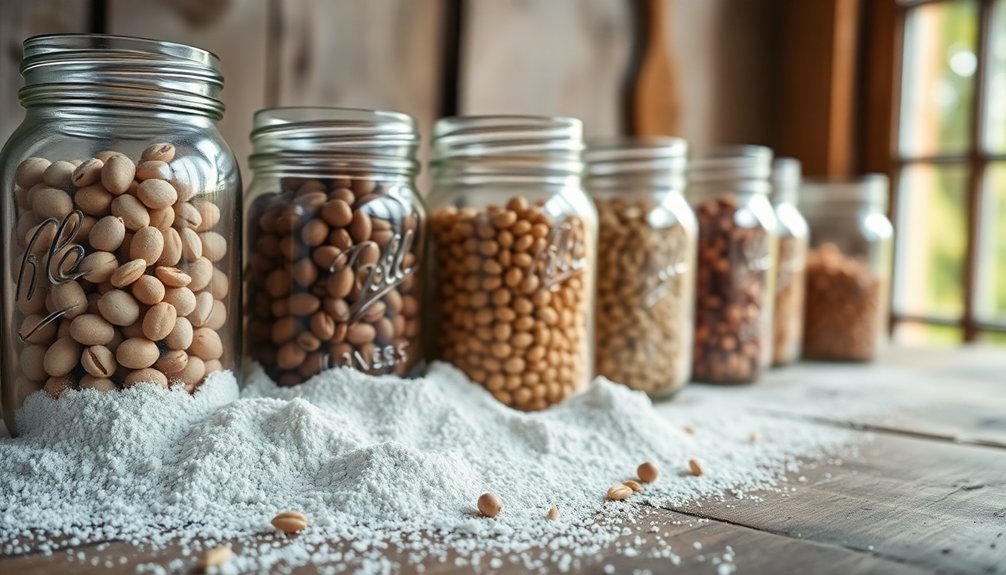
Through its unique chemical composition, wood ash serves as a powerful natural preservative that can greatly extend the life of various foods. When you're storing items like tomatoes, eggs, or cheese, wood ash creates an environment that considerably reduces decay and keeps pests away. Research shows that tomatoes treated with 1.5 kg of ash demonstrated only 20% decay compared to untreated samples. The high calcium content (25-50%) and presence of potassium (5-7%) work together to maintain food freshness and structural integrity.
You'll find that wood ash's preservative properties come from its ability to alter the pH of stored foods, creating conditions that inhibit spoilage. It's particularly effective at maintaining the firmness and texture of food items, which helps them stay viable for months or even years.
While the ash may slightly influence the flavor of some foods, particularly meats, it's completely safe for consumption and won't introduce any toxic elements to your stored goods.
If you're using hardwood ash, you'll get better results than with softwood ash due to its higher potassium content. Remember that the ash needs to be kept in a cool, dark place to maximize its preservation effects, and you should avoid ash from treated lumber or materials containing plastics.
Preparing Your Storage Container
Proper container selection and preparation form the foundation of successful food preservation with wood ash.
You'll need to choose between a wooden container, cardboard box, woven basket, or traditional earthenware crockery. Each option works effectively as long as it can maintain cool, dark conditions for your preserved foods.
Before you begin, verify your chosen container is completely clean and dry, as any moisture can compromise the preservation process.
If you're planning to preserve larger quantities of food, you can create a storage solution by digging a hole in the ground and lining it with ash.
To prepare your container, inspect it thoroughly for any cracks, holes, or damage that could expose your food to air or moisture.
You'll want to position it in a cool, dry location like a basement or cellar before adding your food and ash. Using the basement for storage can help prevent the musty and moldy issues that can develop over time.
Once you've filled the container, seal it appropriately – use packing tape for cardboard boxes or a loose-fitting cover for other containers.
Remember to check periodically to verify your storage conditions remain stable and favorable for long-term preservation.
Safe Wood Ash Selection
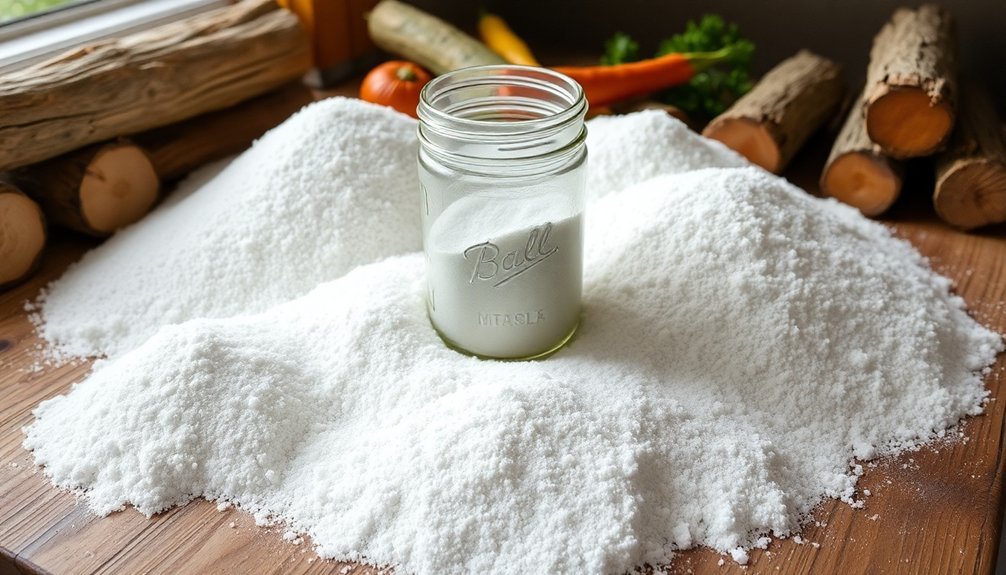
When selecting wood ash for food preservation, you'll need to focus on hardwoods like maple and oak, as they produce the most effective preservative ash.
Don't use softwoods, as their high resin content makes them less suitable for preservation. It's essential to avoid ash from treated, painted, or garbage wood since these can contain harmful heavy metals that could contaminate your food.
If you're sourcing ash from your cooking fire or wood stove, make sure it's completely free from any plastics, debris, or other contaminants. The ash needs to have a pH of 9-13 to effectively preserve food.
You'll want to sift the ash multiple times to achieve a fine, uniform texture that's free from sharp particles. Only use cool, thoroughly processed ash for your preservation projects.
When handling wood ash, always wear protective gear like gloves and a mask due to its alkaline nature.
If you're using commercial wood ash, check its analysis for nutrient and trace metal content before applying it to food.
Store your processed ash in a sealed container in a dry, cool place to maintain its preservation properties.
Remember to keep the ash away from waterways to prevent environmental impact.
Food Types and Methods
Now that you've gathered and properly processed your wood ash, selecting the right foods for preservation will determine your success.
You'll find that certain foods are particularly well-suited for this preservation method, each requiring specific techniques for ideal results.
Hard cheeses like Gruyere work well when stored in stoneware pots with 1-1.5 inches of sifted ash surrounding them. You can preserve these for up to three months in a cool, dark place.
For tomatoes, arrange them upside down and cover them completely with ash – they'll keep for up to six months, though their skin may wrinkle while the inside stays juicy.
Eggs are especially responsive to ash preservation, lasting nearly a year when properly stored. Place unwashed, crack-free eggs in ash-filled containers, making sure they don't touch each other.
If you're preserving meat, hickory ash offers both preservation and flavoring benefits. Various fruits and vegetables can also be preserved using this method, as the ash absorbs excess moisture and prevents bacterial growth.
Remember to store all ash-preserved foods in cool, dark locations and make sure they're completely covered with ash to maximize their preservation time.
Traditional Preservation Practices
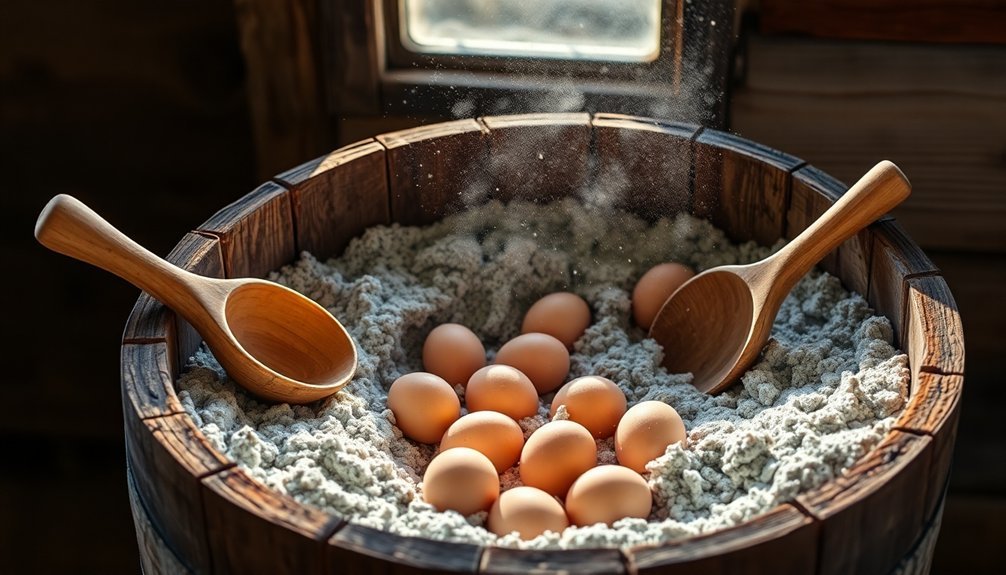
Traditional food preservation with wood ash stretches back through generations of human history, with diverse cultures developing their own effective techniques.
You'll find evidence of this method across different societies, from the Cherokee people's use of hickory ash for meat preservation to African farmers protecting their tomato harvests.
If you're following these time-tested practices, you'll need to start with the right container. While you can use cardboard boxes or ground holes, stoneware crocks are your best choice due to their non-reactive properties.
You'll want to sift your wood ash first to remove any large chunks, ensuring even coverage around your food items.
When preserving food this way, you'll need to completely surround your items with ash, which works by drawing out moisture and blocking oxygen.
The Cherokee's method of using hickory ash added flavor while preserving their meat, showing how practical needs often merged with culinary preferences.
To maintain effectiveness, you'll need to store your containers in a cool, dark place.
Storage Time and Results
You'll find that storage times for foods preserved in wood ash vary considerably, with hard cheeses lasting up to three months and some tomatoes keeping for 5-6 months under ideal conditions.
Through various studies and experiments, you can expect mixed results based on factors like the ripening stage of produce, type of wood ash used, and storage conditions including temperature and darkness.
For the best preservation outcomes, you'll need to maintain specific ratios – such as using 1.5 kg of ash per 1 kg of tomatoes – and guarantee proper storage techniques like complete food coverage and appropriate container selection.
Expected Preservation Durations
When preserving food with wood ash, you can expect different storage durations depending on the type of food and storage conditions. Both cheese and tomatoes can be preserved for up to three months when you follow the proper techniques.
For cheese preservation, you'll need to surround hard varieties with 1 to 1.5 inches of sifted wood ash, while soft and medium cheeses aren't suitable for this method.
When you're preserving tomatoes, you'll need to use 1.5 kg of ash for every 1 kg of tomatoes. You should select ripe tomatoes that aren't soft or damaged for the best results.
The success of both preservation methods depends heavily on your storage setup. You'll need to keep your preserved foods in a cool, dark place using appropriate containers like stoneware, earthenware, cardboard boxes, or woven baskets.
The wood ash's highly alkaline nature helps prevent microbial growth and keeps pests away from your stored foods. You'll find this method particularly useful if you don't have access to refrigeration.
After you're done with the preservation process, you can even repurpose the ash as fertilizer.
Quality Over Time Testing
Scientific testing of wood ash preservation reveals compelling results about storage effectiveness over time. When monitoring tomatoes stored in wood ash versus sand, researchers tracked key quality indicators including sugar content, pH levels, firmness, and carbon dioxide production.
While most physical parameters showed similar results between ash and sand storage, the most significant difference emerged in decay prevention.
You'll find the most efficient preservation using 1.5 kg of wood ash per 1 kg of tomatoes, which resulted in only 20% decay rate compared to 100% in the control group. This ideal ratio demonstrated the best balance between preservation and weight loss, though you should expect about 33.47% physiological weight loss during storage.
Throughout the storage period, researchers used HOBO® devices to maintain consistent temperature and humidity levels between treatments.
While both sand and ash showed similar results for most quality parameters, including firmness reduction and pH levels, ash's superior performance in preventing decay makes it a practical choice for long-term storage.
The testing confirms that you'll need to sift the ash thoroughly through hardware cloth to remove larger particles for best results.
Frequently Asked Questions
Can Wood Ash-Preserved Food Be Safely Consumed During Pregnancy?
Yes, you can safely eat wood ash-preserved food during pregnancy as long as you're using ash from clean hardwoods. Just make sure it's properly sifted and stored, avoiding any contaminated sources.
How Do You Test if Preserved Food Has Gone Bad?
You'll need to check for any mold, unusual odors, discoloration, or slimy textures. If you notice gas bubbles, swelling packaging, or off-putting tastes, don't consume the food as it's likely spoiled.
Will Wood Ash Preservation Affect the Nutritional Value of Foods?
When you preserve food in wood ash, you'll see minimal nutrient loss. You'll actually gain some minerals like calcium and iron, though you might lose some moisture and experience slight changes in protein quality.
Can Wood Ash From Different Tree Species Produce Different Preservation Results?
Yes, you'll find that hardwood ash typically provides better preservation due to its higher calcium and potassium content, while conifer ash's higher silica content might make it less effective for food preservation.
What Happens if Preserved Food Accidentally Gets Wet During Storage?
If your preserved food gets wet, you'll face rapid spoilage as moisture disrupts the ash's preservative properties. You'll notice increased microbial growth, pest attraction, and chemical changes that make your food unsafe to consume.
In Summary
You'll find wood ash preservation to be a time-tested method that's both effective and sustainable. When you properly select clean hardwood ash and carefully layer it with your dry goods, you can store foods like eggs, roots, and grains for several months. Remember to keep your storage containers in a cool, dry place and check them periodically. It's a practical skill that connects you to traditional food preservation methods.

Leave a Reply