

To safely preserve food with wood ash, you'll need untreated hardwood ash from sources like hickory, maple, or oak. Sift your ash 3-4 times through a fine-mesh sieve and let it cool completely for a month before use. Store the prepared ash in fire-resistant containers with tight-fitting lids in a cool, dry place. When preserving, create alternating layers of ash and food items like hard cheese, eggs, or select produce, maintaining complete coverage. Always wear protective gear and monitor for spoilage signs. Following proper techniques and safety measures will reveal wood ash's remarkable preservation potential.
Selecting the Right Wood Ash
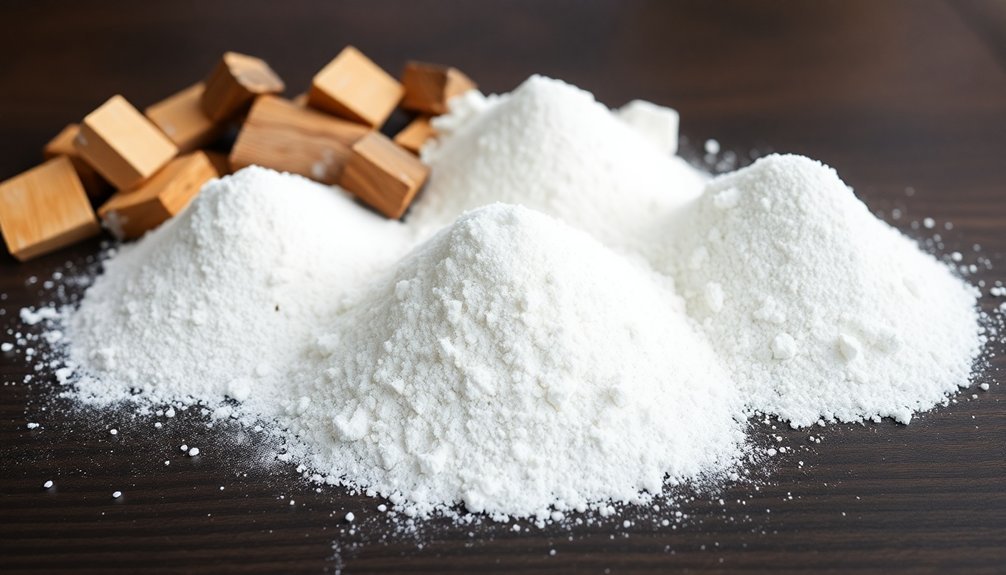
Choosing the right wood ash is essential for safe food preservation. You'll need ash derived from the complete combustion of untreated firewood, guaranteeing it's free from any contaminants or chemicals.
While different wood types produce ash with varying properties, hickory ash has proven particularly effective for meat preservation due to its distinct characteristics. Hardwoods are preferred over softwoods like pine since they don't contain resins that could affect food quality.
When selecting your wood ash source, pay attention to the soil where the trees grew. Trees from nutrient-poor soils will produce ash with lower nutrient density, which may affect its preservation capabilities.
The ash should contain 20-40% calcium, 3-10% potassium, and about 1% each of phosphorous and magnesium for peak effectiveness.
You'll want to guarantee your ash has burned completely at high temperatures, as higher carbon content indicates insufficient combustion.
Before using the ash, sift out larger pieces and any remaining charcoal to achieve uniform quality.
Store your collected ash in a covered metal container, placing it on a non-combustible surface at least three feet away from flammable materials.
Remember to verify that the ash is completely cool before storage or use to prevent any fire hazards.
Proper Ash Preparation Steps
You'll need to start by selecting wood from safe, untreated sources to produce ash suitable for food preservation.
Once you've collected the ash, run it through a fine-mesh sieve three to four times to remove debris and sharp particles.
Store your cleaned ash in a covered metal container placed on a cement slab outdoors, keeping it at least three feet from any combustible materials while it cools completely for a month. The ash's high pH levels help preserve tomatoes and other vegetables by inhibiting bacterial growth that causes spoilage.
Selecting Safe Wood Sources
Before preparing wood ash for food preservation, gathering the right type of wood is fundamental. You'll want to focus on hardwoods like maple or oak, as they produce cleaner and safer ash compared to softwoods. It's vital to avoid wood that's been chemically treated, painted, or contaminated with other materials. Similar to how raw wood is safe for food contact, properly prepared ash maintains this safety profile.
Your wood must be burned in a controlled environment to guarantee complete combustion and minimize contaminants. Don't mix different wood types during burning, and keep the fire free from trash or plastics. Once you've collected the ash, store it in a dry, cool place using wooden or cardboard containers to maintain its quality.
| Wood Type | Characteristics | Suitability |
|---|---|---|
| Maple | Dense hardwood, clean burn | Excellent |
| Oak | High-quality ash, consistent | Excellent |
| Pine | Contains resins, smoky | Avoid |
| Treated Lumber | Chemical contamination | Never Use |
| Mixed Woods | Inconsistent quality | Avoid |
Remember to monitor the burning temperature and protect your stored ash from moisture and direct sunlight. Proper wood selection and burning practices will guarantee your ash is safe for food preservation purposes.
Sifting and Cooling Process
The proper sifting and cooling process involves three essential steps that transform raw wood ash into a safe preservation medium.
First, you'll need to let your ashes cool completely for 8-10 hours after your last fire. While the stove should remain warm, it shouldn't be hot – this cooling period is vital for preventing burns and accidental ignition during handling.
Next, you'll want to sift the cooled ashes using a frame with hardware cloth or mesh screen. Choose either half-inch or quarter-inch holes in your screen to effectively separate fine ash from larger particles. You can double and offset the screens for better filtration. As you shake the sifter, the fine ash will fall through while larger pieces stay behind.
Finally, you'll need to remove any metal contamination. Run a magnetic wand or floor sweeper over your sifted ash to catch any remaining nails or metal debris. You might need multiple passes to guarantee thorough cleaning.
Once you've completed these steps, store your cleaned ash in a dry container, ready for use in food preservation. Keep it sealed and protected from moisture to maintain its effectiveness.
Ash Storage Requirements
Proper ash preparation starts with selecting the right source materials for your preservation needs.
You'll want to use ash exclusively from hardwoods like maple and oak, or verified hardwood charcoal. Never use ash from pressure-treated lumber, painted wood, or materials that might contain toxic substances or heavy metals.
You'll need to store your wood ash correctly to maintain its preservation qualities. Keep it in an unvegetated area, either on a tarp, pad, or inside a building where it won't affect soil conditions.
It's essential to protect the ash from wind and water by covering it with tarps when stored outdoors. If you're planning to stockpile ash, make sure it stays completely dry and protected from the elements.
For best results, you should use your wood ash soon after obtaining it to avoid storage complications.
When you're ready to use it, sift the ash to remove any large particles or debris. Remember to handle the ash carefully due to its high reactivity.
If you're storing multiple batches, keep them separate and clearly labeled to track their sources and processing dates.
Essential Storage Container Requirements
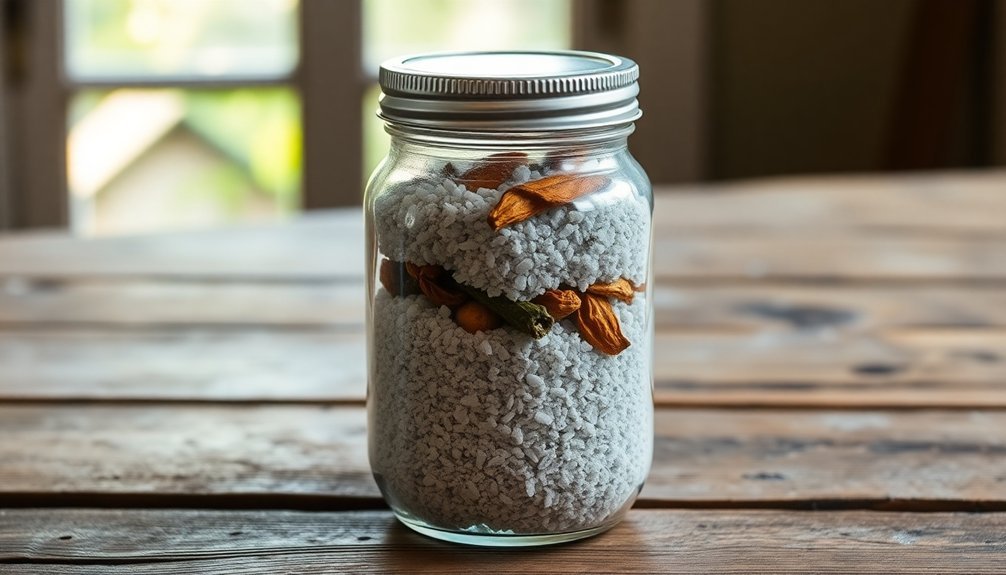
Selecting appropriate storage containers stands at the forefront of safe wood ash food preservation.
You'll need to choose fire-resistant or non-flammable materials, with stoneware and earthenware crocks being ideal choices for food storage. Don't use plastic garbage boxes, cardboard, or paper bags, as these materials aren't suitable for ash preservation.
Your container must have a tight-fitting lid to minimize air exposure and maintain the necessary cool, dark environment. Make certain it's large enough to accommodate both your food items and ash layers while preventing any disturbance of the carefully arranged contents.
Metal containers with secure lids work well for initial ash storage, while wooden or woven baskets can store certain items like tomatoes.
You'll want to place your storage container in a cool, dry location away from heat sources and flammable materials.
Don't store it near firewood piles, garages, wood decks, or under porches. Keep the container in a stable area that's protected from pests and moisture.
Remember to sift the ash before use and verify it's completely cool before adding it to your storage container.
Best Foods for Ash Storage
When storing root vegetables in wood ash, you'll need to layer them carefully with sifted ash to prevent direct contact between pieces and maintain proper preservation conditions.
Your hard cheeses can benefit from ash storage too, as it's the only dairy product suitable for this preservation method and helps maintain ideal moisture levels.
You'll get the best results by ensuring both root vegetables and hard cheeses are clean, dry, and free from damage before placing them in your ash storage container.
Root Vegetables and Storage
Root vegetables present a notable exception to wood ash preservation methods, as they're fundamentally incompatible with this storage technique. Wood ash's high alkalinity can damage these vegetables and create nutritional imbalances that could lead to toxicity. Instead, you'll need to focus on proper environmental conditions to maintain their freshness.
For ideal storage, keep your root vegetables at temperatures between 32-40 degrees Fahrenheit in a dark, humid environment. You'll want to store them separately to prevent cross-contamination if one vegetable begins to spoil. Don't keep them near fruits that release ethylene gas, such as apples, as this can accelerate deterioration.
You've got several effective storage options to choose from. Your refrigerator works well if you have the space, while a basement or root cellar provides excellent conditions for larger quantities.
Keep the vegetables unwashed and dry, storing them in breathable containers to maintain proper humidity. When stored correctly, you can expect different shelf lives: carrots last 4-6 months, onions and potatoes 5-8 months, parsnips 2-6 months, and beets 1-2 months.
Hard Cheese Preservation Tips
Hard cheeses stand out as ideal candidates for wood ash preservation, thanks to their naturally low moisture content and dense structure. You'll find that varieties like Gruyere, cheddar, Gouda, Parmesan, and Romano work exceptionally well with this method.
When selecting cheese for preservation, verify it's fully aged and cut into pieces about 1-1.5 inches thick to maintain quality during storage.
To preserve your cheese, you'll need a stoneware pot or crock and finely sifted wood ash. Remove any factory plastic wrap from the cheese, then surround it completely with 1 to 1.5 inches of ash. Place the container in a cool, dark cellar and cover it with a stoneware lid if available.
This preservation method offers remarkable benefits. You can extend your cheese's shelf life from three months to potentially over a decade, while the ash creates a sterile environment that keeps pests away.
You'll notice the ash may enhance your cheese's flavor profile, making it saltier and more similar to aged Parmesan. For best results, use only hardwood ash and verify it's completely dry and well-sifted before use.
Setting Up Your Storage Space
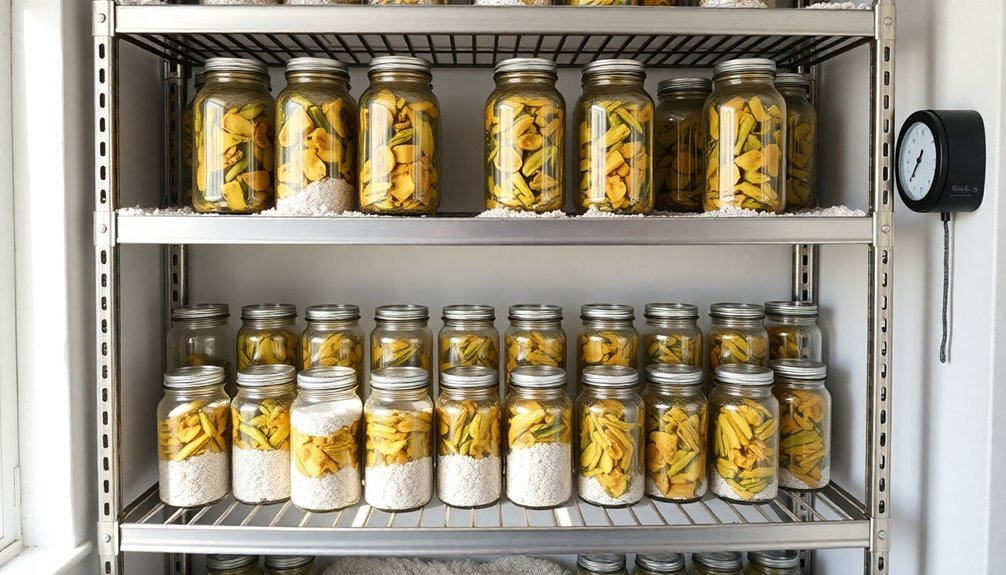
Before beginning wood ash food preservation, establishing a proper storage space serves as your foundation for success.
You'll need to create an environment that's cool, dark, and maintains a stable temperature outside the danger zone where bacteria thrive. Choose a location that's at least three feet away from any combustible surfaces to prevent fire hazards.
Set up your storage area with moisture control in mind, as excess humidity can compromise your preservation efforts.
You'll want to outfit the space with appropriate containers – earthenware crockery works best, but you can also use properly lined and sealed cardboard boxes or woven baskets. Make sure each container has a secure lid or plate cover, and consider adding a weight on top for extra security.
Keep your ash storage separate from your food storage area.
Store your wood ashes in a covered metal container outdoors on a cement or brick surface until you're ready to use them. Remember to sift the ashes to remove any large pieces or sharp particles before use.
Set up a labeling system to track preservation dates, and maintain a regular inspection schedule to monitor your preserved foods' condition.
The Preservation Process
You'll need to start by selecting an appropriate storage container that's clean, dry, and deep enough to accommodate multiple layers of food and ash.
Begin the preservation process by spreading a 1.5-inch base layer of sifted hardwood ash. Then carefully arrange your food items in a single layer, making sure they don't touch each other.
Cover the food completely with another layer of ash, and continue this layering pattern until you've filled the container, always ensuring each food item is fully surrounded by ash.
Layering Food With Ash
Successfully preserving food in wood ash requires careful attention to the layering process, which begins with preparing both your ingredients and ash properly.
You'll need to select fresh, unblemished foods like eggs, meat, hard cheeses, and ripe but firm tomatoes. Gather cool, dry ash from your cooking fires or woodstoves, and sift it to remove any sharp particles or large residues.
To start layering, spread a 1.5-inch base layer of ash in your container. Place your food items in a single layer, positioning tomatoes stem-side down. Cover with a thin, even layer of ash, and continue this pattern until you've filled the container.
Don't stack food items on top of each other, as this can lead to spoilage.
Store your container in a cool, dry, dark location that's protected from temperature fluctuations and pests.
When done correctly, this preservation method can extend shelf life considerably – tomatoes can last 5-6 months, eggs up to a year, and other foods for varying periods. The ash's moisture-absorbing and pest-deterrent properties make it an effective natural preservative that inhibits bacterial and fungal growth.
Storage Container Selection
Proper container selection forms the foundation of successful wood ash food preservation.
You'll want to prioritize earthenware crockery as your primary storage vessel, though well-sealed cardboard boxes can serve as alternatives. Your container must be made from natural, non-reactive materials to prevent food contamination, so avoid plastic or metal containers that could compromise your preserved goods.
When selecting your storage container, verify it meets these vital requirements:
- A wide mouth opening that's large enough to easily layer your food and ash while allowing simple retrieval when needed
- Sufficient depth to fully submerge your food items in multiple layers of ash
- An airtight seal to keep moisture and pests from reaching your preserved goods
- Durable construction that won't break down or leak during long-term storage
You'll need to place your filled containers in a cool, dark location – preferably a basement or underground storage area.
This environment helps maintain consistent temperature and humidity levels. Remember to clean and thoroughly dry your container before use, and don't forget to label it with storage dates for proper monitoring.
Safety Measures and Precautions
When working with wood ash for food preservation, implementing thorough safety measures is crucial to protect yourself from potential hazards. Always wear protective equipment, including gloves, goggles, and a NIOSH-approved respirator if dust levels are high. Since wet wood ash can become corrosive, you'll need to keep it dry and stored in covered containers.
| Safety Aspect | Required Action |
|---|---|
| Personal Protection | Wear gloves, goggles, and respirator |
| Storage | Use covered containers, keep ash dry |
| Dust Control | Avoid generating dust clouds, guarantee ventilation |
| Exposure Limits | Stay under 15 mg/m³ (OSHA) or 10 mg/m³ (ACGIH) |
| Emergency Response | Have eyewash station and shower nearby |
You'll need to be particularly careful about dust management, as wood ash can create combustible dust hazards. Don't use high-pressure water on smoldering ash, and keep ignition sources away from dust clouds. If you're working in extremely dusty conditions, wear long-sleeved protective clothing or disposable outer garments. For spills, wet the ash before cleaning to prevent dust, and use a vacuum or shovel for collection. Apply barrier cream to protect your skin from drying and potential corrosivity during handling.
Storage Duration Guidelines
Based on the specific storage conditions and food type, storage durations in wood ash can vary considerably.
You'll find that properly stored items can last anywhere from several weeks to multiple months, with some foods potentially preserving for years under ideal conditions.
To help you visualize typical storage durations, here's what you can expect:
- Hard cheeses remain viable for several months when stored in wood ash, though you'll want to avoid storing soft or medium cheeses due to their moisture content.
- Tomatoes treated with wood ash can stay fresh for up to 5 weeks, showing significant resistance to decay.
- Meat preserved in hickory ash, as traditionally practiced by Cherokee people, can last for multiple months while developing a distinct flavor.
- Properly stored foods in general can maintain their quality for three months to several years, depending on storage conditions.
For best results, you'll need to maintain a cool, dark storage environment and use appropriate containers like earthenware crockery or ash-filled holes.
Remember that success depends heavily on proper ash preparation, consistent storage conditions, and selecting appropriate foods for preservation.
Monitoring and Maintenance
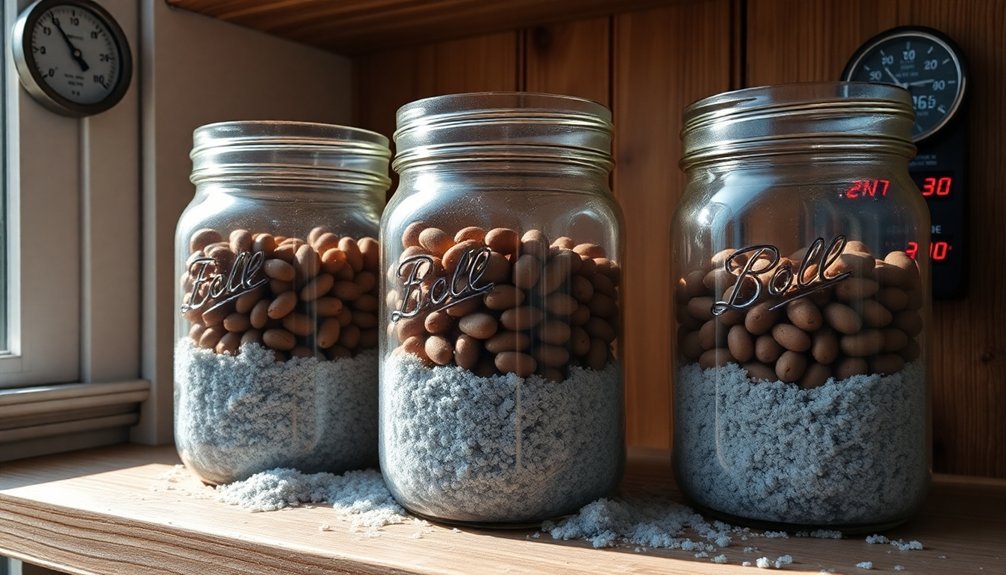
Regular monitoring of wood ash preserved foods requires careful attention to multiple factors that affect storage success. You'll need to check your stored items frequently for any signs of spoilage, including unusual odors, discoloration, or mold growth. It's crucial to maintain detailed records of when you stored each item and the storage conditions you're using.
When you're monitoring your preserved foods, pay special attention to the storage area's temperature, keeping it well below the danger zone of 5°C to 60°C. You should also verify your wood ash remains completely dry, as moisture can compromise its preservative properties. If you notice any dampness, replace the ash immediately.
Check your storage containers regularly to confirm they're still properly sealed and protected from pests. You'll want to maintain a layer of wood ash between different food items to prevent cross-contamination. If you're storing multiple types of food, keep them separated and clearly labeled.
Remember to use only hardwood ash that's free from contaminants, and sift it regularly to maintain its effectiveness. Don't hesitate to discard any food items that show even slight signs of spoilage.
Common Preservation Challenges
Even with careful monitoring, you'll likely encounter several common challenges when preserving food with wood ash.
Moisture control is perhaps the most essential issue you'll face, as excess humidity can compromise the entire preservation process. You'll need to select foods with appropriate moisture content, which is why hard cheeses work well while soft cheeses don't.
Your storage choices will greatly impact success. You'll want to use earthenware or stoneware containers, avoiding plastic or metal that could react with the ash. The storage area must remain cool, dark, and consistently dry throughout the preservation period.
When selecting wood ash, remember that:
- Only hardwood ash is safe – never use treated lumber or plastic-contaminated sources
- Your ash must be completely cold and free of any lingering embers
- You'll need to sift the ash carefully to remove chunks and guarantee even coverage
- Different hardwoods (hickory, maple, oak) may affect your food's final taste
Food selection is equally essential. Not everything preserves well in wood ash, so you'll want to stick with proven items like eggs, hard cheeses, and specific produce.
When preserving tomatoes or meat, you'll need to follow precise techniques for the best results.
Frequently Asked Questions
Can Wood Ash-Preserved Foods Be Safely Consumed During Pregnancy?
You shouldn't eat wood ash-preserved foods during pregnancy, as they can contain toxic metals and chemicals that'll harm your baby's development. The risks of lead, arsenic, and other contaminants are too dangerous.
Does Wood Ash Preservation Affect the Nutritional Value of Stored Foods?
You'll find that wood ash preservation generally maintains most nutrients in stored foods, though it may slightly affect pH levels. While minerals are preserved, some nutrient loss occurs naturally during any storage method.
What Temperature Fluctuations Can Wood Ash-Preserved Foods Safely Withstand?
You'll want to keep wood ash-preserved foods between 5°C and 20°C (41°F-68°F). While they can briefly handle small fluctuations, it's best to maintain temperatures around 10-15°C (50-59°F) for ideal preservation.
Can Wood Ash Preservation Be Combined With Other Preservation Methods?
Yes, you can combine wood ash preservation with other methods like cool storage, darkness, and physical barriers. You'll get better results when you pair wood ash with proper containers and temperature control methods.
How Do You Properly Dispose of Used Wood Ash After Preservation?
You'll need to store used wood ash in a metal container with a tight lid, then dispose of it through regular trash, use it as garden fertilizer, or add it to compost following local regulations.
In Summary
Wood ash preservation can be a reliable food storage method when you're following proper safety protocols. You'll need to select hardwood ash, prepare it correctly, and store your foods in appropriate containers. Remember to monitor moisture levels and inspect your stored items regularly. While this traditional method requires attention to detail, you'll find it's an effective way to preserve certain foods for extended periods.



Leave a Reply