

To keep rice bran fresh, store it in a cool, dry place around 18°C with 70% humidity. Use airtight containers like glass jars or vacuum-sealed bags to minimize air exposure. Refrigerate at 4-5°C for several months, or freeze for long-term storage at 0°F (-18°C) to lock in nutrients. Portion it into smaller amounts to reduce waste and use moisture-absorbing packets to prevent clumping. Regularly check for rancidity by monitoring free fatty acid content. Following these tips guarantees quality and freshness, but there's more insight on effective storage methods waiting for you.
Ideal Storage Conditions
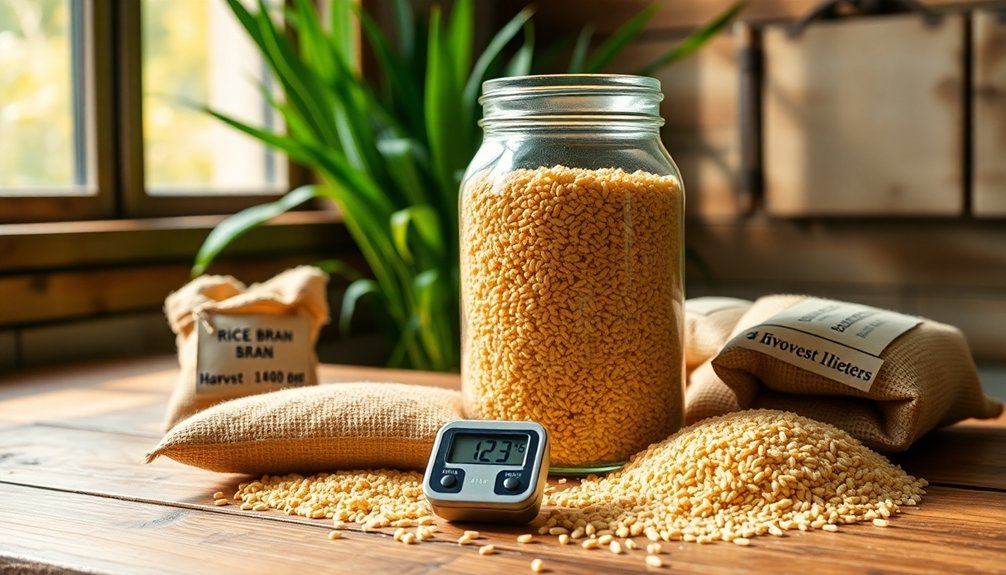
To keep rice bran fresh, understanding ideal storage conditions is vital. First, focus on temperature control. Storing rice bran at around 18°C with a relative humidity (RH) of 70% considerably lowers free fatty acid (FFA) values compared to higher temperatures like 30°C. High heat accelerates rancidity, so avoid the danger zone between 5°C and 60°C. Cooler temperatures extend rice bran's shelf life, while IR heating followed by natural cooling can stabilize it effectively.
Next, manage humidity carefully. A relative humidity of 70% is preferable, as higher levels like 78% can speed up lipid hydrolysis, increasing FFA formation. Additionally, it's important to note that environmental conditions significantly impact FFA levels, making it crucial to monitor storage environments.
Aim for dry, cool, and well-ventilated conditions to keep enzyme activity at bay, preserving the quality of your rice bran.
Finally, consider your packaging. Proper packaging prevents moisture and air from affecting the bran, which is essential in maintaining a stable environment around it. Avoid vacuum packaging, as it can lead to hydrolytic rancidity. Using laminated, metalized bags is a smart choice for ideal storage.
Airtight Container Options
When it comes to storing rice bran, choosing the right airtight container is essential. Glass jars are excellent for their non-porous nature, while food-grade buckets offer durable and spacious options. Both keep your rice bran fresh by preventing moisture and air from spoiling its quality. Proper storage ensures that rice bran maintains its peak freshness for about 30 days post-opening.
Glass Jar Benefits
Have you ever considered how glass jars can revolutionize your rice storage? These containers are a game-changer for keeping your rice fresh and nutritious.
First off, glass jars are non-toxic and chemical-free; they don't contain BPA, BPS, or other harmful substances that could leach into your rice. This means you can store all types of rice, including brown and white, without worrying about contamination.
Durability is another significant benefit. Glass jars can last for years without degrading, resisting stains, odors, and temperature changes. They're perfect for long-term storage, as they withstand thermal shock, allowing you to shift from the freezer to the oven seamlessly. Additionally, their stronger construction ensures that they are resistant to breaking or shattering under stress, making them a reliable choice for your kitchen.
One of the standout features of glass jars is their airtight sealing. This prevents air and moisture from entering, keeping your rice fresh and protected from pests and contaminants. You can easily store them in cool, dry places, and they're even dishwasher safe for easy maintenance.
Lastly, the transparency of glass jars allows you to see your rice at a glance, making storage and handling super convenient. With glass jars, you're ensuring your rice stays healthy and delicious for longer.
Food-Grade Bucket Choices
Food-grade buckets are often an excellent choice for storing rice, offering robust protection against contamination and spoilage. When selecting a bucket, verify it's made from materials that comply with food-grade regulations, such as BPA-free plastic. This not only safeguards your rice from chemical leaching but also assures durability and resistance to damage.
Look for buckets with tight-fitting lids. These lids create a vacuum-sealed environment, preventing air and moisture from entering. This airtight feature keeps pests and rodents at bay while minimizing exposure to light and heat—key factors in maintaining the freshness of your rice.
Additionally, consider waterproof features, especially if you live in a humid climate. These buckets resist water and moisture, guaranteeing that your rice stays dry and unspoiled.
For ideal storage, keep your buckets in a cool, dry place, away from direct sunlight and heat sources. Label them with the storage date and consider using oxygen absorbers to extend shelf life.
Finally, stackable designs will help you maximize your storage space efficiently. With the right food-grade bucket, you can keep your rice fresh and ready for use.
Benefits of Refrigeration
Refrigerating rice bran is a smart move that greatly boosts its shelf life and preserves its nutritional quality. By keeping rice bran at a cool 4-5°C, you can extend its freshness for several months beyond the typical 6-12 months. This method effectively prevents significant increases in free fatty acid (FFA) content, keeping it below 5%.
Utilizing airtight containers adds an extra layer of protection against moisture and odor transfer. The consistent cool temperature inhibits the activity of enzymes like lipase, which can cause rancidity.
You'll also find that refrigeration controls humidity, preventing mold growth and clumping, while keeping the rice bran away from light that can contribute to spoilage.
Moreover, preserving rice bran this way maintains its bioactive constituents, including essential B vitamins, vitamin E, and antioxidants. You'll also retain its protein and fiber content, making it a valuable addition to your diet.
Long-Term Freezing Methods
To keep your rice bran fresh for the long haul, you'll want to focus on ideal freezer temperature and proper packaging techniques.
Storing it at 0°F (-18°C) or lower is essential, and using airtight containers or freezer-safe bags will help prevent freezer burn.
When it's time to use your frozen rice bran, remember to thaw it in the refrigerator for the best results.
Optimal Freezer Temperature
Maintaining an ideal freezer temperature is vital for preserving the freshness and nutritional value of rice bran. To achieve this, make sure your freezer is set at or below 0°F (-18°C). This consistent temperature prevents freezer burn and helps retain the rice bran's quality over time. Fluctuations in temperature can lead to degradation, so it's important to keep the setting steady.
When freezing rice bran, consider dividing it into smaller portions for easier thawing and use. This way, you only take out what you need, minimizing waste. Storing rice bran in airtight containers or freezer-safe bags is key to preventing oxidation. Remember to label each container with the date of storage; this makes it easier to track its shelf life, which can extend up to a year with proper freezing methods.
Lastly, while frozen rice bran can maintain its nutritional value, regular checks for signs of spoilage are necessary. Always thaw rice bran in the refrigerator to reduce moisture condensation and make certain you're consuming it at its best quality.
Following these guidelines will help you maximize the lifespan of your rice bran.
Proper Packaging Techniques
After ensuring your freezer is set to the ideal temperature, proper packaging techniques play a significant role in keeping rice bran fresh during long-term storage.
Start by choosing the right containers; use freezer-safe bags or food-grade plastic containers with tight-fitting lids to prevent freezer burn. Glass jars can also work well if they're clean and dry. If you're storing in bulk, consider food-grade buckets with gamma seal lids. Vacuum-sealing smaller portions can further extend shelf life by preventing oxidation.
When sealing, remove as much air as possible to protect against moisture and pests. Use airtight seals and label each container with the date of storage, along with any relevant usage instructions. This way, you can easily track how long the rice bran has been stored.
Portioning is key. Divide rice bran into smaller amounts so you only thaw what you need, reducing waste and maintaining quality.
Before freezing, store containers in a cool, dry place, away from heat sources and direct sunlight. If necessary, use moisture-absorbing packets to control humidity and prevent clumping.
Following these guidelines will help keep your rice bran fresh for a longer period.
Thawing and Usage Tips
When it comes to thawing rice bran, the best approach is to do it gradually in the refrigerator. This method minimizes moisture condensation, which can lead to spoilage. Avoid direct sunlight and heat sources during the thawing process. Thawing at room temperature isn't recommended because it increases the risk of moisture absorption. Keep an eye out for any signs of spoilage, like off-odors or discoloration, as you thaw.
Once thawed, use the rice bran promptly to maintain its nutritional quality. Store it in airtight containers to prevent moisture absorption and oxidation. You can keep it in the refrigerator for several months.
If you need to store thawed rice bran in a pantry, consider using desiccants or moisture-absorbing packets to help keep it dry.
You can incorporate rice bran into various dishes, from baking to smoothies, to enhance nutritional content. Mixing it with other grains or flours can create nutritious blends.
Remember to check regularly for spoilage, and use thawed rice bran within a few months for the best quality.
Effective Stabilization Techniques

To effectively preserve the freshness of rice bran, utilizing a combination of heating and non-heating stabilization techniques is vital. You can start with heating methods like microwave heating, which uses high power to reduce lipase and peroxidase activity, making it effective for continuous stabilization.
Alternatively, ohmic heating is great for minimizing lipase activity while preserving nutritional properties. If you prefer a more traditional approach, dry heating or steaming can also inactivate enzymes and prevent rancidity.
On the non-heating side, consider low-temperature storage, which keeps your rice bran at around 0°C to markedly reduce enzymatic activity. You might also explore fermentation, using specific fungi or yeast to enhance nutrient bioavailability.
Acid treatment is another option; lowering the pH with HCl can effectively inhibit enzymatic activity. Moisture conditioning is essential as well, as it helps control moisture levels to prevent rancidity.
Recommended Packaging Methods
Maintaining the freshness of rice bran requires not just effective stabilization techniques but also smart packaging methods. Start by choosing packaging that utilizes rice bran wax, which offers excellent barrier properties against moisture, gases, and oils. This biodegradable material isn't only environmentally friendly but also suitable for various packaging forms, from coatings to laminates.
When storing rice bran, aim for a temperature of around 18°C with 70% relative humidity. This helps lower free fatty acid levels and preserves quality. Opt for metalized laminated bags instead of vacuum packaging, as they're more effective in preventing hydrolytic rancidity. Sealed containers with reinforced silicone rings can further protect against moisture and pests.
Consider using food-grade, BPA-free materials for your containers. Look for those with thickened walls and moisture-proof designs to enhance stability and durability.
Additionally, eco-friendly alternatives made from rice husk can provide a sustainable option. By implementing these packaging methods, you'll greatly extend the shelf life of rice bran while ensuring it remains fresh and nutritious.
Monitoring Freshness and Quality

Monitoring the freshness and quality of rice bran is vital for safeguarding its nutritional value and shelf life. Start by maintaining ideal storage conditions; aim for a temperature of 18°C with 70% relative humidity. This prevents higher free fatty acid (FFA) values, which indicate rancidity. Remember, higher temperatures and humidity can accelerate the deterioration of rice bran.
Regularly analyze the FFA content, ideally every two weeks, as this is a significant indicator of hydrolytic rancidity. Lower FFA values suggest better quality and preservation.
Also, evaluate enzyme activity, particularly lipase, which can deteriorate rice bran. If you use heat treatment methods like extrusion or infrared heating, you can inactivate these enzymes, extending shelf life.
Don't overlook milling and drying quality, either. High-quality milling results in lower FFA content, enhancing oil quality. Consider your drying methods; options like infrared heating can improve stability.
Finally, natural cooling after heat treatment helps maintain quality. By closely monitoring these factors, you can guarantee your rice bran stays fresh and nutritious for longer.
Frequently Asked Questions
How Do I Know if Rice Bran Has Spoiled?
To know if rice bran's spoiled, check for a sour smell, dark color, clumpy texture, or fuzzy mold. If it smells rancid or tastes bitter, it's best to toss it out.
Can Rice Bran Be Stored in Plastic Bags?
Yes, you can store rice bran in plastic bags. Just make certain they're airtight, remove excess air, and keep them in a cool, dry place. This helps prevent moisture and pests from affecting the bran's freshness.
What Are the Signs of Rancidity in Rice Bran?
You'll notice signs of rancidity in rice bran by its sour odor, bitter taste, darker color, clumpy texture, or any mold growth. If you detect these changes, it's best to discard the bran immediately.
Is It Safe to Reuse Containers for Rice Bran Storage?
Yes, it's safe to reuse containers for rice bran storage, but make certain they're thoroughly cleaned and completely dry. Avoid any containers that held strong-smelling foods to prevent contamination and guarantee freshness.
How Often Should I Check My Rice Bran for Freshness?
You should check your rice bran every 1-2 months for freshness. Regular inspections help you spot spoilage early. Increase checks in warmer, humid conditions to guarantee it stays safe and maintains quality.
In Summary
By following these smart storage tips, you can keep your rice bran fresh and flavorful for longer. Using airtight containers, considering refrigeration, and exploring freezing methods can greatly extend its shelf life. Remember to stabilize and package it effectively, and always monitor its freshness. With these strategies in place, you'll enjoy the nutritional benefits of rice bran without worrying about spoilage. So go ahead, implement these methods, and make the most of your rice bran!


Leave a Reply