

Open kettle canning puts your family's health at serious risk through multiple safety failures. You'll transfer hot food directly to sterilized jars without proper processing, but this outdated method can't reach the temperatures needed to kill deadly botulism spores. The process also creates weak seals that may break during storage, and dangerous bacteria can contaminate your food during the transfer process. Even if you're canning high-acid foods like jams or pickles, the lack of consistent temperature control and proper vacuum sealing makes this method unreliable. Understanding modern, science-backed canning alternatives will help protect your loved ones from foodborne illness.
Understanding Open Kettle Canning History
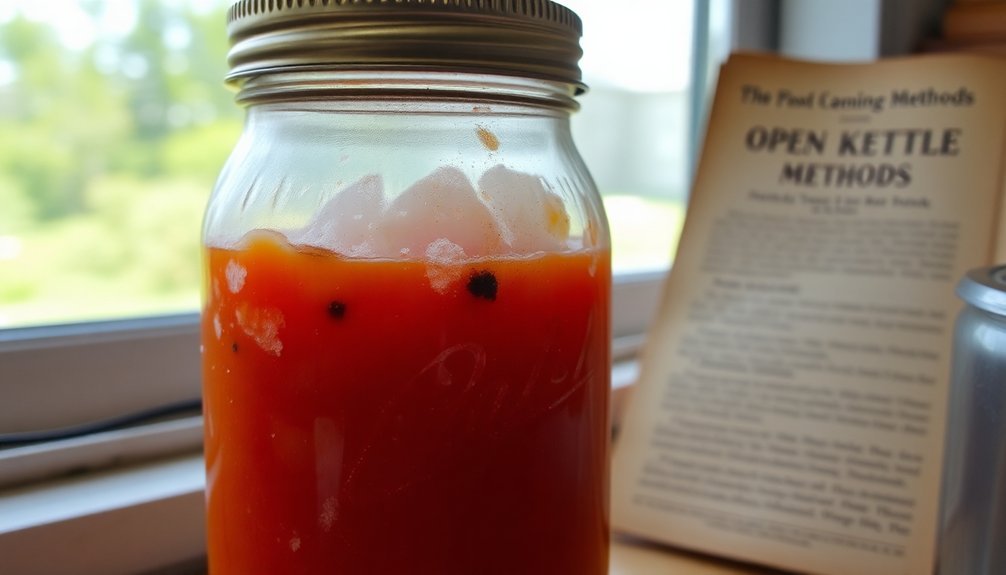
Before the 1980s, open-kettle canning stood as a widely practiced method of food preservation in home kitchens across America. You'd find home canners using this technique primarily for high-acid foods like pickles, jams, jellies, tomatoes, and applesauce.
The process seemed efficient and straightforward: you'd heat your food in an open kettle until boiling, then transfer it to sterilized jars without additional processing after sealing. Sarah Tyson Rorer helped popularize this preservation technique throughout the late 19th century.
The method's popularity stemmed from its apparent convenience. You'd start by sterilizing your jars, lids, and sealing rims in boiling water. Once your food reached boiling temperature, you'd pour it into the hot, sterile jars and quickly apply the lids. Many canners would invert their jars during cooling, believing this would help create a stronger seal.
However, by the 1930s, experts began identifying serious flaws in this approach. What seemed like a time-saving method actually put families at risk.
The Botulism Threat
In light of the severe risks associated with open kettle canning, botulism stands as the most dangerous threat you'll face when using this outdated method. The bacteria Clostridium botulinum thrives in the exact conditions that open kettle canning creates: low-oxygen, high-moisture environments with inadequate heat processing.
When you're canning low-acid foods like vegetables, meats, or soups using the open kettle method, you're creating a perfect breeding ground for botulism spores. These spores can survive and produce deadly toxins even if your food looks, smells, and tastes normal. Weak vacuum seals during the cooling process can allow additional microorganisms to enter your jars.
What's particularly alarming is that just a tiny amount of this toxin can be lethal – one teaspoon could potentially kill 100,000 people.
You can't rely on this method because it doesn't reach the necessary 240°F temperature that pressure canning achieves to destroy botulism spores. The risk is especially high when you're dealing with foods like green beans, corn, potatoes, or meat products.
Even tomatoes, which are traditionally considered acidic, can become dangerous if their pH level rises due to factors like mold growth. Remember, botulism isn't just a case of food spoilage – it's a life-threatening emergency that requires immediate medical attention.
Temperature Control Problems
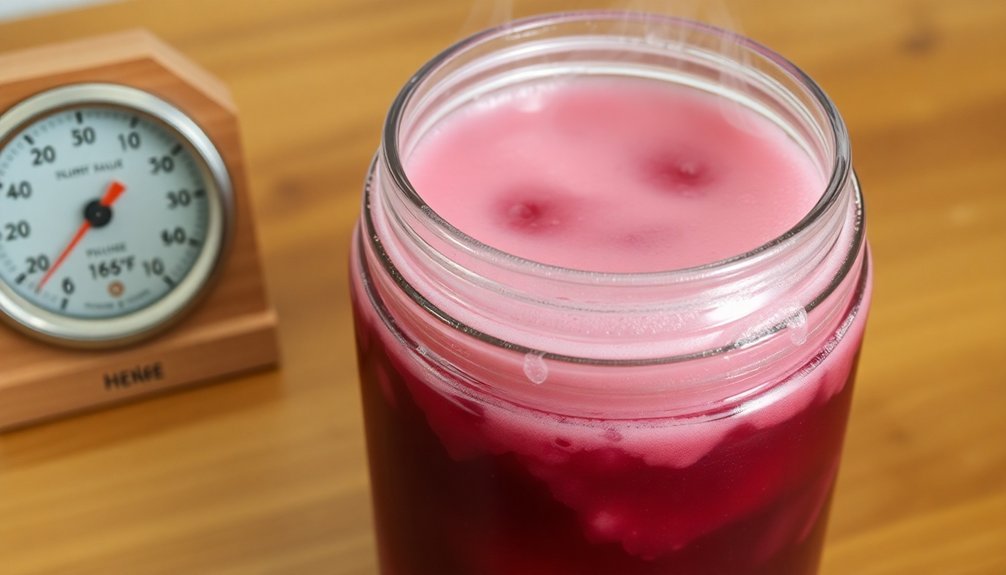
You'll find that open kettle canning never reaches the consistently high temperatures needed to make food safe for storage, since the heating process stops as soon as you pour the food into jars.
The uneven distribution of heat throughout the kettle means some portions of your food may remain dangerously underprocessed, while other areas might appear properly heated. Research-based recipes are essential for ensuring proper temperature control during the canning process.
When the contents cool too quickly after being transferred to jars, you're left with ideal conditions for harmful bacteria to thrive, especially in the cooler spots where temperatures never reached safe levels.
Heat Never Reaches Safe Levels
Safety concerns with open kettle canning stem primarily from its inability to reach and maintain adequate temperatures for safe food preservation. You won't achieve the necessary heat levels to destroy harmful microorganisms, including dangerous *Clostridium botulinum* spores that can cause botulism.
| Temperature Issue | Safety Risk | Safe Alternative |
|---|---|---|
| Never reaches 240°F | Bacteria survive | Pressure canning reaches 240-250°F |
| Inadequate vacuum seal | Air remains in jar | Water bath creates proper seal |
| Poor headspace processing | Mold/yeast growth | Steam canning eliminates air |
When you use open kettle canning, you're putting your food at risk because the temperature doesn't get hot enough to kill all spoilage organisms. Even if your food is fully cooked and hot when you pour it into jars, you won't achieve the sustained heat required for safe preservation. Without proper heat processing, microorganisms can survive in the jar's headspace and multiply over time.
Unlike safe canning methods that process filled jars at 212°F or higher, open kettle canning can't create the strong vacuum seal needed for long-term storage. You'll need to use either a boiling water bath, atmospheric steam, or pressure canner to guarantee your food stays safe.
Uneven Temperature Distribution Dangers
Temperature control issues plague open kettle canning, creating dangerous hot and cold spots throughout your food. Without a controlled heat source like a water bath or pressure canner, you can't maintain the consistent temperatures needed to safely preserve food.
When you're relying solely on the heat of your cooked food, you'll find that different areas of your jars cool at varying rates, leaving some spots dangerously under-processed.
The risks become even more serious with low-acid foods like vegetables, meats, and soups. These foods require sustained high temperatures between 240°F-250°F that you simply can't achieve through open kettle methods.
You're putting yourself at risk for botulism when you don't properly process these foods in a pressure canner.
Here are three critical temperature-related dangers you'll face:
- Your food won't reach uniform temperatures needed to destroy harmful bacteria
- Temperature fluctuations prevent proper vacuum sealing, leading to potential spoilage
- The headspace in your jars remains untreated, allowing microorganisms to thrive
Rapid Cooling Creates Risk
Beyond uneven heating, rapid cooling in open kettle canning creates another set of dangerous problems. When you cool your jars too quickly, you'll likely create a weak vacuum seal that can fail during storage.
Even if your lid appears to seal initially, it may not be strong enough to prevent bacterial contamination later. Without proper heat processing in a canner, you're putting your food at significant risk.
The rapid cooling method doesn't reach temperatures high enough to destroy harmful microorganisms, and when you transfer food from kettle to jar, additional bacteria can enter. You'll find that molds, yeasts, and bacteria can survive and multiply, potentially creating gases that force the lid to release.
You're especially at risk when canning low-acid foods, as they can support the growth of deadly Clostridium botulinum. The absence of proper processing means you won't achieve the strong vacuum seal that comes from using a pressure canner or water bath.
If mold develops, it can lower your food's acidity, creating perfect conditions for botulism-causing bacteria to thrive. Don't trust older cookbooks that recommend this method – it's simply not safe.
Weak Sealing Issues
Proper sealing proves nearly impossible with open kettle canning due to several critical flaws in the process. Without the consistent high temperatures and pressure that proper canning methods provide, you're likely to experience seal failures that put your food at risk.
The lack of a true vacuum seal means air and contaminants can become trapped inside your jars, leading to spoilage and potential health hazards.
You'll face three major sealing challenges with open kettle canning:
- The cooling process doesn't create enough vacuum force to guarantee a reliable seal, even if you hear the lid "pop."
- Internal pressure changes from surviving microorganisms can break your seals over time, causing jars to unseal unexpectedly.
- The method's reliance on heat from the food alone can't maintain the temperatures needed for proper lid sealant activation.
Even if you're careful with your technique, the fundamental flaws in open kettle canning make proper sealing nearly impossible.
Your jars may appear sealed initially, but handling them or storing them can easily break these weak seals. Without the right processing methods, you can't achieve the strong vacuum seal necessary for safe food preservation.
Contamination During Filling Process
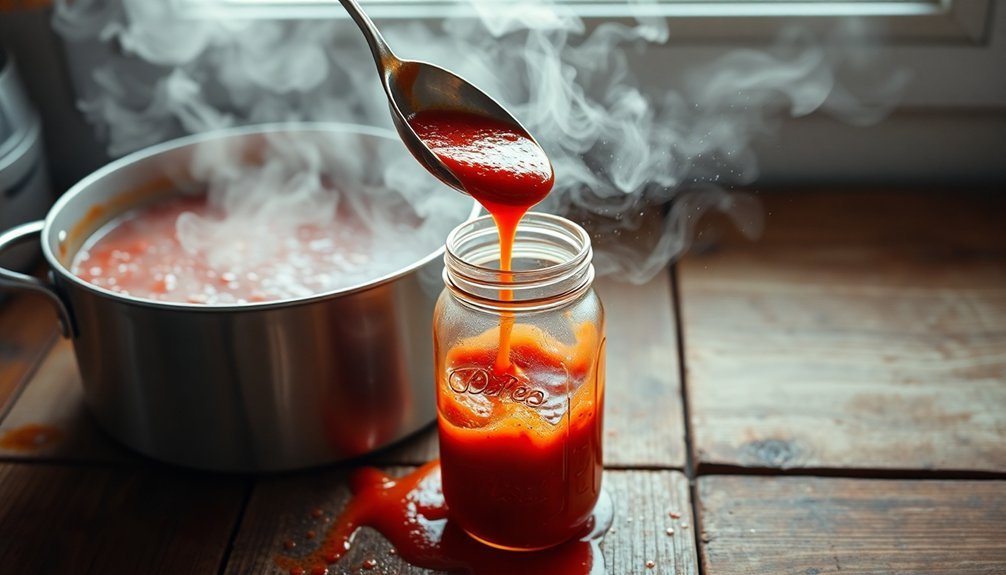
Microscopic invaders pose a serious threat during open kettle canning's filling process. When you're transferring hot food from the kettle to jars, mold, yeast, and harmful bacteria can easily contaminate your food through exposure to ambient air.
Even if you've sterilized your jars beforehand, they won't stay sterile during this vital transfer period. The temperatures achieved in open kettle canning aren't high enough to destroy all spoilage organisms, and you can't properly heat the jar's headspace.
As your food cools and the seal forms, these surviving microorganisms can multiply and spoil your preserved goods. You'll face an especially dangerous situation with low-acid foods like vegetables, meats, and soups, where Clostridium botulinum spores can thrive and produce deadly toxins.
While open kettle canning was historically used for jams and jellies, it's no longer considered safe by the USDA or the National Center for Home Food Preservation.
Even though you might find this method in older cookbooks or family recipes, you're putting yourself at risk by following these outdated practices. The contamination risks during filling are simply too high to justify using this method.
Modern Safe Canning Alternatives
Looking for safer ways to preserve your food?
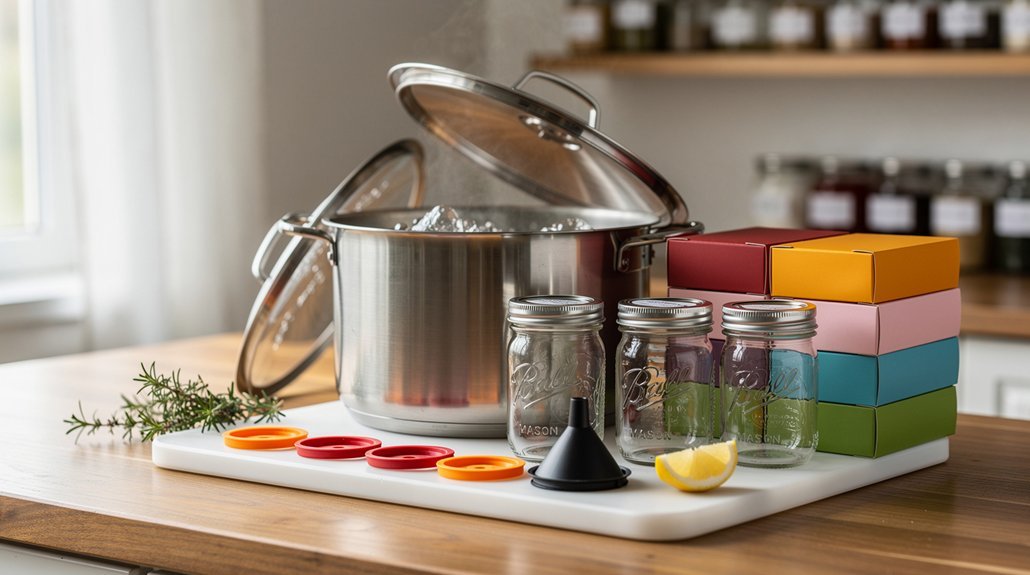
Today's USDA-approved canning methods offer reliable alternatives to risky open kettle canning. You'll find three main approaches that guarantee your preserved foods remain safe and delicious.
1. Water bath canning stands out as the easiest method for beginners.
It's perfect for high-acid foods like fruits, jams, and pickles. You'll need a large stock pot with a lid and sterilized jars, and you'll submerge them in boiling water at 212°F.
2. Steam canning provides another excellent option for high-acid foods.
If you've got a steam canner or a large pot with a steam basket, you can achieve the same results as water bath canning with less water and energy.
3. Pressure canning is vital for low-acid foods like vegetables, meats, and soups.
You'll need a specialized pressure canner with proper gauges, and it's important to follow USDA guidelines for processing times and pressure levels.
Remember to check your local altitude and adjust processing times accordingly.
Whether you choose water bath, steam, or pressure canning, you'll get consistently safe results by following current USDA guidelines and using properly maintained equipment.
Breaking Old Canning Habits
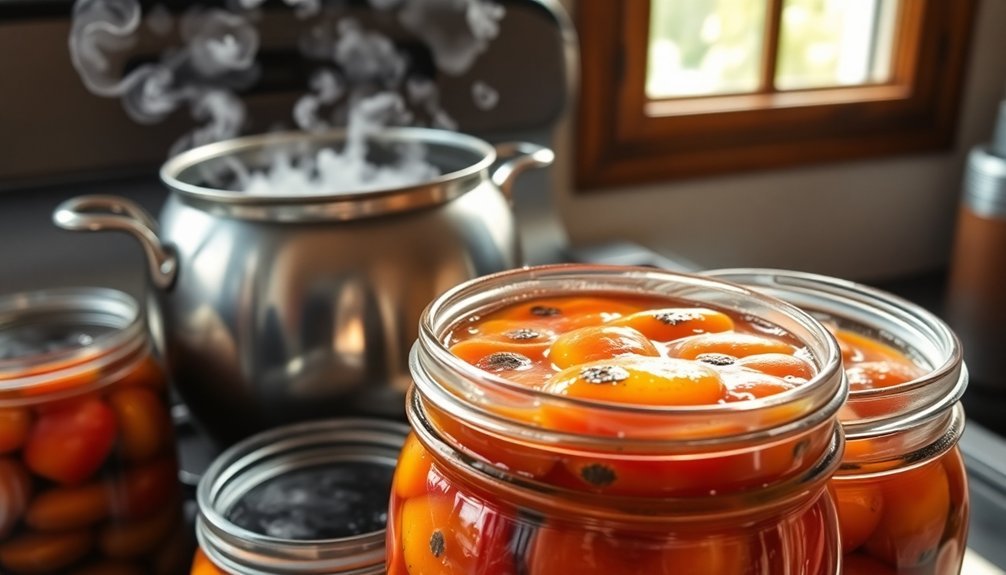
Breaking away from outdated canning methods can be challenging, especially if you've learned them from family traditions. But if you're still using open kettle canning, you're putting yourself and your family at risk of serious foodborne illness, particularly botulism.
| Habit to Break | Why It's Dangerous | Safe Alternative |
|---|---|---|
| Skipping water bath | Inadequate heat processing leaves harmful bacteria alive | Use proper water bath or pressure canner |
| Relying on "ping" sound | Weak seals can fail later, allowing contamination | Process jars for recommended time to guarantee strong seal |
| Using grandma's methods | Traditional methods don't meet modern safety standards | Follow current USDA guidelines |
| Hot-filling only | Temperatures aren't high enough to kill C. botulinum | Process all foods at correct temperature |
You'll need to embrace proven methods that guarantee food safety. When you transfer hot food from a kettle to jars without proper processing, you're creating perfect conditions for harmful bacteria to thrive. Even if your jars seal initially, they can unseal later due to microbial growth and gas production. Don't let nostalgia compromise your safety – modern canning methods are backed by science and proven to prevent foodborne illness.
Frequently Asked Questions
Can I Reprocess Jars That Were Originally Open Kettle Canned?
You shouldn't reprocess open kettle canned foods. It's not safe since harmful bacteria and spores may have already grown. Instead, discard the food and start fresh using proper water bath or pressure canning methods.
What Happens if I Accidentally Ate Food Preserved by Open Kettle Canning?
If you've eaten open-kettle canned food, monitor yourself for symptoms like nausea, dizziness, or breathing problems. Don't wait – contact your doctor immediately if you experience any symptoms, as botulism can be deadly.
How Long Does Open Kettle Canned Food Typically Last Before Spoiling?
You can't safely predict how long open kettle canned food will last. It's highly variable and could spoil within days or weeks, even if it looks fine. Don't risk consuming it at all.
Are There Any Foods That Are Completely Safe for Open Kettle Canning?
No, there aren't any foods that are completely safe for open kettle canning. You'll risk dangerous bacterial growth, including botulism, with any food type. Always use proper water bath or pressure canning methods instead.
Why Do My Grandmother's Open Kettle Canned Foods Never Made Anyone Sick?
You've been lucky – while your grandmother's high-acid foods were less risky, she wasn't necessarily safe. Many factors like acidity, storage, and chance played roles in preventing illness, but the risk remains significant.
In Summary
You'll need to break away from open kettle canning methods, even if they're part of your family tradition. Don't risk your health or your loved ones' safety with outdated preservation techniques. Instead, embrace modern pressure canning and water bath methods that effectively kill bacteria and create reliable seals. Make the switch today – your food safety depends on following current, science-based canning guidelines.

Leave a Reply