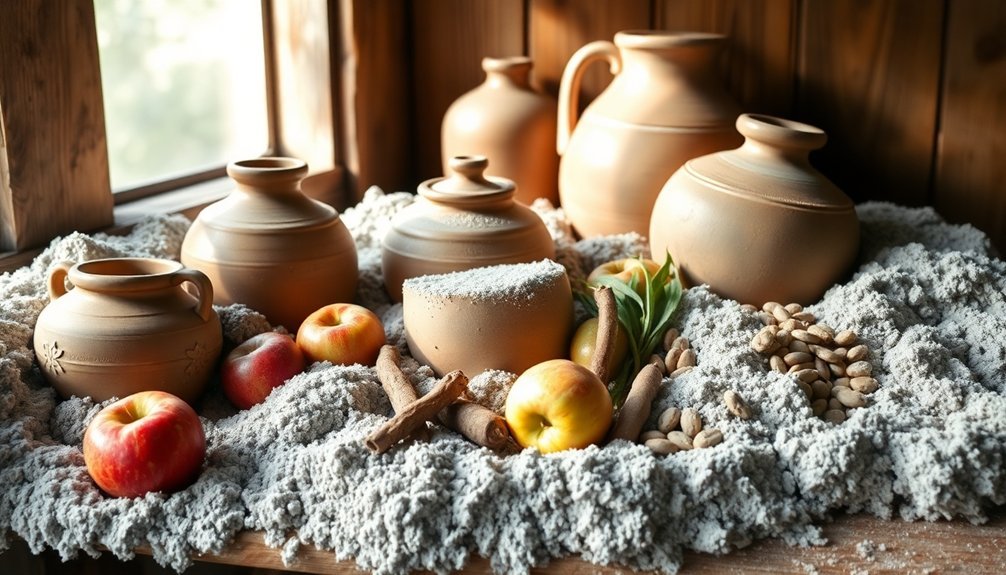
Wood ash storage offers you a time-tested method of preserving food that dates back centuries. You'll need clean hardwood ash from sources like maple or oak, sifted to a fine consistency. Start by placing a 1.5-inch layer of ash at the bottom of an earthenware container, then alternate layers of food and ash using a ratio of 1.5 kg ash per 1 kg food. This method works well for eggs, produce, meat, and cheese, with preservation times lasting months to years. Store your containers in a cool, dark place away from moisture. The ancient practices of the Cherokee and early American settlers hold many more secrets to successful food preservation.
Historical Uses of Wood Ash
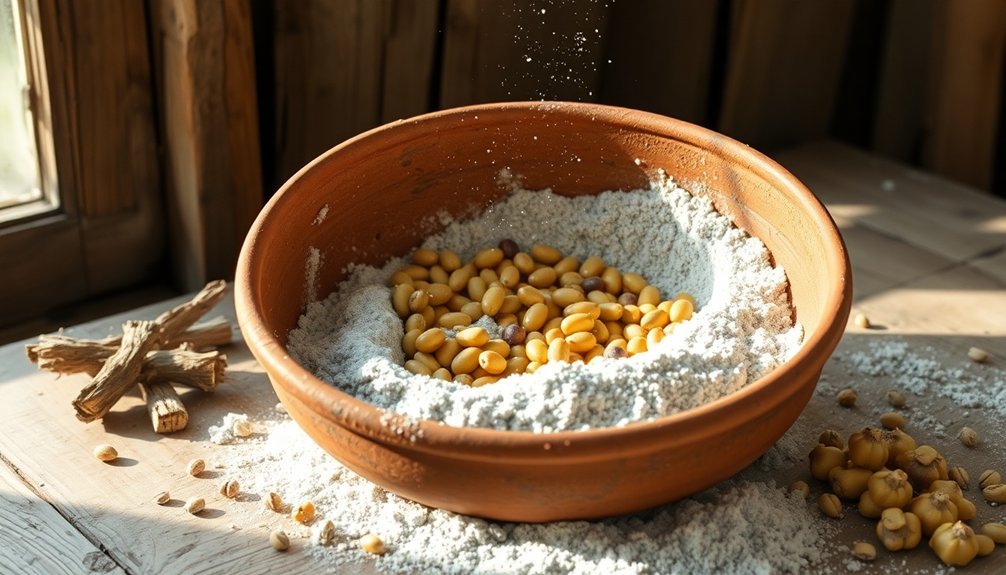
Throughout history, wood ash served as a versatile resource that played an essential role in both industrial processes and everyday life. From the 1700s to the early 1900s, wood ash was a vital raw material in the United States, where it was used extensively for chemical extraction.
You'll find that its primary applications included producing potash for fertilizers and alkali for industrial purposes, though its value diminished as newer production technologies emerged. As a powerful soil amendment, wood ash typically contains a fertilizer ratio of 0-1-3 N-P-K.
In households across different cultures, wood ash proved invaluable for food preservation. The Cherokee people discovered that hickory ash effectively preserved and flavored meat, while African farmers protected their tomatoes using wood ash storage methods.
You'd typically find food items carefully layered with ash in earthenware containers, where the ash created ideal preservation conditions by maintaining coolness and limiting air exposure.
Wood ash's utility extended to numerous domestic tasks. You could find it being used to clean glass, silver, and pewterware, or as a scouring agent for pots and pans.
During butchering season, it helped remove hair from hogs in scalding barrels, and in winter, it provided traction on slippery paths.
Benefits of Ash Storage
Food preservation with wood ash offers remarkable longevity benefits that surpass many traditional storage methods. You'll find that food stored in wood ash can remain viable for several months to years, with tomatoes lasting up to six months and cheese maintaining its quality for extended periods.
When you use the correct ratio of 1.5 kg ash per 1 kg of food, you'll see decay rates as low as 20%.
You'll benefit from wood ash's natural ability to ward off pests and prevent biological decay. Using ash from hardwood sources is recommended for optimal preservation results. It creates a protective barrier that keeps air from reaching your food while its high mineral content fights against mold and bacteria.
The method works effectively for various foods, including eggs, produce, meat, and cheese.
You won't need expensive equipment to implement this storage technique. All you'll need is a cool, dark space and basic containers like stoneware crockery or lined cardboard boxes.
By storing tomatoes upside down and surrounding cheese with 1-1.5 inches of sifted ash, you'll maintain ideal preservation conditions.
This cost-effective method not only preserves your food but also maintains its nutritional quality, and you can even reuse the ash later for gardening purposes.
Selecting the Right Wood Ash
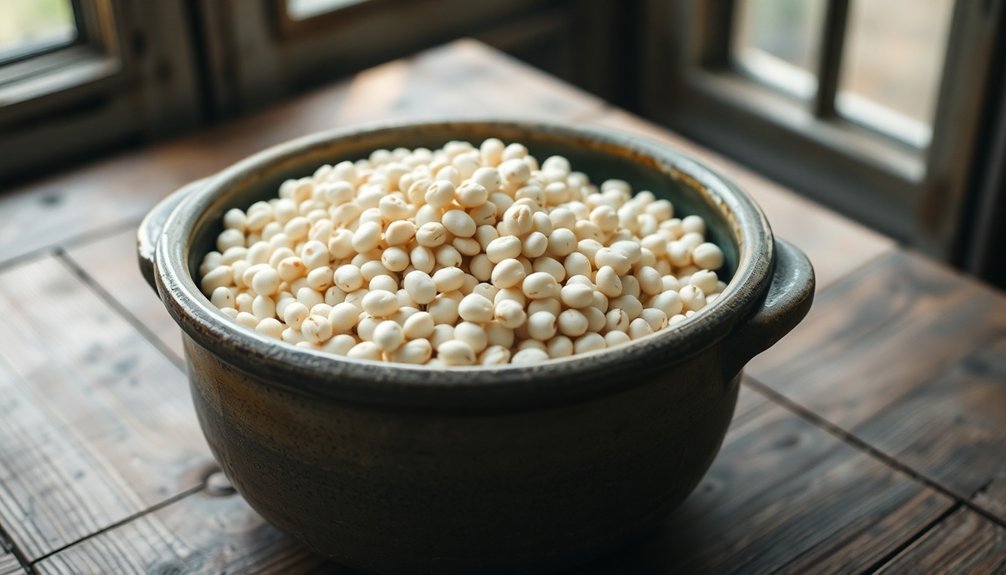
To create safe ash for food storage, you'll want to stick with hardwoods like maple and oak while avoiding softwoods that contain problematic resins.
You must process your ash by letting it cool completely, then sift it multiple times to remove debris and achieve a fine, consistent texture. Research shows using 1.5 kg of ash per kilogram of food items like tomatoes provides optimal preservation results.
Make sure your ash comes from clean sources like backyard fire pits or chimneys, and never use ash from treated lumber, plastics, or other hazardous materials.
Best Woods For Ash
Selecting the right wood ash stands as an essential first step in food preservation. You'll want to focus exclusively on hardwoods, as they provide the safest and most effective ash for food storage. Maple, oak, hickory, and birch are your best options, each offering unique properties for preservation.
Maple ash is particularly valued for its food-safe qualities and superior hardness, making it an excellent choice for general food preservation. Oak ash, historically used by the Cherokee, excels in preserving meat and making lye hominy. If you're looking to add flavor while preserving, hickory ash is your go-to option, known for both its strength and distinctive taste. Birch ash contributes a natural salty flavor that enhances preserved foods.
You'll need to avoid all softwoods, as they can contain harmful contaminants and don't provide the necessary hardness for effective preservation. Never use ash from treated lumber, unknown sources, or wood that might contain plastics or other materials.
When collecting your ash, verify it's fully burned, properly sifted, and completely cool before use. Store your collected ash in a dry, cool place to maintain its preservation properties.
Proper Ash Processing Steps
Once you've chosen your hardwood source, proper ash processing becomes your next key task.
You'll need to collect the ash after your fire has completely cooled down to prevent any heat damage to your stored food. Don't collect ash from pressure-treated lumber, plastics, or any hazardous materials, as these can contaminate your food.
Your next step is thorough sifting and cleaning. Run the ash through a fine mesh or sieve multiple times to remove any sharp particles, debris, or large residues.
You'll want only the finest ash particles for food preservation, so be diligent in this process. If you find any contaminants, discard that batch and start fresh.
Once you've cleaned your ash, prepare your storage container. You can use a wooden box, cardboard container, woven basket, or earthenware crock.
Line your chosen container with paper to create a barrier between the ash and the container's surface. Make sure your container is completely dry, as moisture will compromise the ash's preservation properties.
Pack the ash tightly at the bottom, creating a base layer that's 1-2 inches thick before adding your food items.
Proper Container Selection
Successful wood ash food preservation begins with choosing the right container. You'll want to select earthenware crockery or stoneware pots as your primary options, as they're non-reactive and ideal for this preservation method.
Avoid metal containers completely, as they can react with both the ash and food, potentially compromising your preservation efforts.
Your container should be appropriately sized for your needs, with enough depth to accommodate multiple layers of food and ash. When selecting your container, make certain it has a proper lid or covering to keep the ash undisturbed and maintain peak preservation conditions.
Here are the essential steps for preparing your container:
- Clean thoroughly to remove any contaminants
- Line with paper if using wooden boxes or cardboard containers
- Sift the ash before adding it to remove debris
- Create even layers between food items and ash
- Seal properly to maintain the preservation environment
Store your container in a cool, dark place like a cellar or basement, keeping it away from direct sunlight and moisture.
The storage area should maintain a stable temperature and be protected from pests to make sure your preserved food stays in prime condition.
Preparing Food for Storage
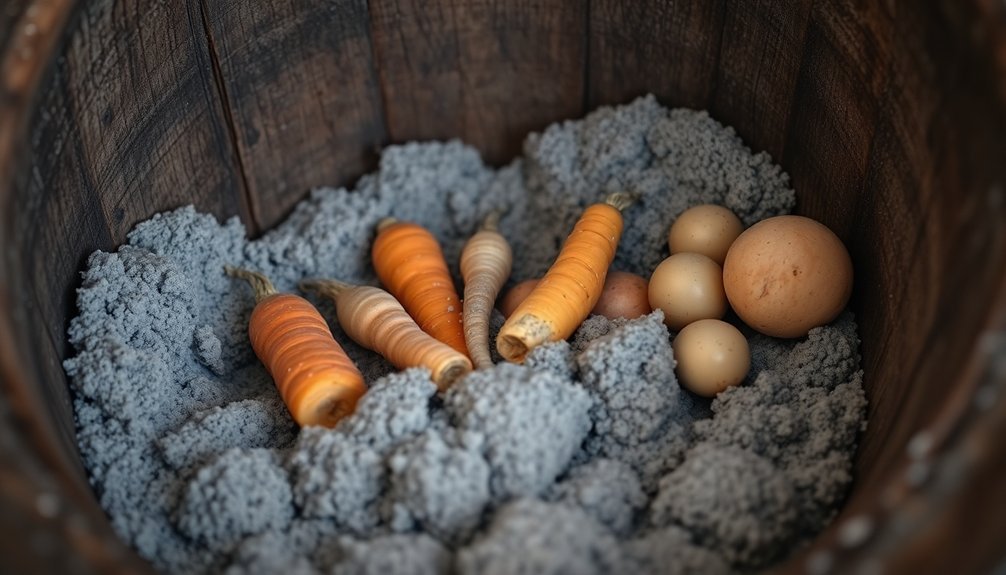
With your container properly prepared, it's time to focus on getting your food ready for preservation. You'll need to verify your food items meet specific requirements before storing them in wood ash. For hard cheeses, cut them into chunks at least 1-2 inches thick, and don't forget to taste a small piece for later comparison.
| Food Type | Preparation Steps |
|---|---|
| Hard Cheese | Cut 1-2 inch thick pieces; complete aging process |
| Meat/Poultry | Clean thoroughly; cut into manageable portions |
| Eggs | Clean shells; verify no cracks |
| Produce | Sort for ripeness; remove damaged items |
| Grains | Dry completely; remove debris |
For homemade cheeses, you'll need to complete the drying and aging process before preservation. When preparing meat, especially if you're using hickory ash, verify it's clean and cut into portions you'll use. You'll likely need to remove the outer layer of cheese after storage due to rind formation. Always use clean utensils and work surfaces to prevent contamination. If you're storing eggs, inspect each shell carefully for cracks, and with produce, sort through items to remove any that show signs of damage or decay.
Layering Techniques
Proper layering lies at the heart of wood ash preservation, requiring careful attention to both ash thickness and food placement. Start by spreading a 1.5-inch layer of sifted wood ash at the bottom of your lined container.
Place your produce, such as tomatoes, upside down in a single layer, guaranteeing they don't touch each other. Continue alternating layers of ash and produce until your container's full, then seal it with packing tape or a loose cover.
For cheese storage, you'll need to surround your cheese pieces with 1 to 1.5 inches of ash on all sides in a stoneware pot. Remember that consistent layer thickness is essential for even preservation.
Here's what you need to watch for when layering:
- Always use clean, sifted ash from wood stoves or chimneys
- Keep produce pieces separated to prevent spoilage spread
- Maintain even ash distribution throughout each layer
- Confirm complete coverage with no exposed food surfaces
- Check periodically for any signs of deterioration
Your stored items will develop some changes – tomatoes may wrinkle but remain juicy inside, while cheese will form a new rind.
Store your containers in a cool, dry place like a cellar for ideal preservation.
Best Foods for Ash Preservation

When selecting foods for ash preservation, you'll find hard cheeses like Gruyere and cheddar work exceptionally well, provided they're at least an inch thick.
For produce storage, ripe but firm tomatoes offer the best results, lasting up to six months when properly layered in wood ash.
You can maximize your storage success by choosing unblemished tomatoes and ensuring your hard cheeses contain minimal moisture content.
Ideal Produce for Storage
Several foods stand out as excellent candidates for wood ash preservation, each offering unique storage benefits.
You'll find that tomatoes and peppers can maintain their quality when properly covered in sifted wood ash, while eggs can last nearly a year using this method.
Meat preservation, particularly with hickory ash, offers both storage benefits and flavor enhancement.
For ideal results with wood ash storage, you'll want to focus on these proven items:
- Fresh eggs – Store them completely covered in ash for up to 12 months in a sealed container
- Ripe tomatoes – Preserve for 3-6 months using finely sifted ash in cardboard boxes or stoneware
- Bell peppers – Store similar to tomatoes, guaranteeing complete coverage with fine ash
- Fresh meat – Use hickory ash specifically for both preservation and flavoring
- Root vegetables – Place in layers of ash in a cool, dark location
You'll need to maintain cool, dark conditions for all stored items and verify the ash is properly sifted before use.
Remember that visual quality may decline before inner quality, so check your stored items periodically for best results.
Hard Cheese Selection Tips
Selecting the right hard cheese stands at the forefront of successful ash preservation. You'll want to choose pieces that are approximately 4 inches square and 1½ inches thick, as this size allows for ideal preservation while maintaining enough volume after the aging process.
Don't select pieces that are too thin, as they won't have sufficient mass to develop properly during storage. You must stick to hard cheeses exclusively, as soft or medium varieties contain too much moisture and won't preserve well in wood ash. The high moisture content in softer cheeses can lead to spoilage, while hard cheeses can continue aging safely.
When you're preparing for storage, you'll need a cool, dark location and either stoneware pots or earthenware crockery filled with sifted wood ashes. During preservation, you'll notice your cheese becoming drier and harder, with its flavor improving over time.
While you might spot small ash particles in the cheese's surface cracks, this won't affect its quality. You can expect your properly stored hard cheese to last three months or longer, but you'll need to check it regularly for any signs of spoilage.
Optimal Storage Conditions
Proper storage conditions play an essential role in preserving food with wood ash. You'll need to choose a cool, dry location that's protected from both air and natural light to maintain ideal preservation. A cellar or underground storage area works exceptionally well due to its naturally cool and dark environment.
When setting up your storage space, make certain you're using the right container. Choose earthenware crockery or other non-porous containers, and verify they're thoroughly clean before use. If you don't have a proper lid, you can use a plate or stone to weigh down a cover and create an effective seal.
Here's what you'll need to maintain ideal storage conditions:
- A cool, dry storage area protected from light and temperature fluctuations
- A clean, non-porous container with a secure lid or weighted cover
- Proper sealing to prevent air from reaching the preserved food
- A pest-free environment to protect your stored items
- Regular monitoring to confirm preservation conditions remain stable
Remember to check that your wood ash is completely cool and dry before using it, and sift it thoroughly to remove any debris or sharp particles that could damage your food items.
Safety Precautions
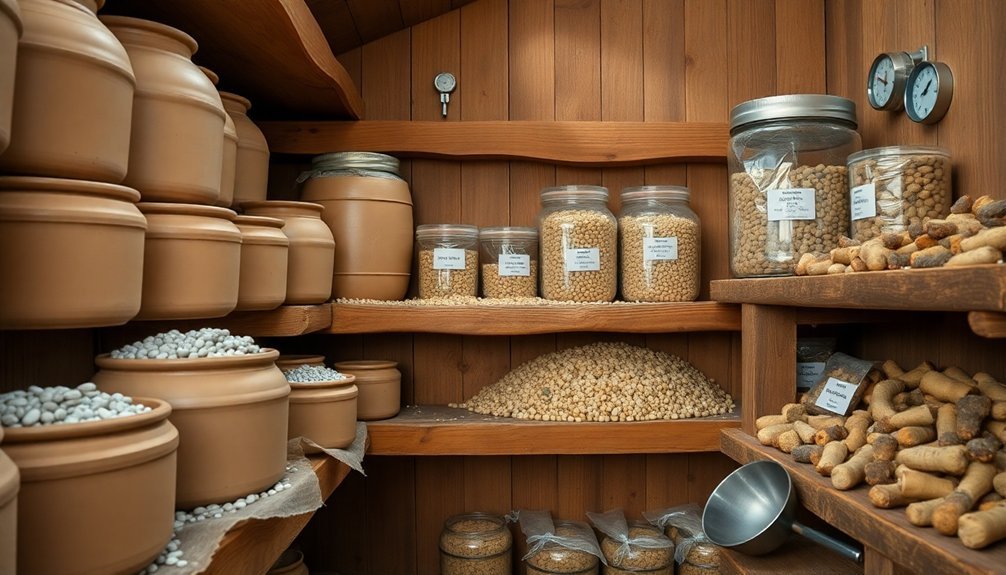
When selecting wood ash for food storage, you'll need to verify it's from clean, untreated wood and has been fully cooled to prevent any heat-related accidents.
Store your ash in a metal or ceramic container with a tight-fitting lid to keep moisture out and prevent dust from becoming airborne.
You must always wear protective gloves and a dust mask when handling wood ash to protect yourself from its corrosive nature and potential toxic substances.
Clean Ash Selection Process
Safe handling of wood ash requires careful attention to both material selection and proper safety measures.
You'll need to select hardwood ash from sources like maple or oak while avoiding any ash from treated lumber, plastics, or hazardous materials. When collecting ash for food preservation, verify it's thoroughly dried for several weeks to minimize moisture-related issues.
Follow these essential steps for clean ash selection:
- Collect ash only from known hardwood sources, such as cooking fires or fire pits
- Allow the ash to dry completely in a well-ventilated area for at least 2-3 weeks
- Sift the ash multiple times to remove debris and achieve a fine, uniform texture
- Check for any remaining combustible materials or sharp particles
- Store the processed ash in a dry, sealed container away from heat sources
Always wear protective equipment when handling ash, including gloves, goggles, and a dust mask.
Work in well-ventilated areas to avoid inhaling ash particles. Remember that proper ash selection is vital for food preservation success – using contaminated or improperly processed ash can compromise your food's safety and storage effectiveness.
Storage Container Requirements
Now that you've gathered clean wood ash, choosing the right storage container becomes your next priority.
You'll need an earthenware crock or similar non-reactive container with an airtight lid to guarantee proper food preservation. Don't use wooden containers, as they're combustible, and avoid metal ones since they might react with the ash and affect your food.
Your container must have a secure, well-fitting lid to prevent air infiltration and keep pests out. Make sure it's large enough to hold both your food items and the surrounding ash layer, but manageable enough to move safely.
Don't choose containers with cracks or chips that could compromise the seal.
When handling your storage container, always wear protective gear including gloves and a respirator to avoid inhaling ash dust.
Position your container in a cool, dark location away from heat sources and direct sunlight. Keep it elevated from the floor and away from combustible materials.
You'll want to place it in a well-ventilated area to prevent any gas buildup, but guarantee it's protected from moisture that could affect the ash's preservative properties.
Proper Handling Guidelines
Safety demands rigorous attention when handling wood ash for food storage. You'll need to protect yourself with essential gear including NIOSH-approved dust masks, protective gloves, and dust goggles. Apply barrier cream to your skin before handling ash to prevent drying and irritation.
Make sure you're working in a well-ventilated area to minimize breathing in harmful dust particles.
When handling wood ash, follow these critical safety measures:
- Keep ash away from heat sources and sparks to prevent combustion
- Wet the ash slightly before handling to reduce airborne dust
- Never enter confined spaces containing wood ash without proper ventilation
- Use a fine water mist if you need to extinguish smoldering ash
- Store ash in non-combustible containers away from flammable materials
If you're cleaning up spilled ash, dampen it first and use a vacuum or shovel for collection. Don't create dusty conditions that could lead to respiratory issues or potential dust explosions.
Remember that wood ash is corrosive, so avoid any skin contact and immediately wash any exposed areas. If you experience respiratory discomfort, leave the area and seek fresh air immediately.
Restoring Preserved Foods
Retrieving foods preserved in wood ash requires careful attention to maintain their quality and guarantee they remain safe to eat.
You'll need to gently remove the storage container from its cool, dark location and carefully scoop away the ash using a spoon or trowel to avoid damaging the preserved items.
Once you've retrieved the food, you'll need to clean it properly. Use a soft brush to remove ash from delicate items, and rinse others with clean water without soaking them.
For cheese, you'll want to remove the outer rind that's formed from the ash contact and wipe the surface with a clean cloth.
Before consuming, you must assess the food's quality. Check for proper texture and any signs of spoilage. Your preserved tomatoes should be firm with slightly wrinkled skin, while cheese should remain fresh inside despite its new outer rind.
Preserved meat should maintain its original texture and flavor.
If you're not eating the food immediately, you'll need to transfer it to a different storage method. Consider using airtight containers or refrigeration, and plan to consume the food relatively soon after retrieval to ascertain the best quality.
Environmental Impact
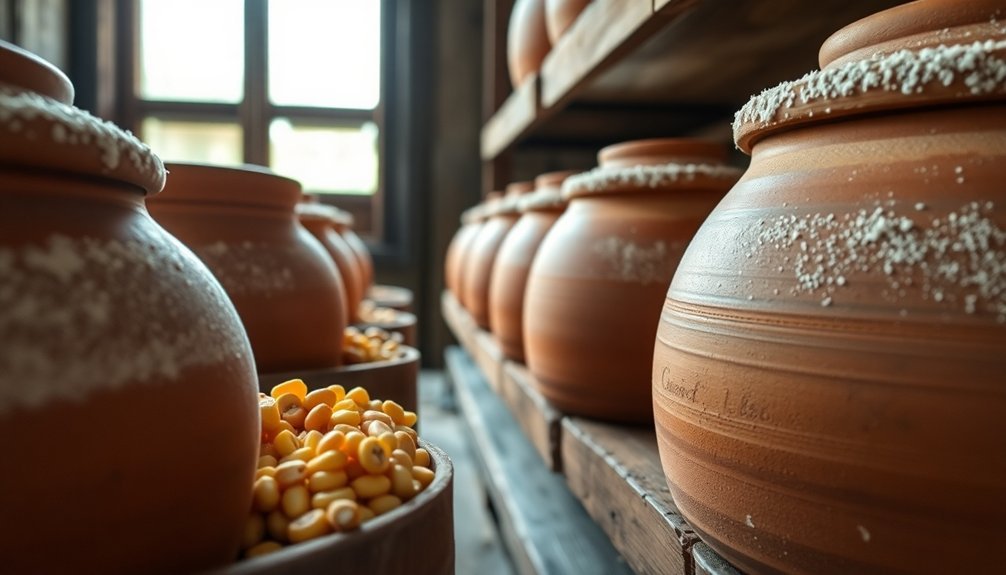
Understanding wood ash's environmental impact is essential before using it for food preservation, as it contains several harmful substances that can affect both ecosystems and human health.
When you're handling wood ash, you're dealing with materials containing heavy metals like arsenic, cadmium, and chromium, along with carcinogenic compounds such as polycyclic aromatic hydrocarbons.
The environmental concerns you should consider include:
- Wood ash can rapidly increase soil pH, which might harm acid-loving plants in your garden if not properly contained.
- Heavy metals and toxins can leach into groundwater and surface water when ash isn't stored correctly.
- Improper disposal can lead to air pollution and contamination of living spaces.
- Mercury and other harmful substances can accumulate in soil and water systems over time.
- Carcinogenic compounds in the ash can pose risks to local ecosystems.
When using wood ash for food preservation, you'll need to implement proper containment methods to prevent environmental contamination.
This means storing ash in sealed containers, keeping it away from water sources, and disposing of used ash appropriately to minimize its impact on the surrounding environment.
Frequently Asked Questions
How Long Does Wood Ash Preserve Different Types of Food?
You can preserve hard cheese for 3 months, tomatoes for up to 6 months, and eggs for up to 2 years using wood ash. It'll work best when you store these items in cool, dark places.
Can Food Preserved in Wood Ash Be Eaten by Pregnant Women?
While you can technically eat wood ash-preserved foods during pregnancy, you'd better consult your doctor first. The high alkalinity could affect nutrient absorption, and there's limited research on its safety for pregnant women.
What Happens if Moisture Accidentally Gets Into the Ash Storage Container?
If moisture gets into your ash container, you'll face chemical reactions that make the ash corrosive and cakey. It'll generate heat, become hard to handle, and could create hazardous conditions for both storage and use.
Can Wood Ash From Campfires or Fireplaces Be Used for Preservation?
You can use campfire or fireplace ash for food preservation, but you'll need to guarantee it's from untreated wood, completely cool, and sifted to remove debris and charcoal pieces first.
Does Ash Preservation Affect the Nutritional Value of Stored Foods?
You won't lose significant nutritional value when preserving food in wood ash. Research shows that total soluble solids, sugar content, and mineral composition remain stable, though you may notice slight changes in firmness over time.
In Summary
You'll find wood ash storage is an eco-friendly, time-tested method that's still relevant today. By following proper safety guidelines and storage techniques, you can effectively preserve various foods while reducing your environmental impact. Whether you're looking to connect with traditional preservation methods or seeking sustainable alternatives, wood ash storage offers a practical solution that bridges ancient wisdom with modern needs.



Leave a Reply