
Safe canning starts with understanding pH levels: foods below 4.6 pH are high-acid and can be water bath canned, while those above 4.6 pH are low-acid and require pressure canning. You'll need to test your foods with pH strips or meters to guarantee safety. For vinegar-based recipes, always use 5% acidity vinegar, and follow tested recipes when adding lemon juice or citric acid to adjust pH levels. Don't guess at acidification amounts – precise measurements are vital. Most fruits work well in water baths, but vegetables, meats, and poultry need pressure canning. There's much more to learn about safe pH levels and proper canning techniques.
Understanding High and Low Acids
Food acidity plays an essential role in home canning safety. You'll need to understand the difference between high-acid and low-acid foods to choose the right canning method.
High-acid foods have a pH of 4.6 or lower, including most fruits, pickles, and some tomatoes. These foods can be safely processed using a water bath canner because their acidity prevents the growth of dangerous *Clostridium botulinum* spores.
Low-acid foods, with a pH above 4.6, require different handling. These include vegetables, meats, fish, and poultry. You can't safely process them in a water bath canner because *Clostridium botulinum* spores can survive boiling temperatures. Instead, you'll need to use a pressure canner to reach temperatures of 240-250°F to destroy these harmful spores. Tested recipes and methods are essential for ensuring proper processing times and temperatures.
If you're working with borderline foods like tomatoes or figs, you can adjust their pH by adding lemon juice or citric acid. This acidification process makes them safe for water bath canning.
Testing Foods Before Canning
Testing pH levels before canning provides essential safety confirmation for your preserved foods. You'll need to determine if your food requires water bath or pressure canning, with the critical pH threshold being 4.6. Foods above this level must be pressure canned to prevent botulism, while those below are safe for water bath canning. Sufficient acid content in foods helps prevent dangerous botulism spores from producing toxins.
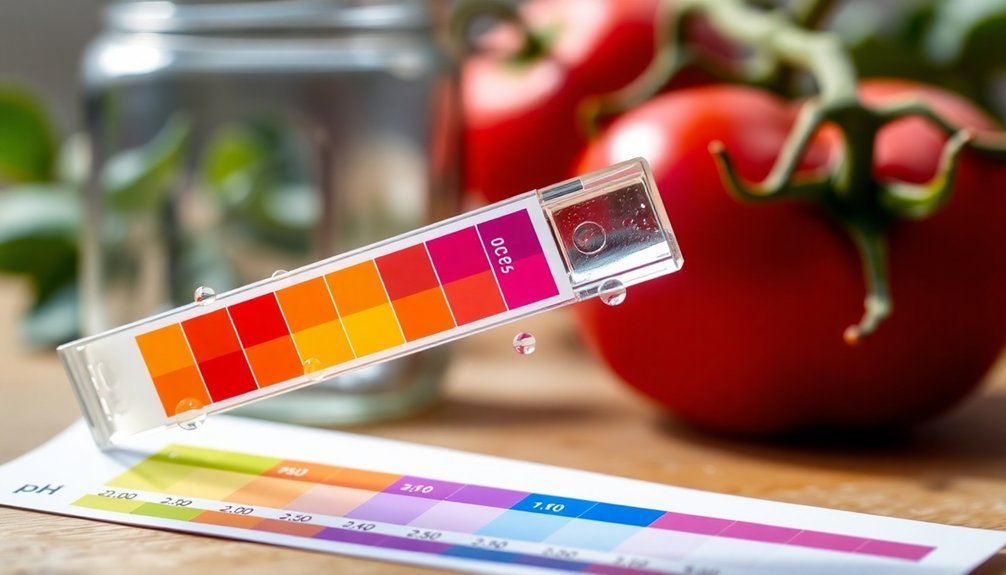
You can test pH using either strips or a meter. For pH strips, take a room-temperature sample of your food and dip a clean strip until it's saturated. Wait 15-30 seconds, then compare the color to the chart.
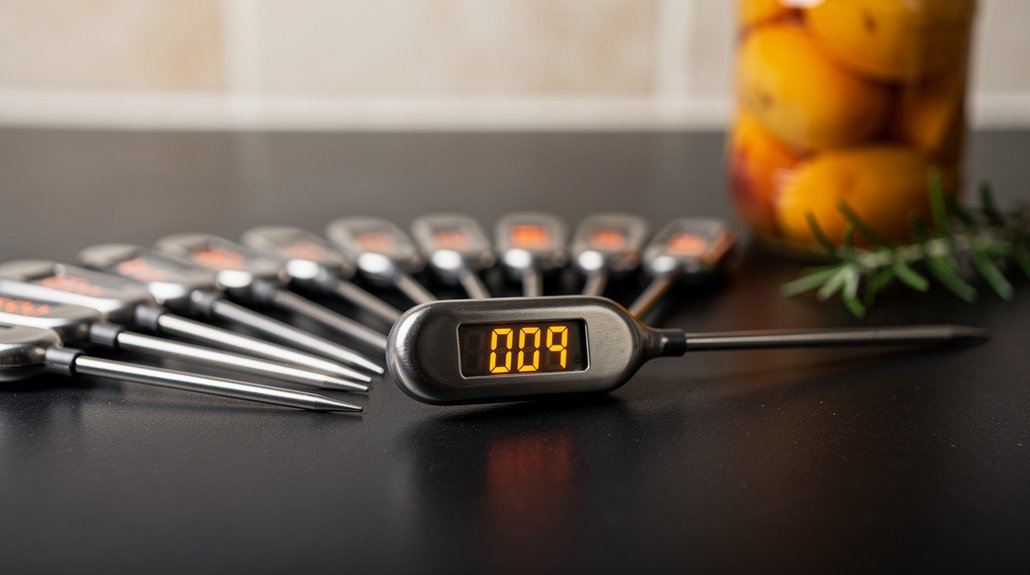
If you're working with mixed or chunky foods, you'll get more accurate results using a pH meter. Remember to calibrate your meter first and puree non-homogenous samples before testing.
To guarantee reliable results, you'll want to test multiple samples of your food. Always use fresh, quality ingredients and follow tested recipes from trusted sources like the USDA's Complete Guide to Home Canning.
Keep a log of your pH readings and adjust processing times based on your altitude. If you notice any signs of spoilage later, such as bulging lids or odd smells, discard those jars immediately.
Safe Vinegar Acidity Levels
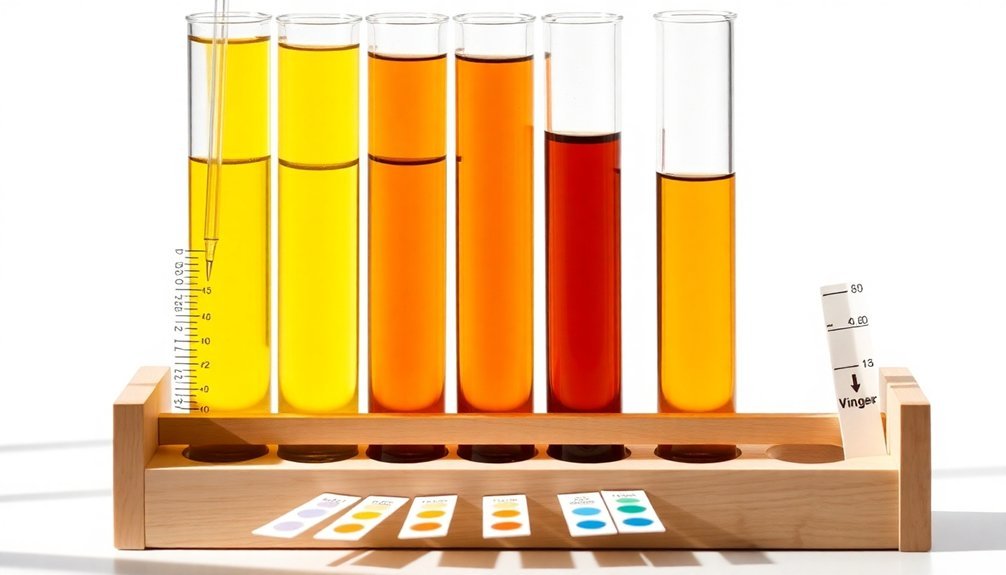
One essential factor in safe home canning is using vinegar with 5% acidity. This specific percentage isn't arbitrary – it's the minimum acidity level required to guarantee your canned foods reach a safe pH level and remain shelf-stable.
You'll find that both the USDA and the National Center for Home Food Preservation strictly recommend using only 5% acidity vinegar in canning recipes. Local extension offices can provide additional guidance and support for your home canning projects.
If you're tempted to use vinegar with less than 5% acidity, don't. Using 4% or lower acidity vinegar can create unsafe conditions where harmful bacteria, including botulism spores, might grow.
When you've accidentally used lower acidity vinegar, you'll need to either refrigerate the food within 24 hours or discard it completely.
You must check your vinegar's label before starting any canning project. With more low-acid vinegars appearing on store shelves, you can't assume all vinegars are suitable for canning.
Remember to follow tested recipes from trusted sources, and never substitute lower acidity vinegars in your canning recipes. This is especially vital when you're making pickled vegetables, salsa, or preserved fruits.
Adjusting Ph for Safety
Maintaining proper pH levels stands at the core of safe home canning practices. You'll need to guarantee your foods have a pH of 4.6 or lower to prevent dangerous bacterial growth, particularly Clostridium botulinum.
Many foods, including tomatoes and figs, naturally sit above this vital threshold and require acidification. You can adjust pH levels using bottled lemon juice, lime juice, or powdered citric acid.
It's essential that you follow tested recipes precisely, as they'll specify the exact amount of acid needed for safe preservation. Don't guess or experiment with quantities – even small pH variations can greatly affect food safety.
You'll find that certain foods consistently need pH adjustment. Tomatoes, figs, melons, persimmons, and papaya typically require acidification.
When you're working with mixed ingredients, you'll need to guarantee the overall pH remains safe. Even pickled products need verification to maintain proper acidity levels.
For accurate results, use a pH meter to test your products. If you're following tested recipes exactly, you can trust their acid recommendations.
Canning Methods by Ph
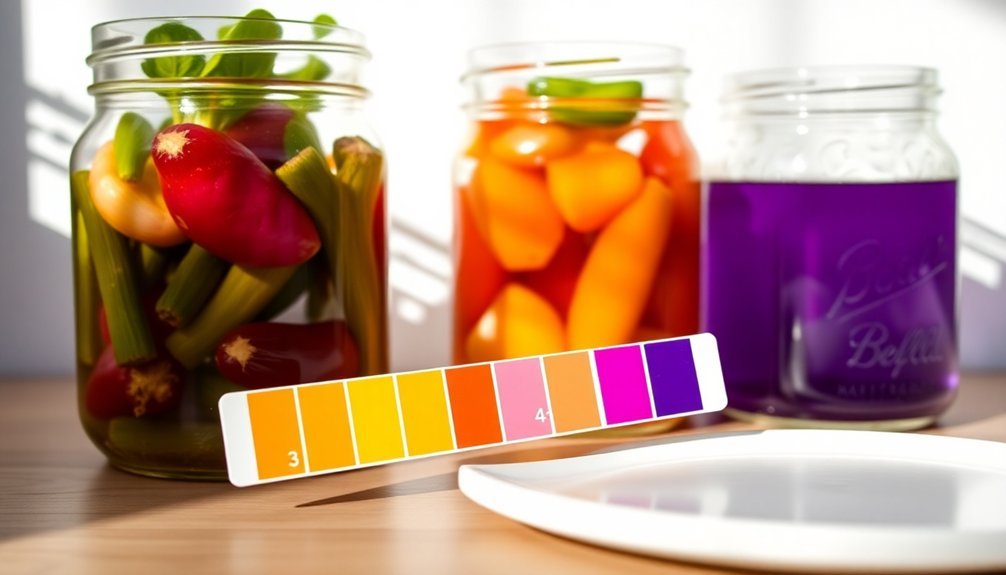
The pH level of your food directly determines which canning method you'll need to use for safe preservation. For foods with a pH of 4.6 or lower (high-acid foods), you can safely use a boiling water bath or atmospheric steam canner. However, if your food's pH is above 4.6 (low-acid foods), you must use a pressure canner to achieve the higher temperatures needed to destroy C. botulinum spores.
| Food Type | pH Level | Required Method |
|---|---|---|
| Most Fruits | Below 4.6 | Water Bath |
| Pickled Foods | Below 4.6 | Water Bath |
| Vegetables | Above 4.6 | Pressure Canner |
| Meats/Poultry | Above 4.6 | Pressure Canner |
When working with borderline foods like tomatoes or figs, you'll need to add acid to guarantee they're safe for water bath canning. Any recipe containing low-acid ingredients, such as meat, vegetables, or chicken bouillon, requires pressure canning regardless of other ingredients. Don't attempt to water bath can these items, as they won't reach the necessary temperature to eliminate harmful bacteria. Always use tested recipes from reliable sources to guarantee you're using the correct method for your specific food items.
Frequently Asked Questions
Can I Reuse Vinegar Brine From Store-Bought Pickles for Home Canning?
You shouldn't reuse store-bought pickle brine for home canning. It's already diluted from its first use and won't maintain safe acidity levels to prevent bacterial growth. Always use fresh brine for canning.
How Long Do Ph Testing Strips Remain Accurate After Opening?
You'll get the best accuracy from pH test strips within 6 months after opening. While they might last up to a year, it's important you store them properly in their original container with the lid tightly sealed.
Does Altitude Affect the Ph Level of Foods During Canning?
No, altitude won't affect your food's pH levels during canning. While you'll need to adjust processing times and pressure for higher elevations, the acidity of your foods remains constant regardless of your location's elevation.
Can Frozen Fruits Have Different Ph Levels Than Fresh Ones?
No, you won't notice significant pH differences between frozen and fresh fruits. Your frozen fruits typically maintain the same pH levels as their fresh counterparts, since freezing doesn't cause chemical changes that affect acidity.
Does Cooking Time Affect the Final Ph of Preserved Foods?
No, your cooking time won't drastically change the food's final pH. While you'll notice changes in texture and flavor during cooking, the actual pH level depends on your ingredients and acidification, not cooking duration.
In Summary
You'll want to maintain proper pH levels as your main defense against botulism and other harmful bacteria in home canning. Remember to test each batch, keep your high-acid foods at 4.6 pH or lower, and adjust acidity when needed using tested recipes and proper vinegar concentrations. Don't take shortcuts with pH testing or processing times – your family's safety depends on following these essential guidelines.

Leave a Reply