
To keep food fresh in salt boxes, you'll want to maintain a temperature of 41°F (5°C) or below, with the ideal range between 32-40°F (0-4°C). This cold environment slows bacterial growth and enhances the curing process, allowing your preserved foods to last for several months. You should use a thermometer to monitor the temperature regularly and watch for signs of temperature issues like liquid leakage. Keep your salt box in a cool, dry area away from sunlight and steam, and maintain humidity levels below 70%. Understanding proper temperature control is just the first step to mastering food preservation in salt boxes.
Temperature Ranges For Salt Boxes
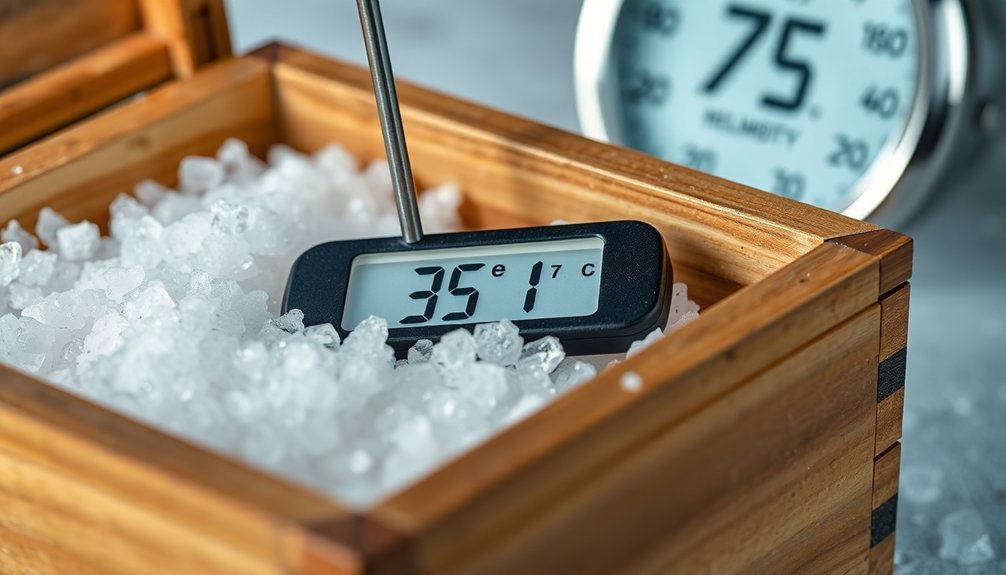
As you monitor your salt box, you'll need to check temperatures regularly to prevent harmful bacterial growth.
The ideal temperature for salt box storage is 41°F or below to effectively prevent bacterial growth and ensure food safety.
Remember that refrigeration slows the curing process and helps maintain food safety.
If you're planning long-term storage, you can expect your salted foods to last several months when kept at these recommended temperatures.
Don't forget to watch for signs of spoilage and change the brine when necessary to maintain ideal preservation conditions.
Environmental Factors For Preservation
Several environmental factors play an essential role in keeping your salt box preservation system effective. You'll need to manage humidity, light exposure, and air circulation carefully to maintain ideal preservation conditions. Keep humidity levels below 70% to prevent excess moisture from compromising your preserved foods, and store items in low-moisture-permeability packaging when possible. Higher temperatures can cause protein denaturation, affecting the quality and safety of preserved foods.
You'll want to minimize light exposure since it can trigger oxidation reactions and cause food deterioration. Store your salt box in a dark place to protect the nutritional value and appearance of your preserved items. For air control, pack your food tightly and consider using weights to keep items submerged in their brine.
| Factor | Target Condition | Impact |
|---|---|---|
| Humidity | Below 70% | Prevents bacterial growth |
| Light | Minimal exposure | Reduces oxidation and deterioration |
| Air | Limited contact | Prevents spoilage and rancidity |
Using controlled atmosphere techniques can further enhance preservation. You can replace regular air with carbon dioxide to extend shelf life, and this modification helps control pests without chemical treatments. Remember to monitor these conditions regularly to maintain the effectiveness of your preservation system.
Signs Of Proper Temperature
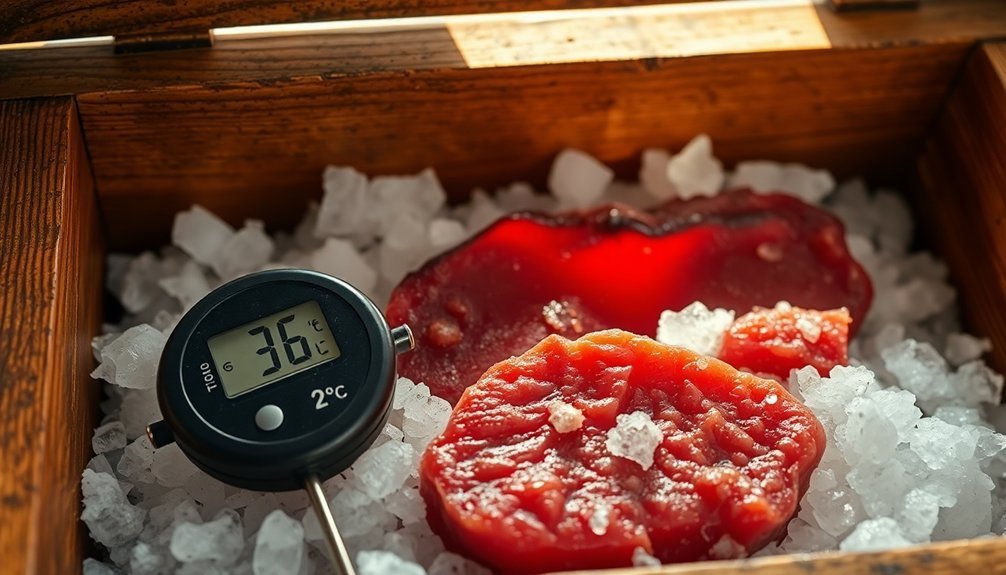
You'll know your salt box is at the right temperature when food maintains its original color and texture without any signs of mold or off-odors.
The ideal temperature range of 32-40°F (0-4°C) will prevent bacterial growth and keep your preserved items fresh longer.
Salt draws moisture out of food to help control humidity levels in your storage container. If you notice any liquid leakage or food stored above 41°F, you'll need to adjust your storage temperature immediately to prevent spoilage.
Temperature Warning Signs
The safety of stored food depends heavily on monitoring temperature warning signs. You'll need to watch for specific indicators that your food storage temperatures have become dangerous. When temperatures fall between 40°F and 140°F (4.4°C and 60°C), you're in the danger zone where bacteria can multiply rapidly, doubling every 20 minutes.
For canned goods, you'll notice several warning signs if they've been exposed to improper temperatures. Watch for bulging or loose lids, swollen cans, or any signs of rust that won't wipe away.
If you've stored cans in temperatures above 85°F (29°C), you may see deterioration in food quality and nutrient content. Similarly, if cans have frozen and thawed, they might develop microscopic holes that allow bacteria to enter.
You shouldn't ignore any unusual smells or cloudy appearances in your stored food. If you're thawing frozen canned goods, do it in the refrigerator, never at room temperature.
When you're checking your storage area, pay special attention to high-acid foods, which only last 12-18 months, even under ideal conditions. Remember, temperatures above 100°F (38°C) can permanently damage your canned goods.
Optimal Range Indicators
Inside properly maintained salt storage boxes, certain indicators will confirm you're maintaining the right temperature range. You'll notice the salt remains loose and free-flowing when you're keeping it between 60°F to 70°F (15°C to 21°C). At these ideal temperatures, your salt won't form hard clumps or show signs of moisture absorption.
You can verify proper temperature maintenance by checking the container's exterior. It should feel cool to the touch but not cold. If condensation appears on the container's walls, you're likely experiencing temperatures that are too high or fluctuating too much. Your storage containers shouldn't show signs of sweating or moisture buildup.
Watch for the salt's consistency as a key indicator. When stored at perfect temperatures, it should pour easily and maintain its original granular structure. If you're using glass containers, you won't see any fog or moisture on the inside walls.
For best monitoring, you'll want to place a small thermometer near your salt storage area. This will help you track temperature variations and confirm you're maintaining the ideal range. Remember, if your salt starts clumping, it's a clear sign that your storage temperature needs adjustment.
Storage Setup And Placement
Setting up proper storage for your salt box requires careful consideration of location and environmental factors.
You'll need to place your salt box in a cool, dry area away from direct sunlight and kitchen steam. Choose a well-ventilated spot with consistent temperatures, ideally in a dark storage room that's protected from light exposure and cooking odors.
When selecting your storage container, opt for airtight options made from glass, metal, stainless steel, ceramic, or durable bamboo.
You'll want a container with a tight-fitting lid, and you might find magnetic swivel lids or side indentions useful for easy access. For bulk storage, consider using quart-size canning jars or 5-pound plastic containers, and repackage larger quantities into smaller airtight containers for better management.
Position your salt box away from raw or cooked foods to prevent cross-contamination and maintain the salt's purity.
If you're using salt for food preservation, maintain temperatures below 8°C (46°F) during the initial salting and maturation process.
Remember to check your stored salt periodically for any signs of moisture or unwanted odors that might affect its quality.
Monitoring Your Salt Box
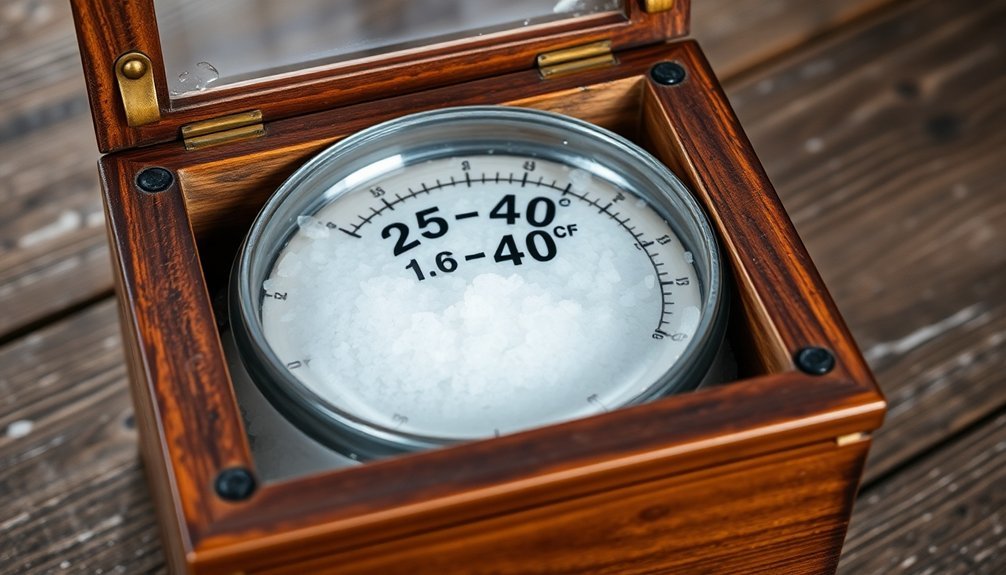
Regular monitoring of your salt box guarantees excellent freshness and prevents potential quality issues. You'll need to check your salt storage regularly for signs of moisture absorption, which can lead to clumping and quality degradation. Keep your storage temperature below 85°F and watch for any environmental changes that could affect your salt's condition.
| Monitoring Task | Action Required |
|---|---|
| Temperature Check | Maintain below 85°F, avoid areas above 100°F |
| Moisture Inspection | Look for clumping or dampness, verify airtight seals |
| Container Assessment | Check for cracks, damages, or loose lids |
| Contamination Control | Watch for dirt, mold, or unusual odors |
If you notice any signs of moisture absorption, you'll need to transfer your salt to a new, dry container immediately. Don't forget to inspect your container's integrity regularly – any damage to seals or cracks can compromise your salt's quality. When you spot signs of contamination like dirt or mold, dispose of the affected salt immediately. You should also maintain a clean storage area and protect your salt box from direct sunlight and temperature extremes to guarantee peak preservation.
Salt Box Maintenance Tips
Proper maintenance of your salt box starts with implementing strict temperature and humidity controls. You'll need to keep temperatures between 32-40°F (0-4°C) and humidity levels below 70% to prevent bacterial growth and guarantee ideal preservation.
Make sure you're storing your salt box in a cool, dark place away from direct sunlight to protect both the salt and your preserved foods.
Your container choice plays an important role in maintenance. Select a moisture-tight but not airtight container made from non-reactive materials like glass or food-grade plastic.
You'll want to confirm it has proper drainage capabilities and is thoroughly cleaned before use. Pack your food tightly and use weights to keep items submerged in their brine.
Don't forget to maintain good air circulation around your salt box while avoiding areas with strong odors, as salt can absorb surrounding scents.
You should regularly check for proper drainage and clean any excess moisture to prevent bacterial growth. Label and date your preserved items, and monitor them regularly for any signs of spoilage.
Keep the surrounding area dry and well-ventilated to maintain the salt box's effectiveness as a preservation method.
Frequently Asked Questions
Can Different Types of Salt Affect the Temperature Requirements for Preservation?
No, you won't find different temperature requirements based on salt types. While salts vary in texture and mineral content, they all preserve food through the same mechanism, requiring storage between 32-40°F for effective preservation.
How Do Seasonal Temperature Changes Impact the Effectiveness of Salt Boxes?
You'll need to adjust your salt box storage during warmer months since higher temperatures can reduce salt's effectiveness. In summer, you should move boxes to cooler locations or add refrigeration to maintain preservation.
Does Altitude Affect the Optimal Temperature Range for Salt Box Storage?
No, altitude won't affect your ideal salt box storage temperature range. You should still maintain temperatures between 0-18°C (32-64°F), focusing on keeping your storage area cool and dry regardless of elevation.
What Emergency Backup Methods Exist if Temperature Control Systems Fail?
If your temperature control fails, you can use ice packs, evaporative cooling, cold water baths, or insulated coolers. Keep the area shaded and moist, and consider moving items to a basement for cooler temperatures.
Can Traditional Salt Boxes Be Modified for Use in Tropical Climates?
You can modify traditional salt boxes for tropical climates by adding ventilation holes, using moisture-absorbing materials, elevating them off the ground, and incorporating extra salt layers. Consider combining with smoking or drying methods.
In Summary
Keep your salt box between 35-45°F (2-7°C) for ideal food preservation. You'll need to monitor the temperature regularly and adjust your storage location as needed. Make sure you're checking for condensation and maintaining proper salt levels. By following these guidelines and keeping your salt box clean, you'll extend the shelf life of your preserved foods while preventing spoilage.