

Wood ash offers seven superior food preservation methods you won't find in modern solutions. You'll get exceptional moisture control that keeps tomatoes fresh for months and cheeses preserved for years. It naturally regulates temperature while creating an effective barrier against pests like insects and rodents. You can extend storage life dramatically – up to two years for eggs and a decade for hard cheeses. It's sustainable, cost-effective, and even enhances flavors, especially in aged cheeses. Plus, you'll benefit from traditional storage techniques that don't require electricity or special equipment. Discover how this ancient preservation method could revolutionize your food storage approach.
Natural Moisture Control
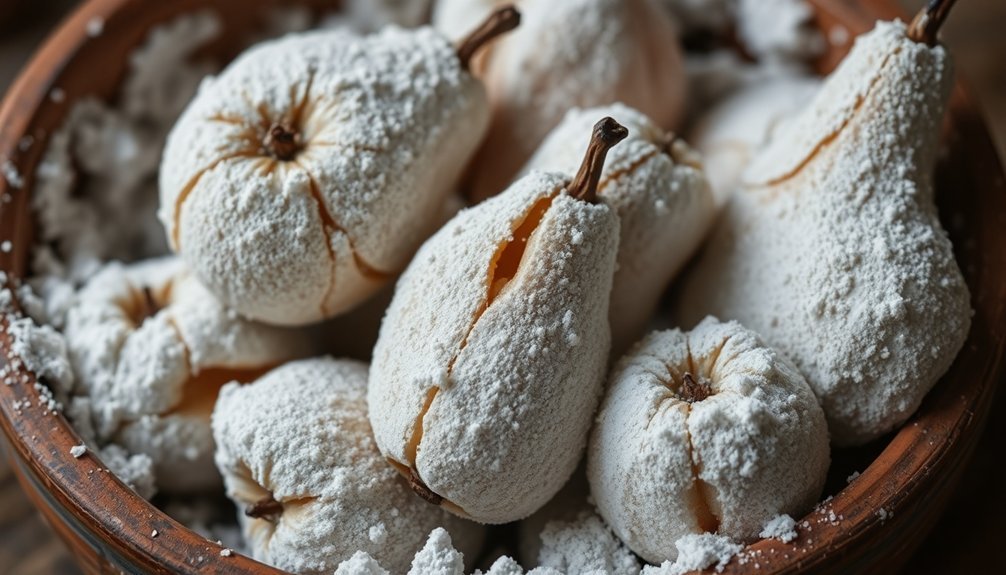
For centuries, wood ash has served as a powerful natural moisture-control agent in food preservation. When you're storing food with wood ash, it actively absorbs moisture from your items, creating an environment that's inhospitable to bacteria and fungi. This natural process helps you maintain the quality of your food for extended periods.
You'll find wood ash particularly effective when you're preserving moisture-sensitive foods like tomatoes and hard cheeses. By surrounding your food with sifted wood ash, you're creating a protective barrier that draws out excess moisture. For tomatoes, you can expect preservation for up to three months, while properly stored hard cheeses remain viable when surrounded by one to one and a half inches of ash. The ash from hardwood sources provides the best preservation results.
To maximize wood ash's moisture-controlling benefits, you'll need to store your food in a cool, dry place using appropriate containers like stoneware pots. Make sure you're layering the ash evenly and sifting it to remove any sharp particles.
The ash's ability to maintain a stable, dry environment reduces enzymatic activities that lead to spoilage, helping you preserve your food naturally and effectively.
Protection Against Pests
When you're protecting stored food from pests, wood ash creates an effective natural barrier against multiple invaders.
You'll find it particularly useful as a deterrent for insects like ants and moths, while its unpleasant texture and smell keep rodents at bay. When placed in corners and storage areas, it provides a non-toxic pest control solution that keeps cockroaches away from food supplies.
Its versatility extends to protecting against various pest types, from tiny parasites to larger mammals, making it an invaluable tool in food preservation.
Natural Insect Barrier
Wood ash serves as a powerful natural deterrent against numerous garden pests and food storage insects. You'll find it particularly effective against soft-bodied creatures like slugs and snails, as well as hard-bodied insects such as beetles and ants. The ash works by creating a protective barrier that insects won't cross, primarily due to its desiccating and abrasive properties. When properly maintained, non-toxic pest control provides a safe alternative to chemical pesticides.
| Pest Type | How Ash Affects Them | Application Method |
|---|---|---|
| Soft-bodied | Causes dehydration, irritation | Thin layer around food storage |
| Hard-bodied | Damages protective coating | Mix with lime solution |
| Crawling | Creates impassable barrier | Early morning application |
| Flying | Disrupts chemical signals | Sprinkle on surfaces |
To create an effective insect barrier, you'll want to sprinkle a thin layer of ash around your stored food items. For best results, apply the ash when surfaces are slightly damp to guarantee it sticks. Remember to wear protective gear when handling ash, and store it in a metal container with a lid. You'll need to reapply the ash barrier frequently in humid conditions or after it gets wet, as moisture reduces its effectiveness.
Repels Rodents Effectively
A natural defense against unwanted critters, wood ash proves remarkably effective at repelling rodents from food storage areas. You'll find that mice and roaches actively avoid areas where wood ash is present, making it an excellent choice for protecting your stored food.
By sprinkling a thin layer of ash in strategic locations, you're creating a natural barrier that drives these pests away without using harmful chemicals.
When you're applying wood ash, make sure to wear protective gear like gloves and a mask to avoid inhaling fine particles. You can spread it by hand or use a mechanical spreader for larger areas.
Keep in mind that you'll need to reapply the ash if it gets wet, as moisture reduces its effectiveness.
You can enhance your pest control strategy by combining wood ash with other natural deterrents. The ash works continuously to create an inhospitable environment for rodents while absorbing moisture that might attract them.
Since it's non-toxic, you won't have to worry about harmful effects on your pets or other wildlife. Remember to monitor the treated areas regularly and maintain a consistent presence of ash for the best results.
Deters Multiple Pest Types
Consistently providing multi-layered protection, wood ash serves as a powerful deterrent against various pest types that threaten stored food.
You'll find it particularly effective against crawling insects, as it creates a protective barrier that causes desiccation when they attempt to cross it. By sprinkling wood ash around your storage areas, you're creating an environment that's hostile to pests like ants, slugs, and snails.
When you apply wood ash to affected areas, it disrupts pests' ability to detect food through chemical signals and makes the treated surfaces unpalatable.
You can enhance its effectiveness by mixing it with hydrated lime and water to create a spray solution for infested areas. This mixture proves especially useful in protecting valuable food stores from leaf-eating pests and other destructive insects.
You'll need to maintain regular applications, particularly after rain or when the ash gets wet, to guarantee continuous protection.
The ash's natural properties help create an inhospitable environment for multiple pest types while simultaneously improving the surrounding area's soil health, which reduces overall pest attraction to your stored goods.
Temperature Regulation Benefits
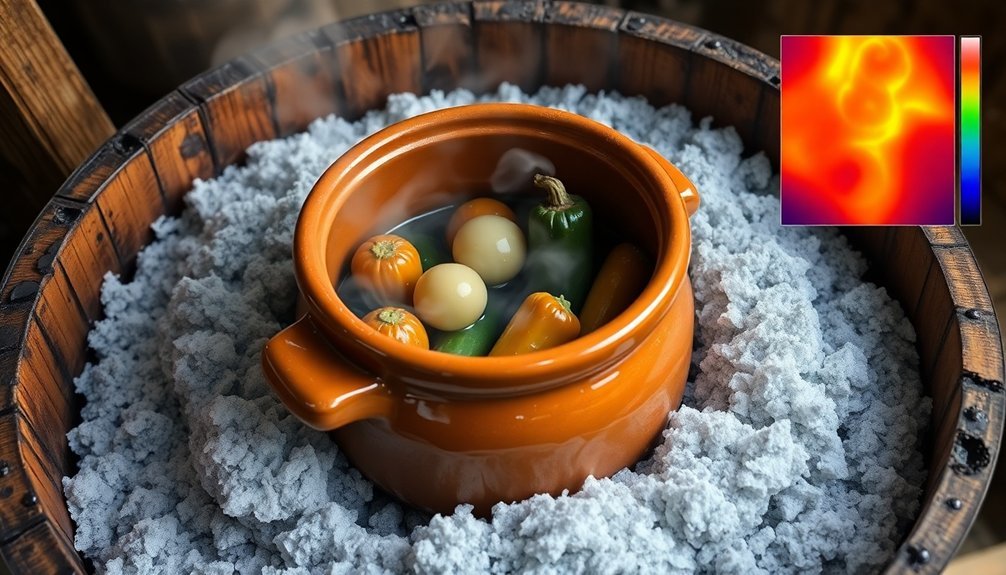
You'll find wood ash acts as a natural temperature buffer, helping protect your stored food from harmful temperature fluctuations that can speed up spoilage.
When you store food items in ash-lined cellars, you're taking advantage of the ash's insulating properties to maintain consistently cool conditions throughout the year.
The cooling properties of wood ash maximize preservation by creating a stable environment that slows down the biological processes leading to food deterioration.
Natural Heat Buffer
Temperature stability emerges as one of wood ash's most valuable preservation traits. When you use wood ash for food storage, you'll benefit from its remarkable insulation properties that maintain consistent temperatures around your stored items.
The ash creates a protective barrier that shields your food from external temperature fluctuations, effectively slowing down spoilage processes.
You'll find that wood ash's natural heat buffer works through multiple mechanisms. It creates a stable microclimate that guards your food against environmental changes, while simultaneously controlling humidity levels.
This means you won't have to worry about moisture-related deterioration, as the ash absorbs excess moisture and maintains ideal conditions for preservation.
The practical benefits are significant. You can store foods for extended periods, often up to six months or more, making it especially useful for seasonal produce.
When you properly layer food in wood ash, you're creating an environment that's inhospitable to pests and insects while protecting against contamination.
The ash's ability to regulate temperature and humidity means your stored items maintain their texture and freshness, giving you a reliable, natural method for long-term food preservation.
Stable Cellar Storage
Building upon wood ash's natural heat-buffering properties, a cellar environment maximizes its preservation potential. When you store food in a cellar using wood ash, you'll benefit from temperatures that consistently stay between 50°F to 60°F, creating ideal conditions for long-term preservation.
This stable environment works in harmony with wood ash's protective qualities to prevent bacterial growth and reduce spoilage risks.
You'll find that cellar storage offers several key advantages when combined with wood ash preservation:
- Prevents damaging temperature fluctuations that could compromise food quality
- Maintains a naturally dry atmosphere that enhances wood ash's moisture-absorbing properties
- Creates a pest-resistant environment, as insects and rodents can't thrive in cool conditions
- Extends storage duration considerably – up to three months for cheese and six months for tomatoes
- Eliminates condensation issues that could lead to mold growth
The cellar's controlled environment multiplies wood ash's effectiveness as a preservative. You won't need to worry about sudden temperature changes or moisture buildup affecting your stored foods.
This combination of stable temperatures and wood ash's protective barrier guarantees your preserved items stay fresh and safe for extended periods.
Cooling Properties Maximize Preservation
Wood ash's remarkable cooling properties create an ideal preservation environment through multiple mechanisms. When you use wood ash for food preservation, you'll benefit from its natural ability to absorb moisture, which keeps your food items dry and less prone to spoilage.
The ash creates a protective barrier that actively draws moisture away from your stored foods, greatly reducing the risk of bacterial and fungal growth.
You'll find that wood ash's insulating properties help maintain stable temperatures around your preserved foods. This temperature consistency is vital, as it prevents the rapid fluctuations that typically accelerate food spoilage.
When you layer the ash properly around your food items, you're creating a controlled environment that maximizes preservation effectiveness.
The ash's basic chemical properties work to your advantage by naturally inhibiting microbial growth. You'll get the best results by ensuring complete coverage of your food items with thin, even layers of ash on all sides.
This thorough coverage is particularly effective for preserving items like tomatoes and eggs, where the ash's combination of moisture control, temperature stability, and antimicrobial properties work together to extend shelf life greatly.
Long Term Storage Potential
Preserving food with wood ash offers remarkable long-term storage capabilities across various food types.
You'll find this traditional method particularly effective for eggs, which can last up to two years when stored in earthenware crockery filled with wood ash.
When it comes to cheese, you can achieve impressive results with hard varieties like Gruyere and parmesan, potentially preserving them for a decade or longer in ash-filled stoneware pots.
For meat preservation, you'll discover that wood ash, especially from hickory trees, not only extends shelf life but also adds flavor, as demonstrated by Cherokee traditional practices.
Your tomatoes and other produce can stay fresh for up to six months, though results may vary based on ripeness and storage conditions.
- Store unwashed eggs in wood ash to maintain their natural protective coating
- Keep cheese in stoneware pots surrounded by sifted wood ash to form a new protective rind
- Use hickory ash for meat preservation to combine extended storage with enhanced flavor
- Maintain all ash-preserved foods in cool, dark locations for best results
- Guarantee proper air and moisture protection by completely surrounding foods with ash
Flavor Enhancement Properties
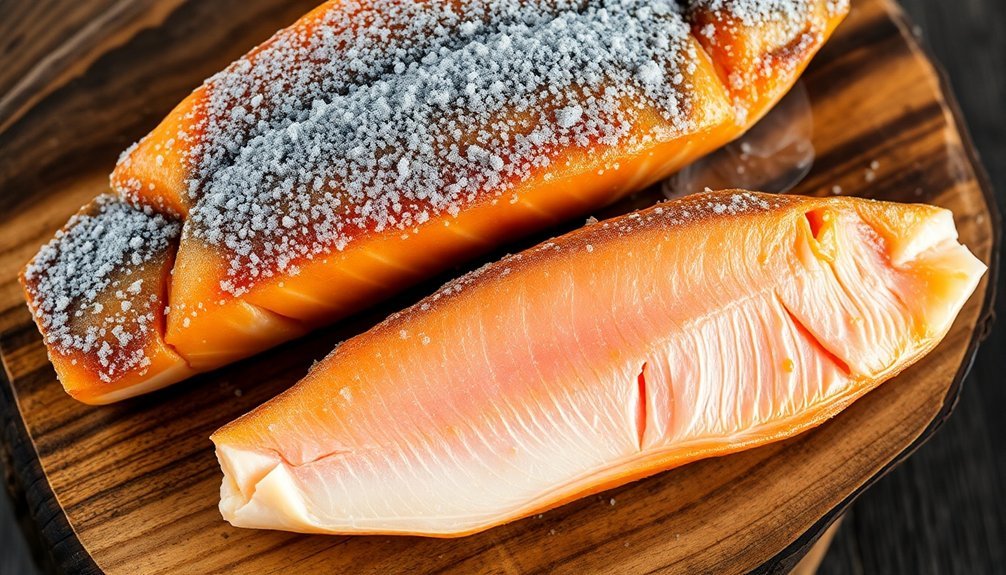
The flavor enhancement properties of wood ash preservation extend far beyond simple food storage. When you're preserving cheese with wood ash, you'll notice it creates a unique transformation that can turn your cheese into something resembling aged parmesan. The ash forms a new rind and interacts chemically with the cheese, developing complex flavors you can't achieve through other preservation methods.
You'll want to choose your wood ash carefully, as the type greatly impacts the final flavor. Hickory and clean hardwood ashes are your best options, while you should avoid ash from pressure-treated or contaminated wood sources. The ash's basic properties and high calcium content work together to alter your cheese's composition, creating a saltier, grainier profile while concentrating its flavors through moisture absorption.
When you compare ash preservation to other methods like waxing, you'll find it offers superior flavor enhancement. Over a three-month aging period, your cheese will develop distinctive characteristics, including tyrosine crystals, and transform into a harder, more flavorful product that's perfect for grating.
This traditional preservation method delivers a unique taste that modern techniques simply can't replicate.
Cost-Effective Food Preservation
Beyond its impressive flavor-enhancing qualities, cost-effective food preservation makes wood ash an attractive option for both homesteaders and budget-conscious food enthusiasts.
You'll find that this traditional preservation method requires virtually no financial investment, as wood ash is readily available from your fireplace, wood stove, or fire pit. The simplicity of the process means you won't need expensive equipment or specialized storage solutions.
You can effectively preserve various foods using wood ash, including:
- Hard cheeses that stay fresh for up to three months
- Tomatoes using 1.5 kg ash per 1 kg of produce
- Fresh eggs for extended periods
- Various produce items protected from decay
- Meat products sheltered from spoilage
You'll appreciate how easy it's to implement this method – simply place your food items in basic containers like earthenware crocks and surround them with sifted wood ash.
The ash naturally deters pests and protects food from air exposure, eliminating the need for electricity or chemical preservatives. This makes it particularly valuable for off-grid living or during power outages, while also serving as a sustainable solution you can reuse later as fertilizer or ice melt.
Traditional Storage Methods Revived
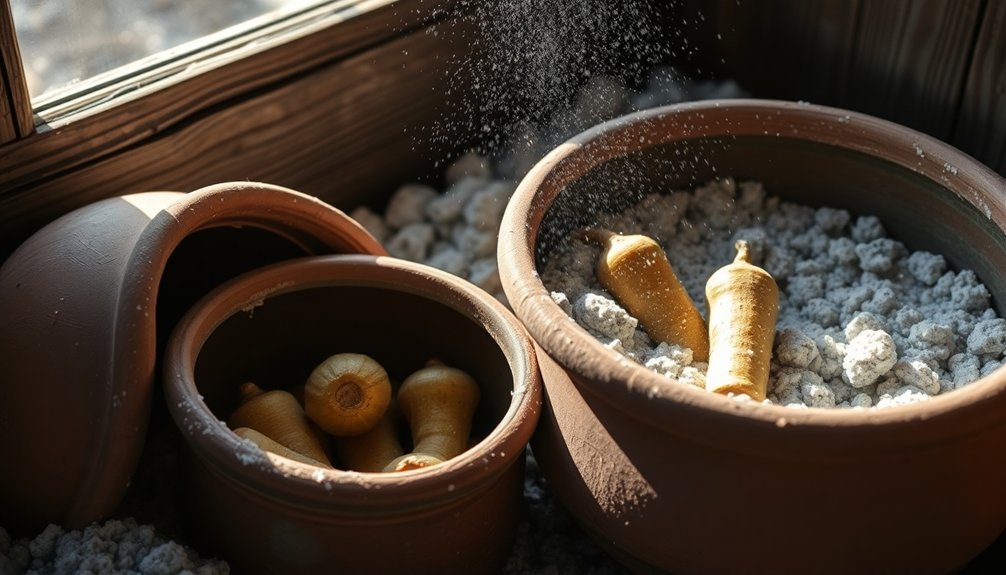
Reviving ancient food storage methods reveals the enduring wisdom of our ancestors who relied on wood ash preservation. You'll find these time-tested techniques particularly effective when using traditional containers like earthenware crocks and stoneware pots, which don't react with the ash while maintaining ideal preservation conditions.
When you're preserving hard cheeses, you'll want to surround them with 1 to 1.5 inches of sifted wood ash in a stoneware container. For tomatoes, you can layer them in earthenware crocks or even wooden baskets, making sure each piece is completely covered with ash.
If you're following the Cherokee tradition, you'll discover that hickory ash works exceptionally well for preserving and flavoring meat.
You'll need to pay special attention to proper storage conditions. Place your containers in cool, dark locations, and make certain they're properly sealed to prevent air exposure.
Whether you're using traditional holes in the ground or modern adaptations of ancient storage methods, you'll find that wood ash preservation still works effectively for various foods, including eggs, hard cheeses, and produce like okra and tomatoes.
Frequently Asked Questions
Which Types of Wood Create the Safest Ash for Food Preservation?
You'll want to use hardwoods like maple, oak, and hickory for the safest food-preserving ash. Make sure your wood's untreated and free from contaminants. Pine and other softwoods aren't safe choices.
How Can You Tell if Food Preserved in Wood Ash Has Spoiled?
You'll know your ash-preserved food has spoiled if you spot mold, notice unusual discoloration, detect foul or sour odors, feel slimy textures, or discover the food has become unusually soft or crumbly.
Can Wood Ash Preservation Affect the Nutritional Value of Foods?
You'll find that wood ash preservation actually helps maintain your food's nutritional value by preventing decay. It doesn't decrease nutrients, and in some cases, like with corn, it can even enhance nutritional content through nixtamalization.
Is It Safe to Preserve Multiple Food Items Together in Ash?
You shouldn't preserve multiple food items together in wood ash. It's not proven safe and each food requires specific preservation methods. Keep your items separated to prevent cross-contamination and guarantee proper preservation.
How Many Times Can the Same Wood Ash Be Reused for Preservation?
You shouldn't reuse wood ash for food preservation. Each use depletes its nutrients and effectiveness. It's best to use fresh ash every time to guarantee safe preservation and avoid potential contamination risks.
In Summary
You've discovered how wood ash can transform your food preservation methods naturally and affordably. Whether you're controlling moisture, keeping pests away, or regulating temperature, wood ash offers reliable solutions. It's time to embrace these traditional preservation techniques that add subtle flavors while extending storage life. Start incorporating wood ash into your food storage routine and enjoy fresher, longer-lasting ingredients without artificial preservatives.